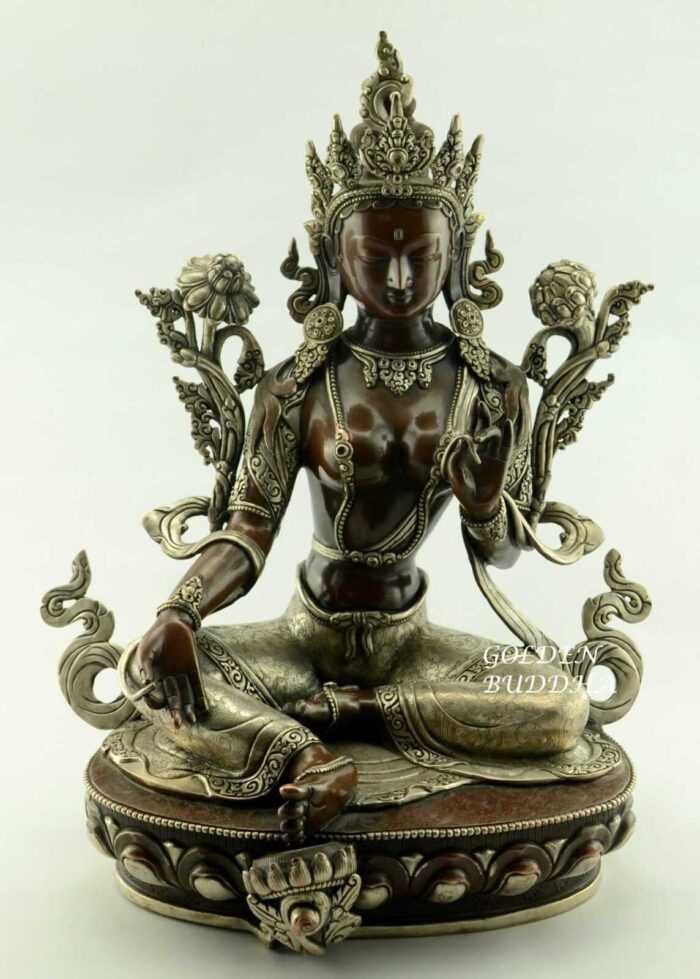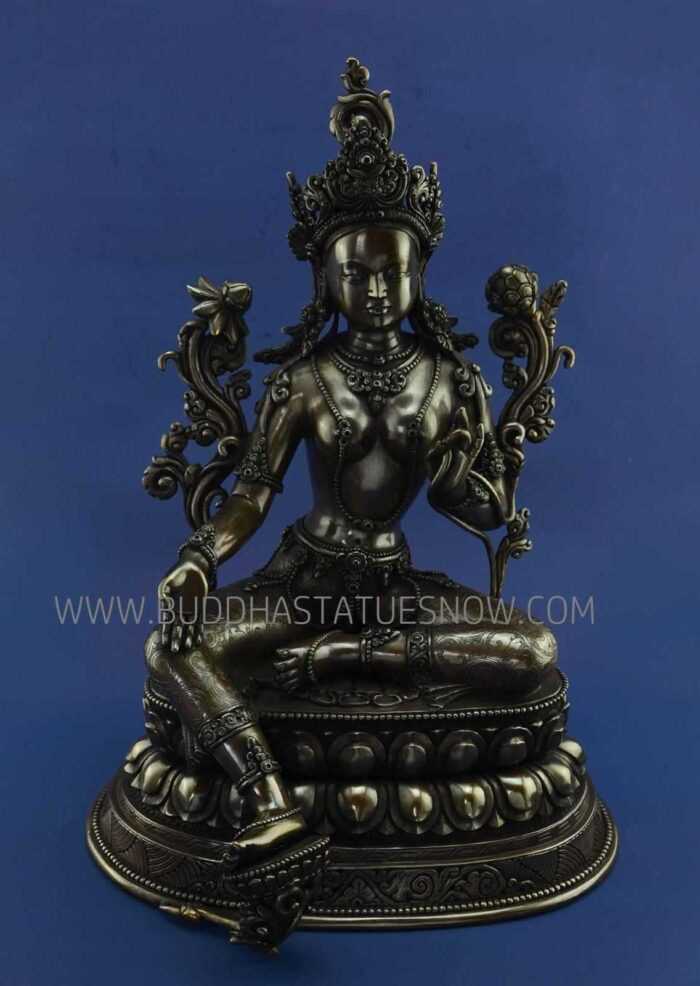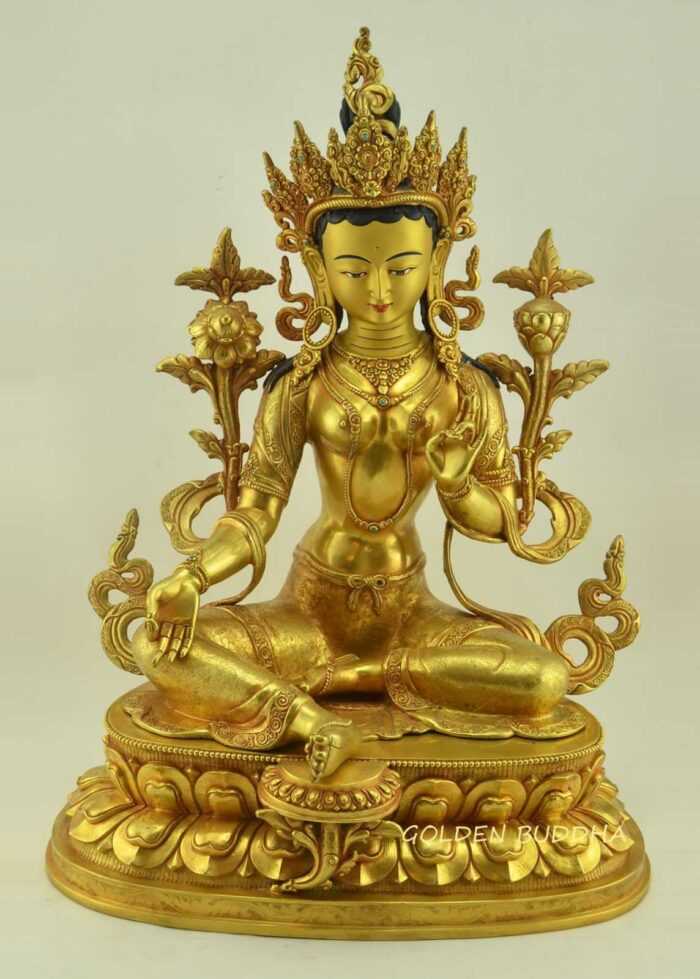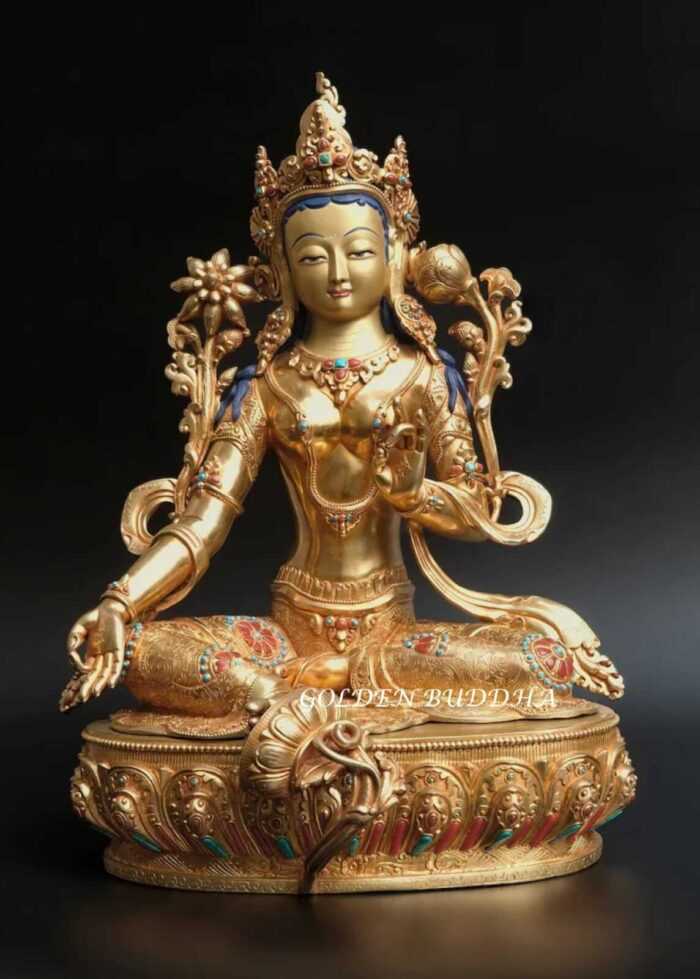
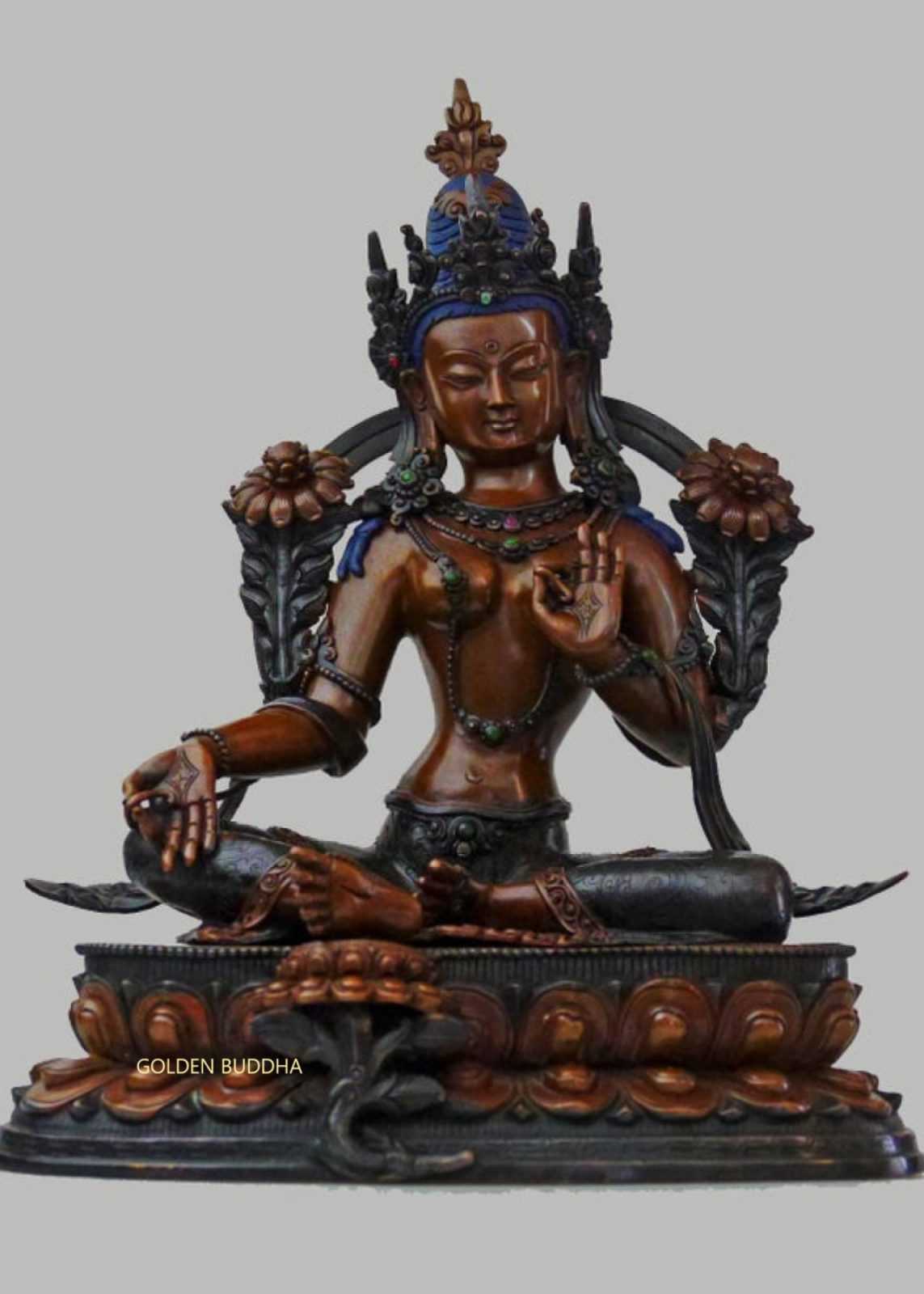
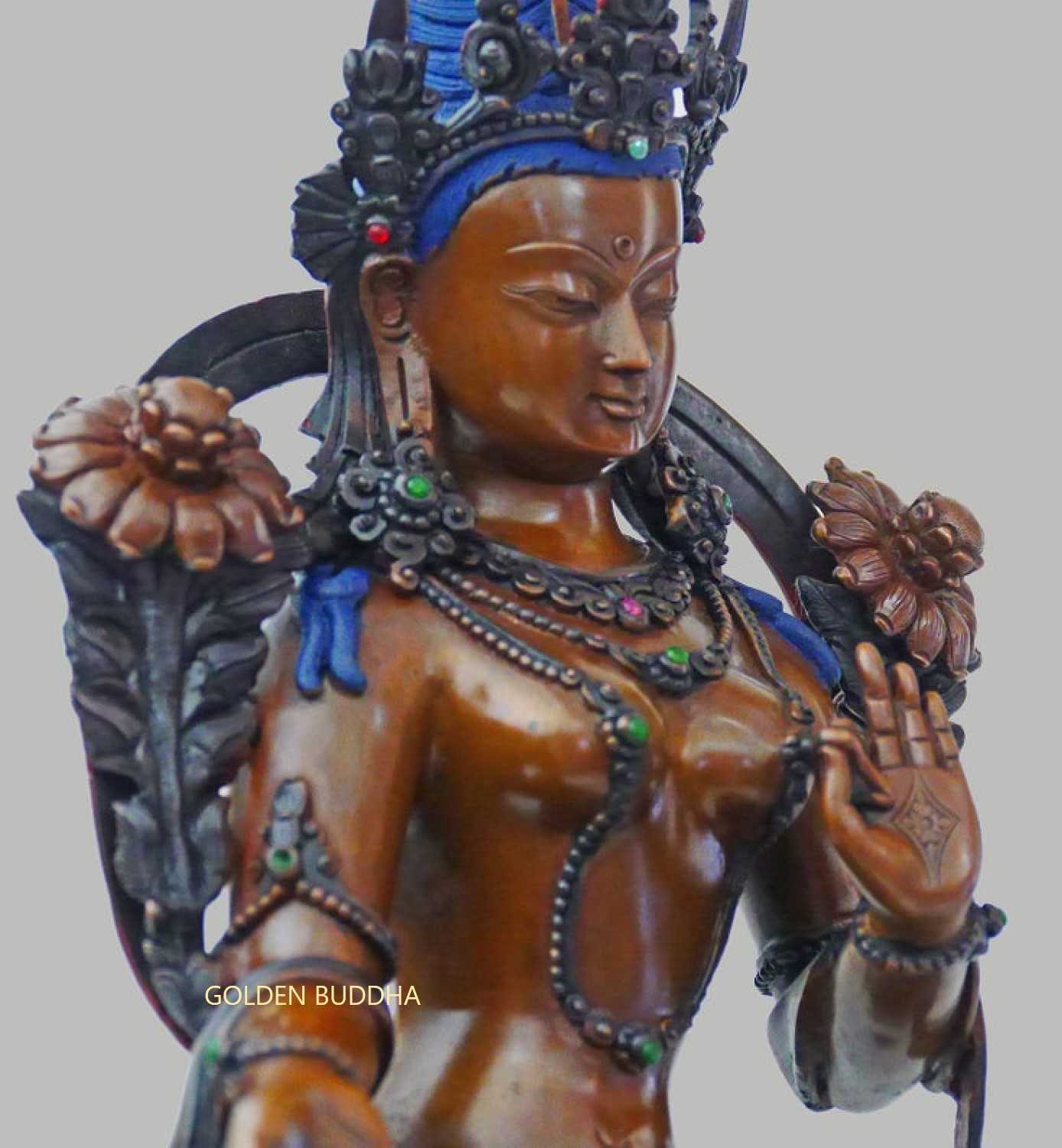
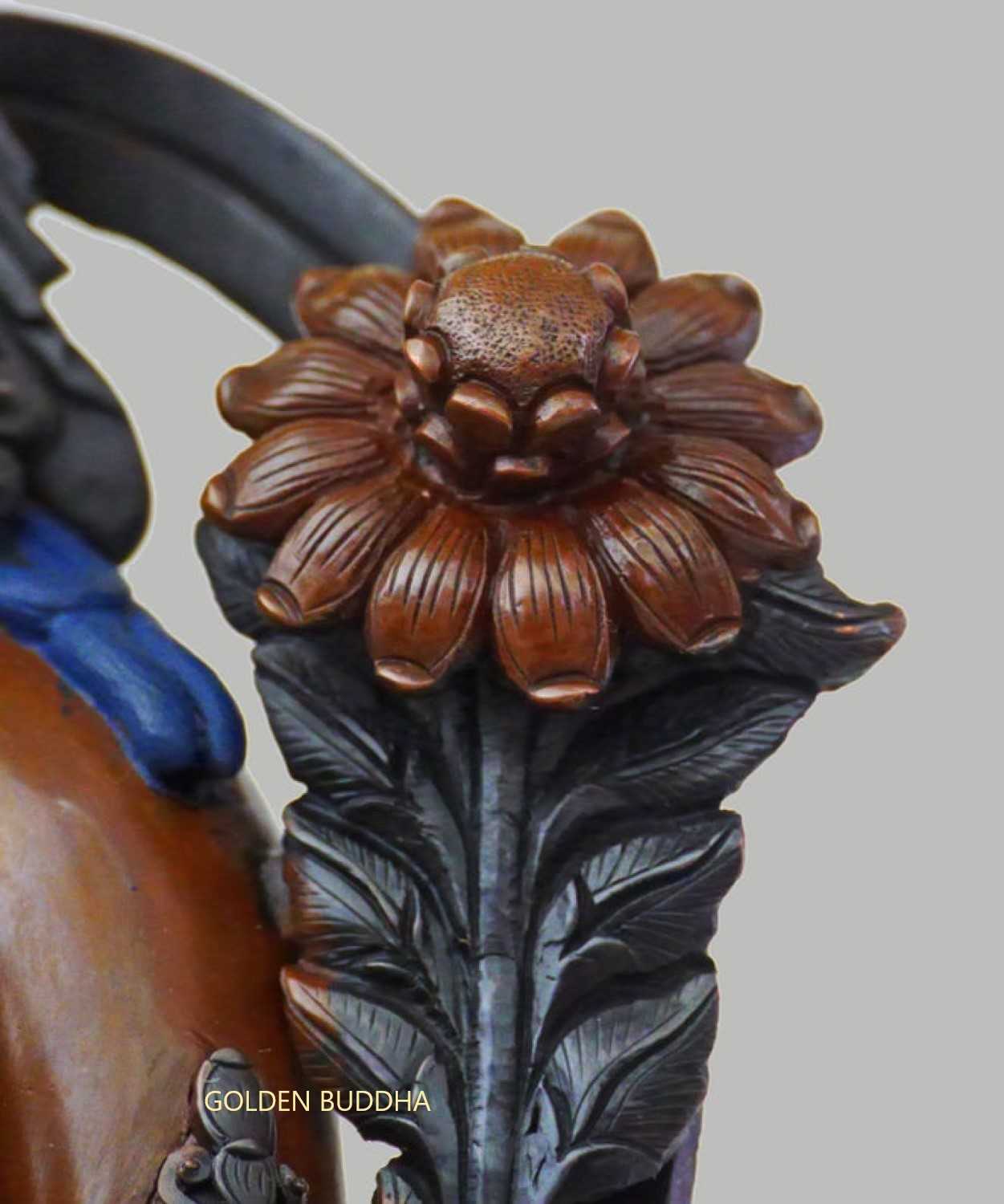
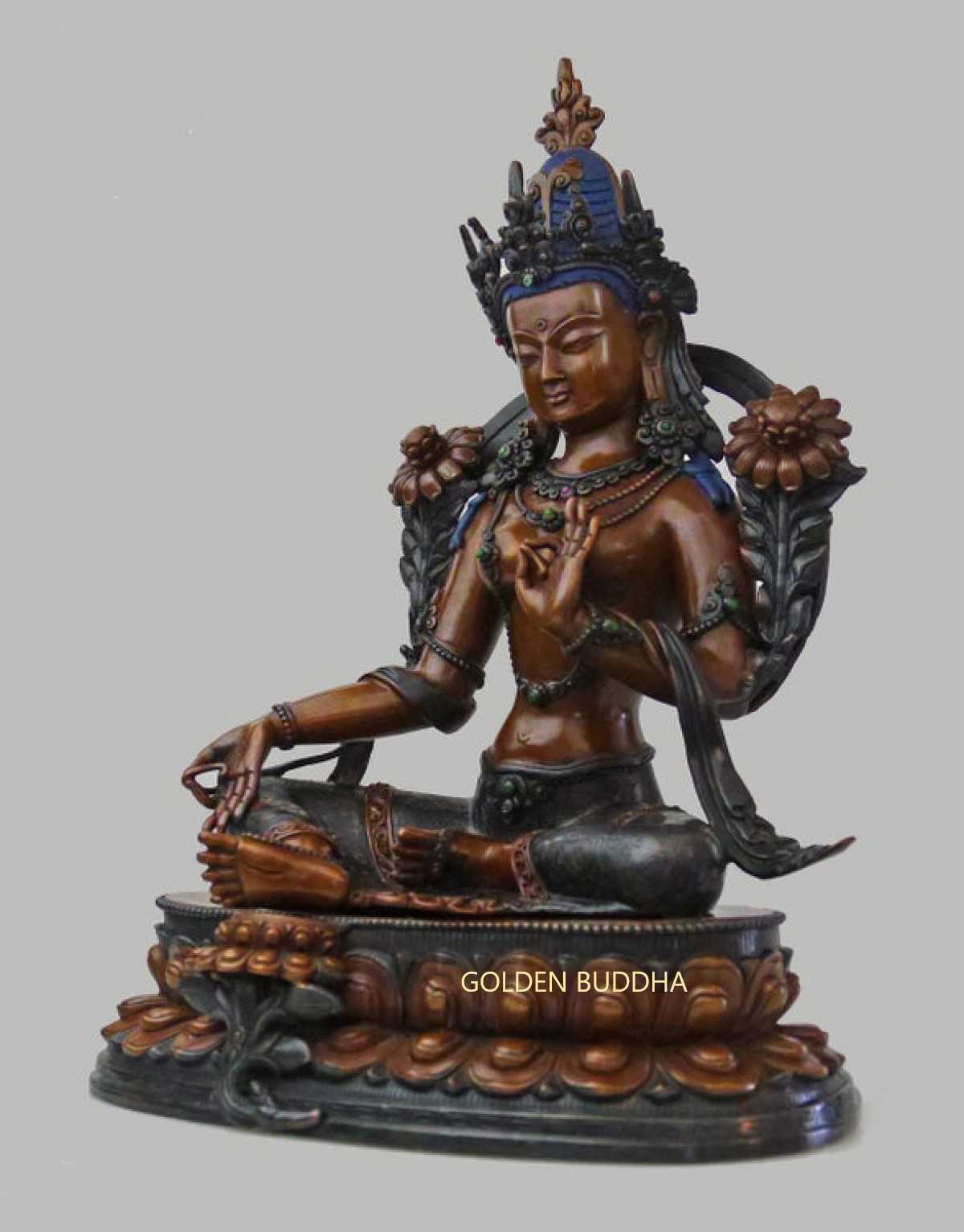
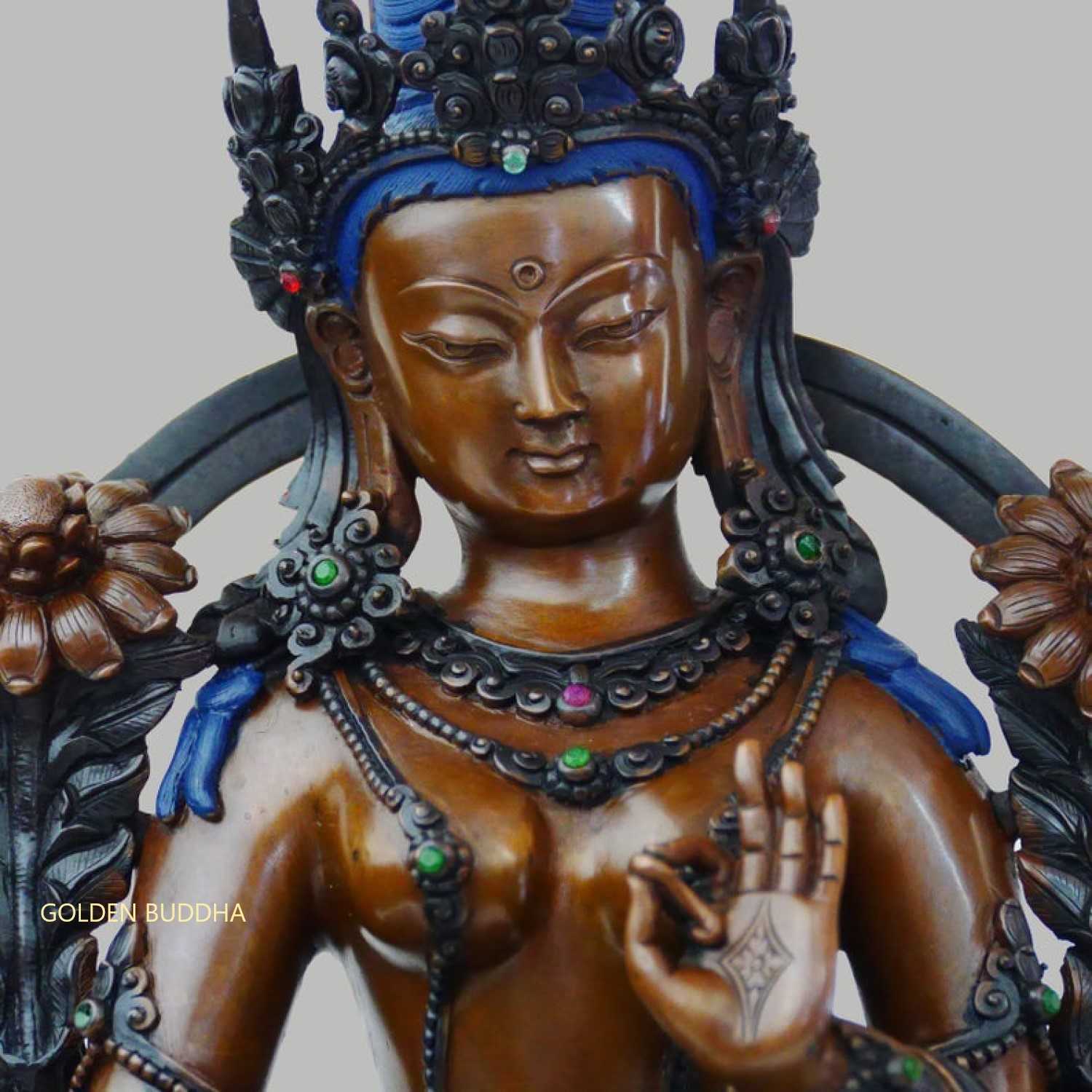
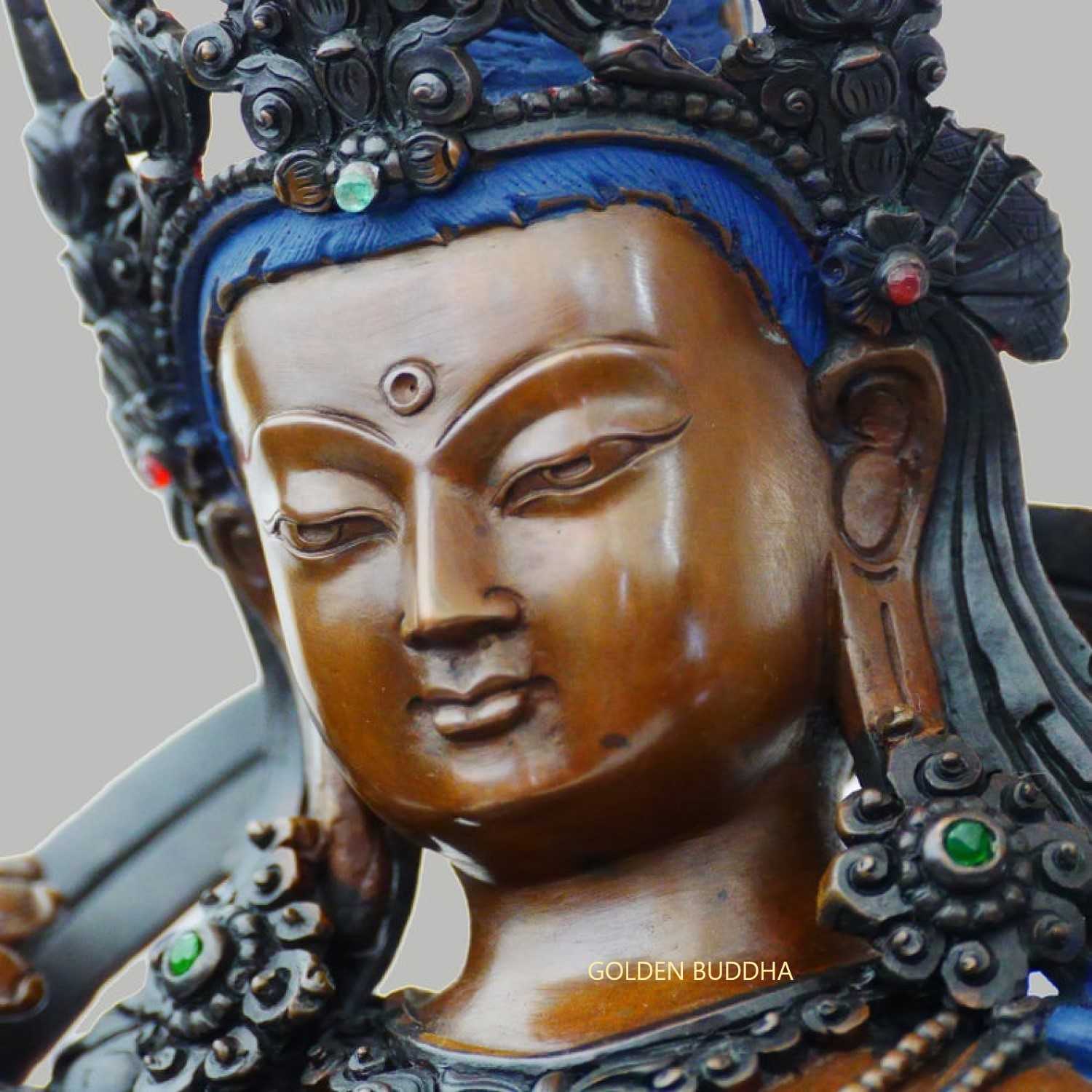
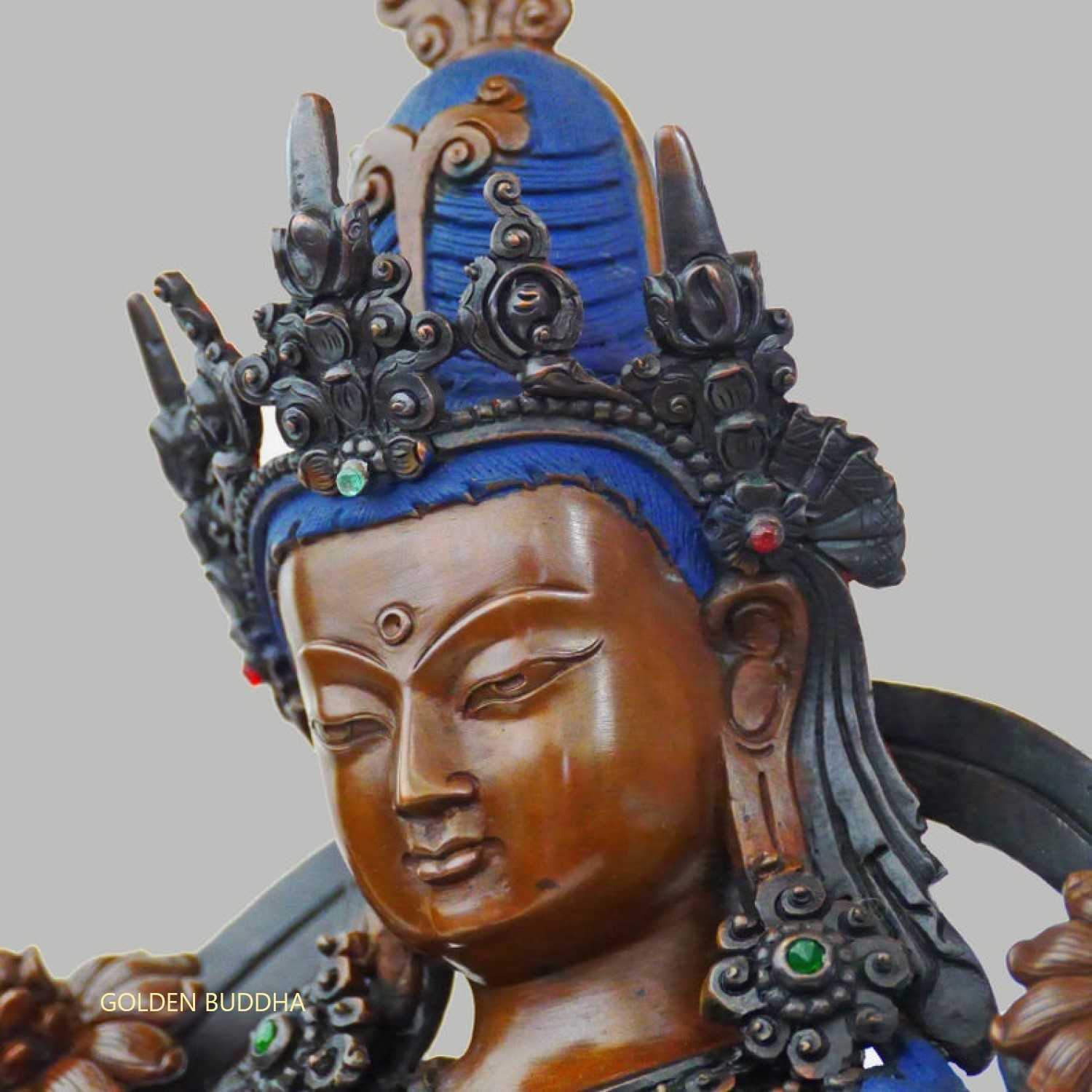
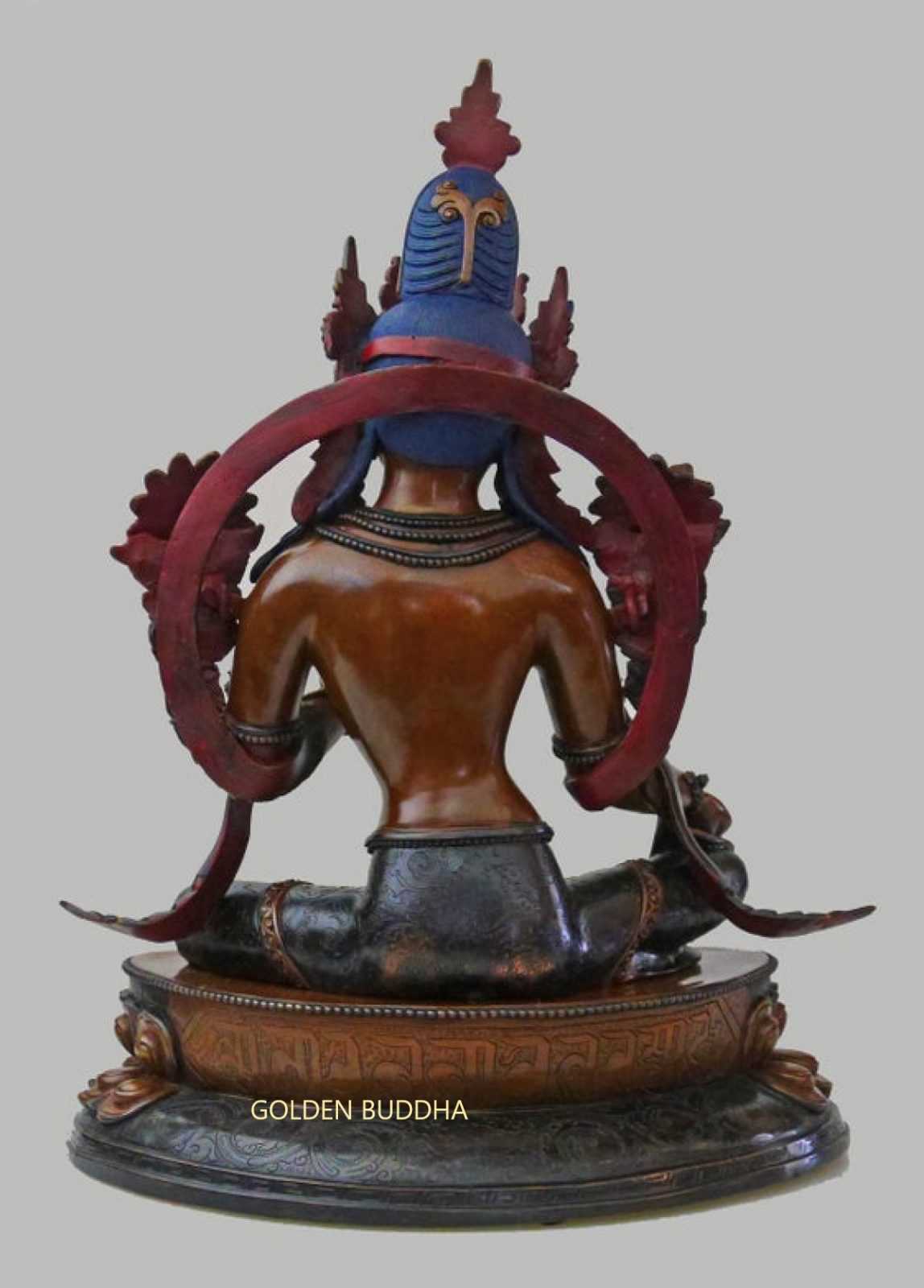
This handmade 31cm Green Tara statue was traditionally cast in copper alloy by master Shakya artisans in Patan, Nepal using the centuries-old lost wax casting method. The sculpture is finished with a rich antiquated patina that contrasts warm copper tones with dark oxidized accents, creating depth throughout the figure. Her hair is traditionally painted deep blue, while her Bodhisattva crown and jewelry are already adorned with embedded turquoise and red coral stones that provide vibrant highlights against the antiquated finish. Learn more about the remarkable heritage of the Shakya artisans and the traditional lost wax casting process.
Green Tara, known in Tibetan as Jetsun Dolma, is one of the most beloved figures in Tibetan Buddhism and is revered as the swift embodiment of enlightened compassion. According to tradition, she immediately responds to sincere prayers and assists practitioners in overcoming both worldly obstacles and inner suffering. Her sacred mantra, Om Tare Tuttare Ture Svaha, is recited throughout the Himalayan Buddhist world to cultivate courage, compassion, and wisdom while removing obstacles from one’s spiritual path. Discover the meaning and practice of the Green Tara mantra, or explore how she protects practitioners from the symbolic Eight Great Fears described in Buddhist teachings.
Antiquated Green Tara Statue Features
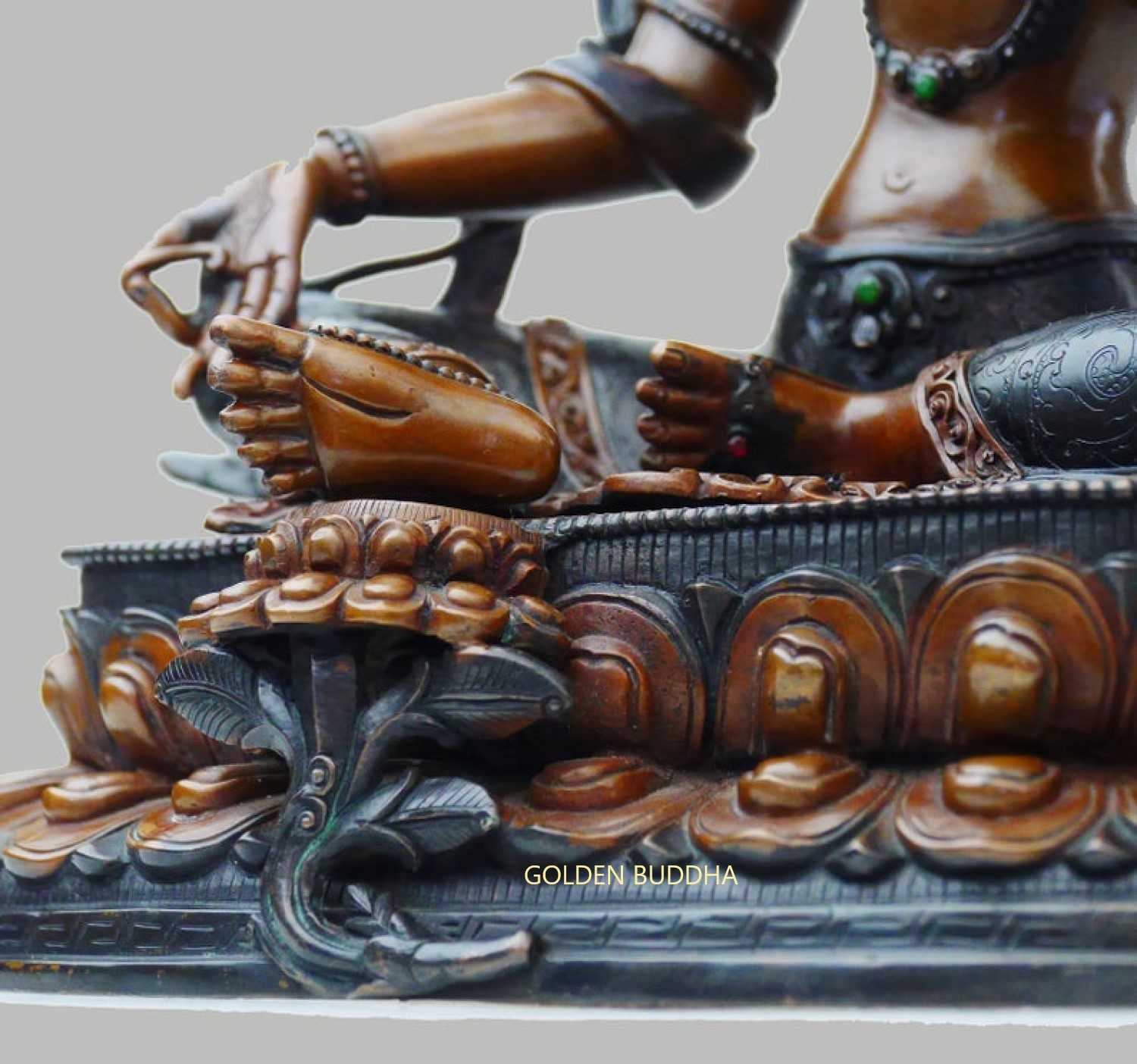
Green Tara is portrayed in lalitasana, the “posture of royal ease,” with her right leg gracefully extended, expressing her readiness to respond without hesitation whenever her compassionate assistance is sought. Her lowered right hand forms a traditional Buddhist hand gesture symbolizing generosity, blessings, and compassionate action, while her raised left hand gently holds the stem of an utpala lotus. For a deeper explanation of this sacred Buddhist hand gesture and its symbolism, visit our guide to Buddhist mudras and their meanings.
Both utpala lotus blossoms rise fully opened above her shoulders, representing the complete flowering of enlightened wisdom that emerges unstained from the waters of samsara. The sculptor has carefully balanced these blossoms with elegant lotus vines that frame the figure without overwhelming her serene presence. Learn more about Green Tara’s posture, lotus symbolism, and iconography in our complete Green Tara guide.
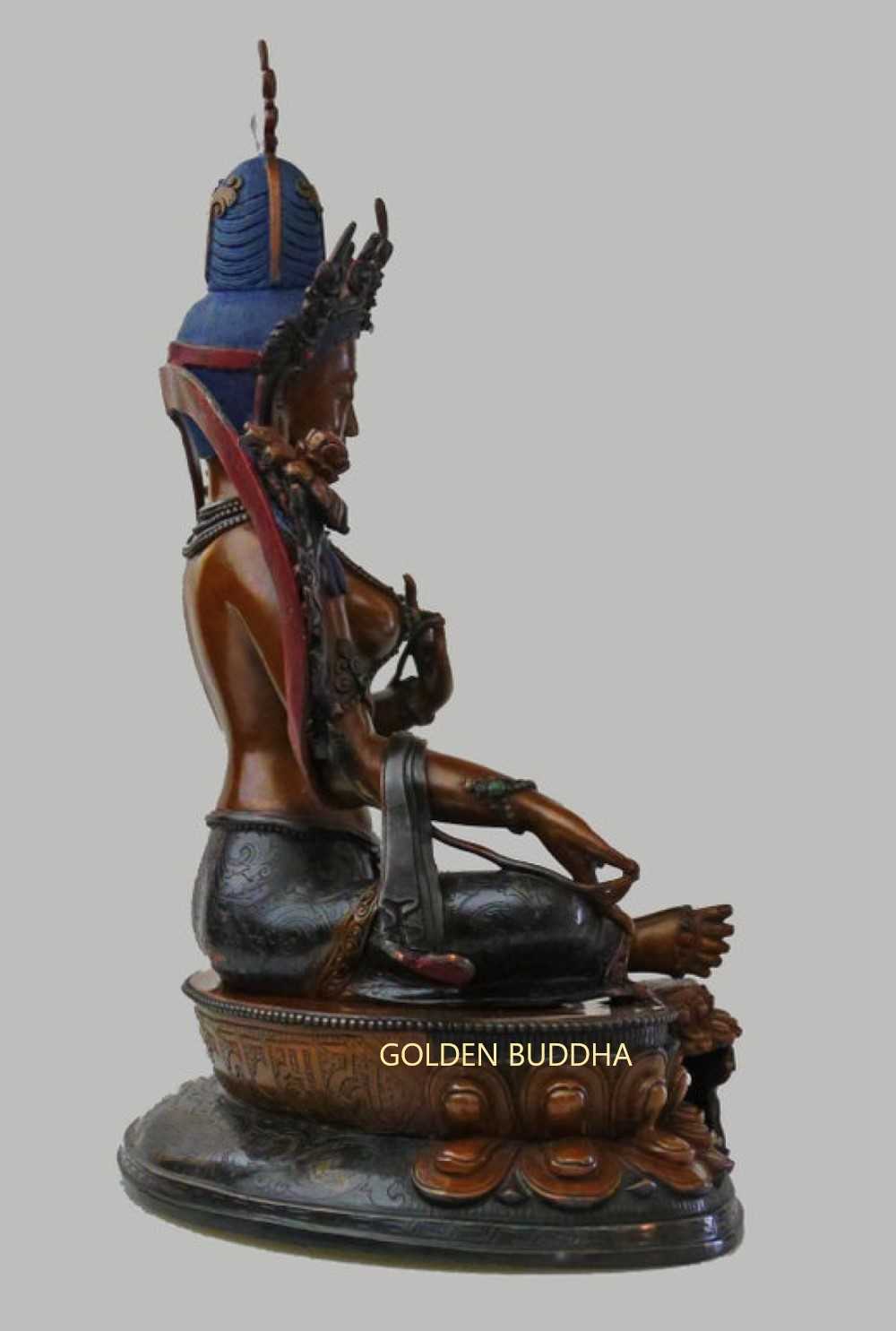
The craftsmanship is especially evident in the carefully engraved details decorating the lower garments, ornamental borders, and the double lotus pedestal. Fine engraved patterns continue around the rear of the base, where sacred decorative motifs enhance the sculpture from every viewing angle. The smooth modeling of Green Tara’s face and torso intentionally contrasts with these richly ornamented areas, directing attention toward her peaceful expression while allowing the engraved crown, jewelry, pedestal, and garments to provide visual richness. The combination of warm copper tones, dark oxidized surfaces, brilliant blue hair, and embedded turquoise and coral stones gives this statue a distinctive Himalayan character suitable for both a meditation shrine and a fine art collection.
Authentic, Handmade in Nepal
Every statue and ritual item is handcrafted in Patan, Nepal, using traditional lost wax casting and comes with a certificate of authenticity issued by Nepal's Department of Archaeology, verifying its materials, technique, and origin.