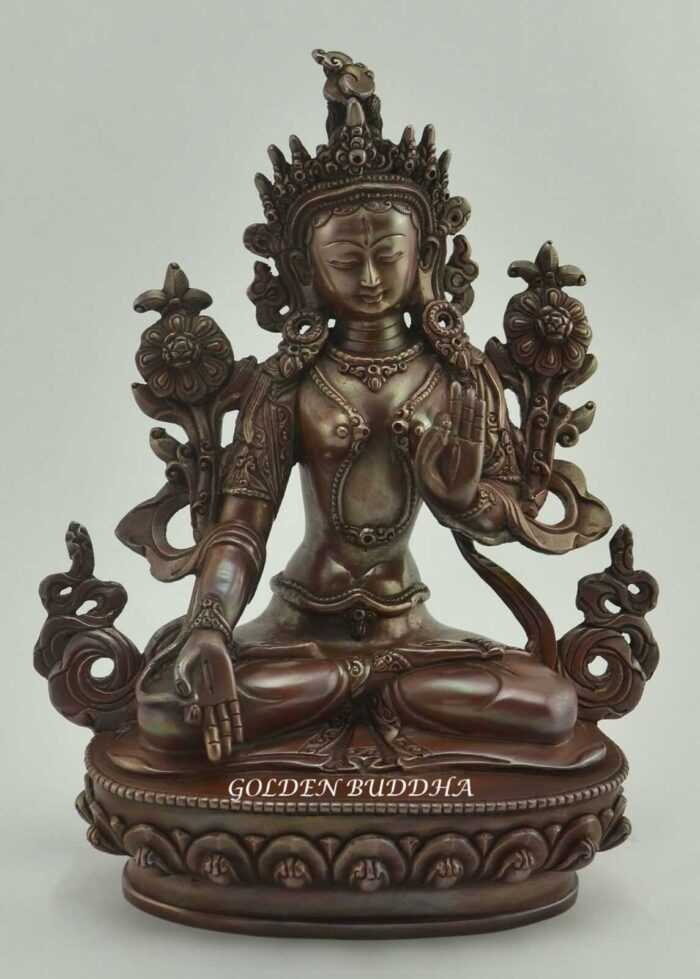
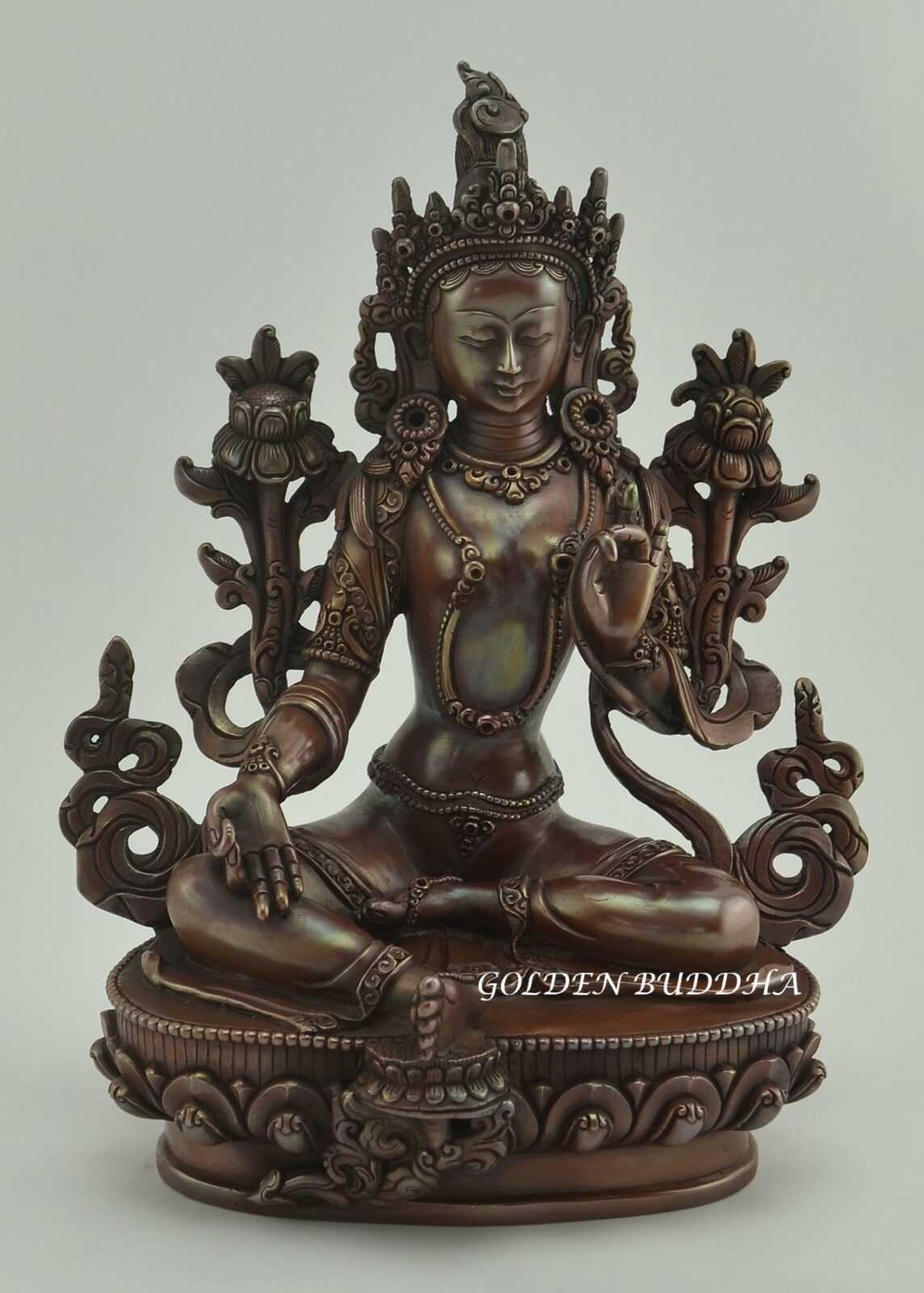
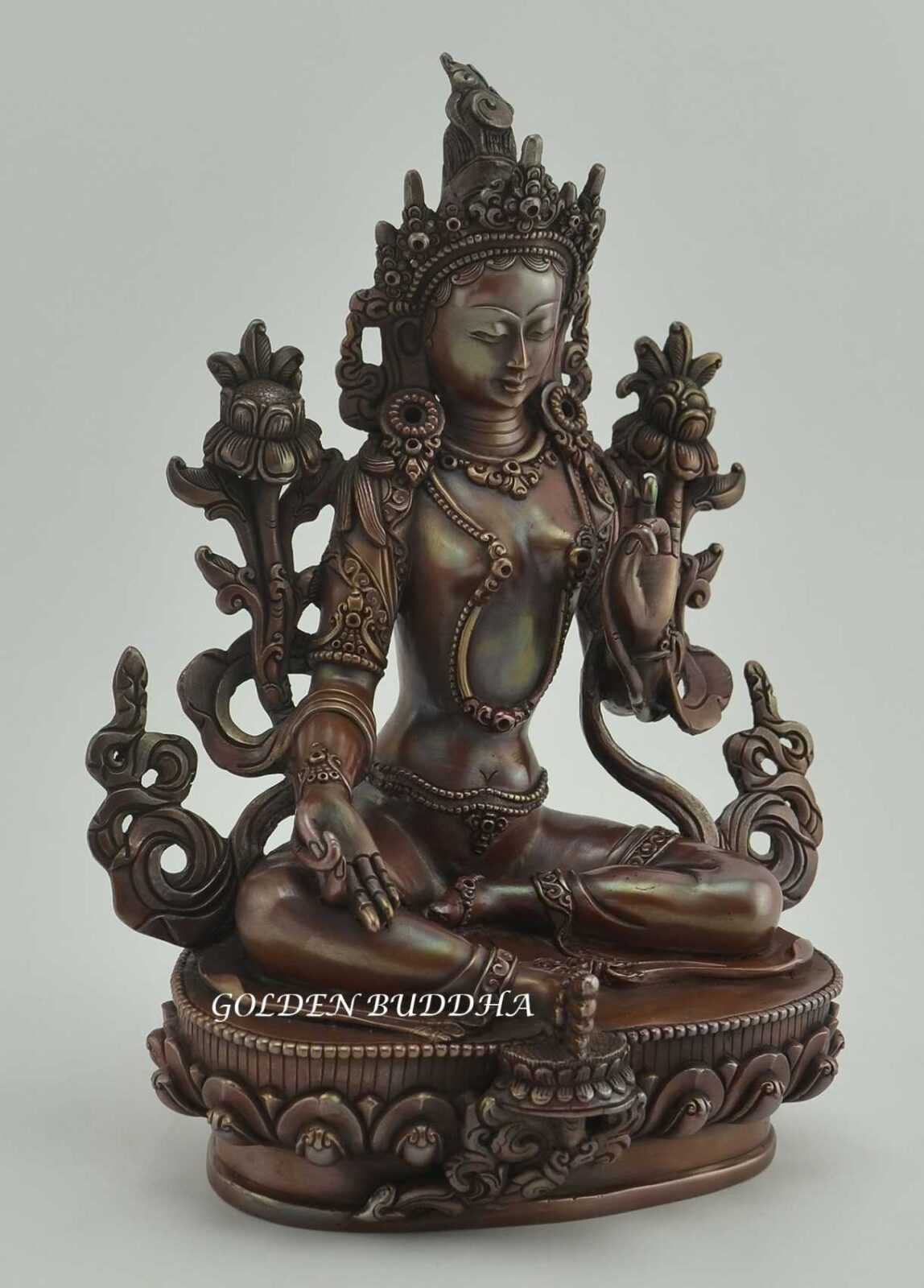

This Oxidized Green Tara statue was handcrafted from copper alloy in Patan, Nepal, by a master Newar artisan using the traditional lost wax casting method that has distinguished Himalayan sculpture for centuries. Finished with a rich antiquated oxidized patina, the statue displays warm copper tones accented by naturally varied highlights that emphasize every carefully sculpted contour. The crown, jewelry, flowing scarves, lotus throne, and robe borders have all been individually finished by hand, giving the sculpture the appearance of an heirloom monastery piece. Upon request, our artisans can also embellish the Bodhisattva crown and ornaments with genuine turquoise and red coral stones at no additional charge before shipment.
Green Tara, known throughout Tibet as Jetsun Dolma, is revered as the female embodiment of enlightened compassion in action. Unlike forms of compassion that remain purely contemplative, Green Tara responds immediately whenever beings encounter fear, danger, illness, uncertainty, or obstacles on the spiritual path. Her dynamic posture and welcoming expression remind practitioners that enlightened compassion is never passive—it continually acts for the welfare of others. Learn more about Green Tara’s mantra and practice in our complete Tara guide.
Oxidized Green Tara Statue Symbolism
This Oxidized Green Tara statue portrays the goddess seated in the traditional lalitasana, or posture of royal ease. Her left leg remains folded in meditation while her right leg extends gracefully forward, resting upon a small lotus that rises from the throne. This distinctive posture symbolizes her constant readiness to leave meditation instantly whenever sentient beings call upon her assistance. It is one of Green Tara’s defining characteristics and distinguishes her from many other Bodhisattvas.
Her lowered right hand displays the Varada mudra, the gesture of generosity and compassionate giving. Rather than promising only material blessings, this mudra represents Tara’s willingness to bestow protection, wisdom, courage, favorable conditions for Dharma practice, and ultimately liberation itself. Her raised left hand forms the Vitarka mudra, symbolizing the transmission of enlightened teachings while simultaneously offering reassurance and refuge to practitioners.
Rising gracefully beside both shoulders are two fully opened utpala lotus blossoms, each supported by elegantly carved stems. The blue utpala lotus has long symbolized purity, wisdom, and spiritual awakening within Tibetan Buddhism. Growing from muddy water yet blossoming untouched above its surface, the lotus reminds practitioners that enlightenment develops within ordinary life without becoming stained by worldly confusion. The fully opened blossoms depicted on this sculpture emphasize the complete flowering of compassion and wisdom.
The Bodhisattva wears an elaborate five-point crown, circular earrings, layered necklaces, bracelets, armbands, and finely engraved garments appropriate to her enlightened Sambhogakaya appearance. Graceful celestial scarves flow outward beside the figure, creating movement while balancing the composition. The robe borders, shoulder covering, lotus throne, jewelry, and ornamental details have all been carefully hand engraved before the oxidized finish was applied.
Traditional Newar Craftsmanship
Each sculpture begins as an individually modeled wax figure before being transformed through the traditional lost wax casting process into copper alloy. After casting, master craftsmen spend many additional hours refining every surface by hand, engraving the robe borders, lotus petals, crown ornaments, jewelry, and decorative motifs before applying the antiquated oxidized finish. Because every statue is individually finished, subtle variations make each piece unique while preserving strict adherence to traditional Himalayan Buddhist iconography.
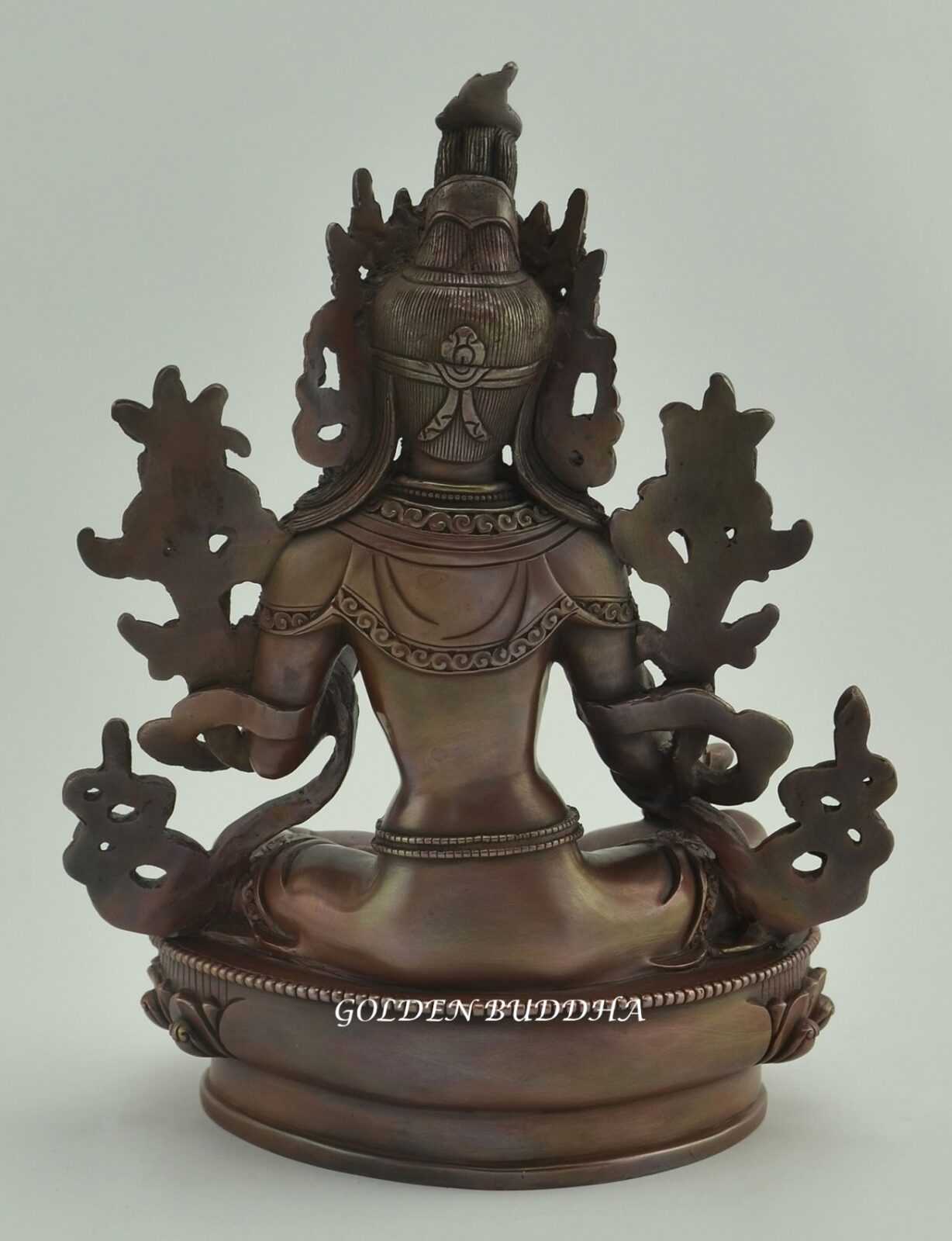
The single lotus throne beneath Green Tara features a finely beaded upper rim above carefully carved lotus petals that encircle the pedestal. The oxidized finish naturally settles within the recessed carving, creating visual depth that highlights the precision of the artisan’s work. Viewed from behind, the sculpture continues this careful craftsmanship with engraved garment borders, flowing scarves, and a beautifully modeled hair arrangement secured beneath the tiered topknot.
Green Tara, Chenrezig and Manjushri Statue Set
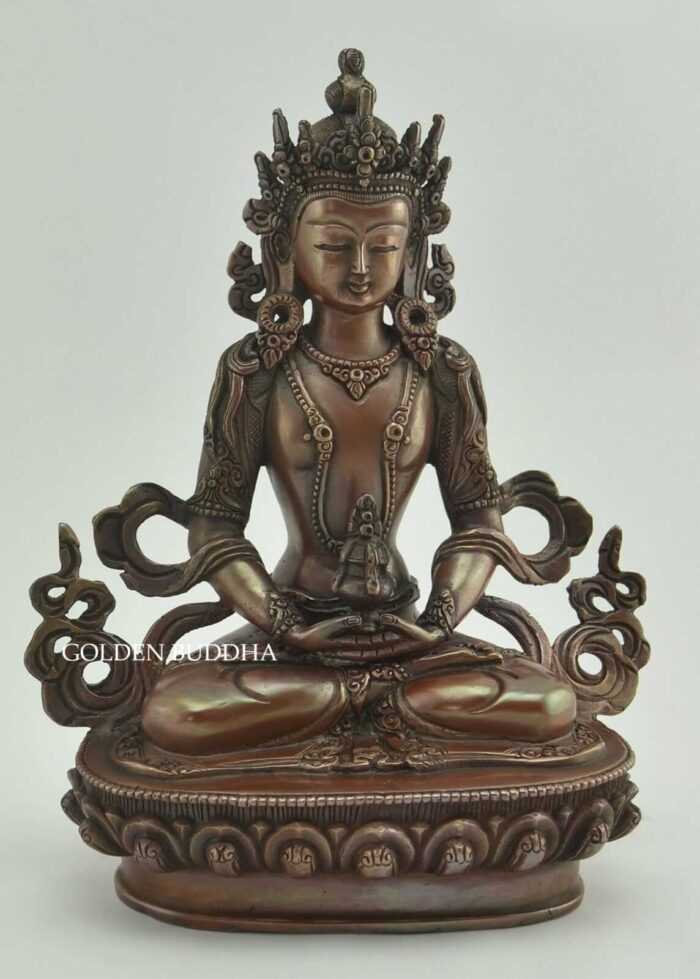
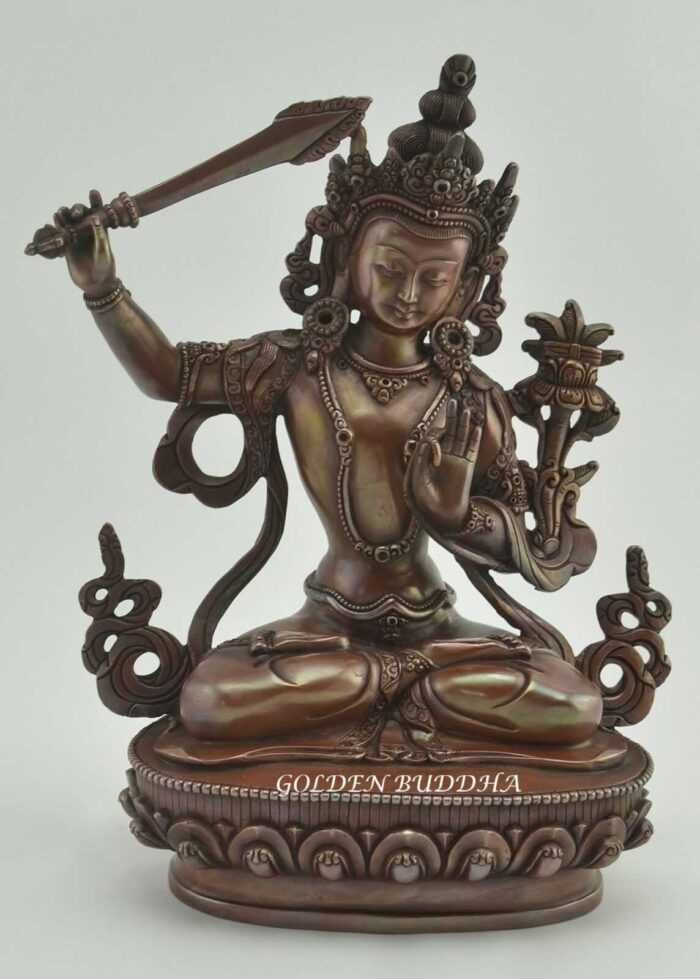
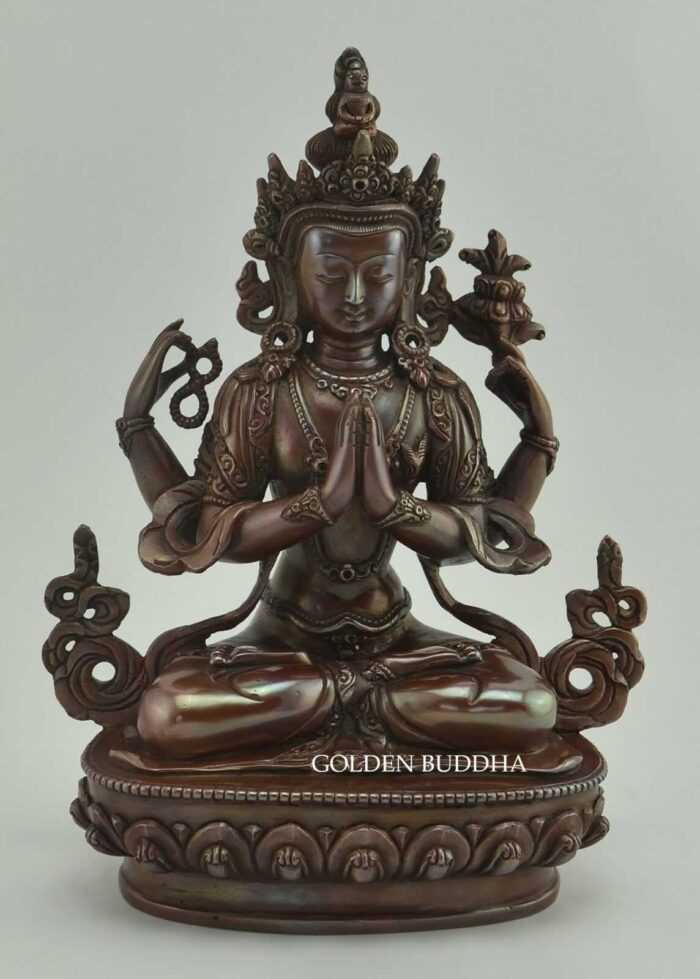
This Oxidized Green Tara statue creates an exceptional three-statue arrangement when displayed together with the matching Oxidized Chenrezig statue and Oxidized Manjushri statue. All three sculptures were created by the same Nepali master artisan using copper alloy with antiquated oxidized finishes, matching engraved robe hemlines, complementary Bodhisattva ornamentation, flowing celestial scarves, and beautifully proportioned lotus thrones. Together they produce a visually harmonious shrine while maintaining complete iconographic authenticity.
Doctrinally, these three Bodhisattvas represent three complementary dimensions of the Buddhist path. Green Tara embodies swift compassionate activity and the fearless removal of obstacles that prevent spiritual progress. Chenrezig (Avalokiteshvara) represents boundless compassion directed equally toward every sentient being. Manjushri embodies transcendent wisdom, cutting through ignorance with the Sword of Wisdom while illuminating the path toward enlightenment. Displayed together, they symbolize enlightened compassion motivated by wisdom and expressed through immediate compassionate action.
Custom Made Green Tara Statues
If you would like a Green Tara sculpture created to your own specifications, our workshop in Nepal also produces custom handmade Tibetan Buddhist statues. We can create larger or smaller sizes while preserving the traditional iconography, including different oxidized finishes, 24K fire gilding, hand-painted faces, gemstone settings, enhanced engraving, monastery-quality lotus thrones, and matching shrine sets suitable for home practice, temples, or Dharma centers.
Many collectors choose to commission Green Tara together with the matching Chenrezig statue and Manjushri statue so all three sculptures share identical proportions, finishes, lotus thrones, and artistic style. The resulting shrine beautifully expresses three inseparable enlightened qualities: Green Tara’s swift compassionate action, Chenrezig’s limitless compassion for all beings, and Manjushri’s perfect wisdom that guides compassionate activity toward genuine liberation.
Authentic, Handmade in Nepal
Every statue and ritual item is handcrafted in Patan, Nepal, using traditional lost wax casting and comes with a certificate of authenticity issued by Nepal's Department of Archaeology, verifying its materials, technique, and origin.