
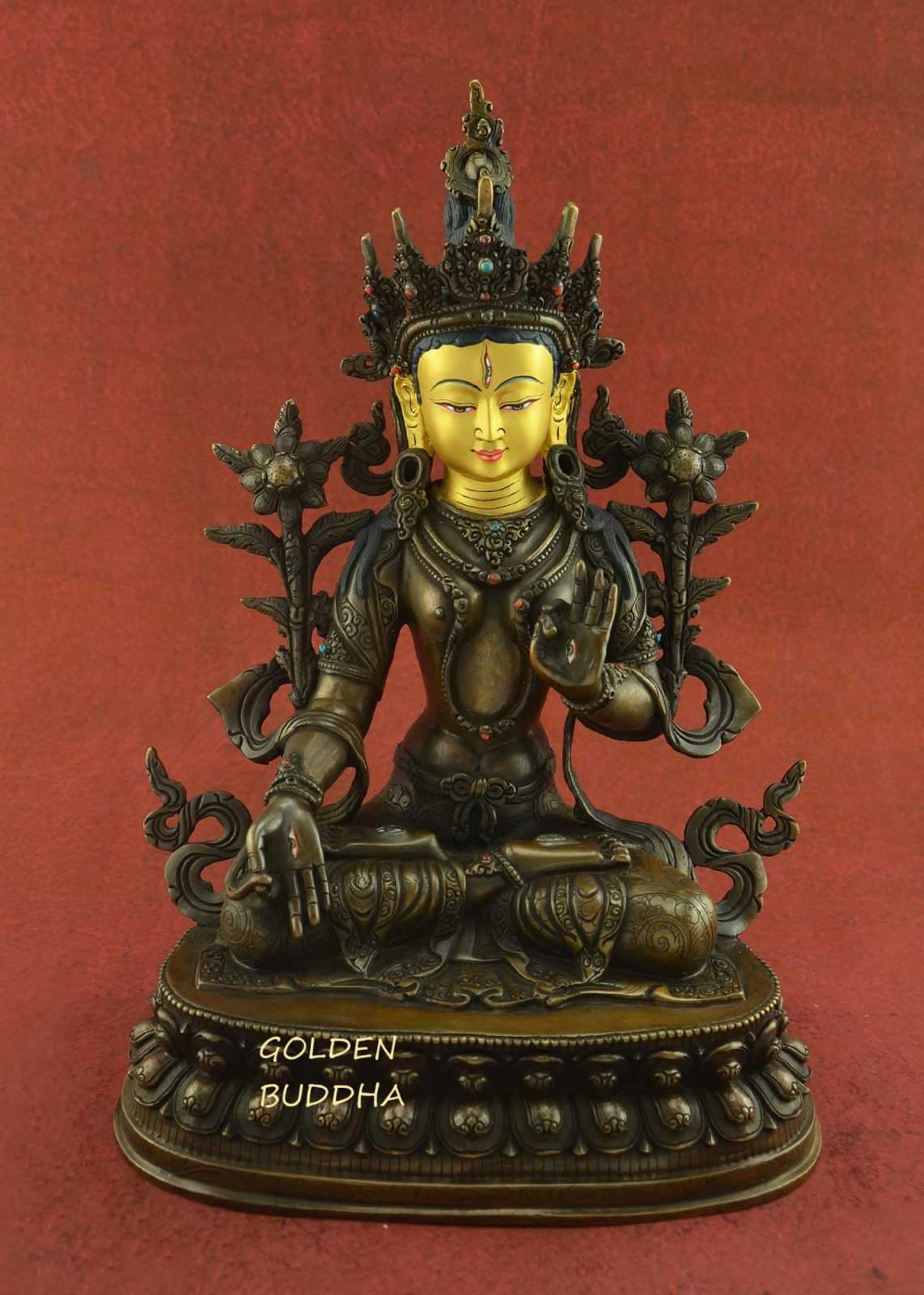
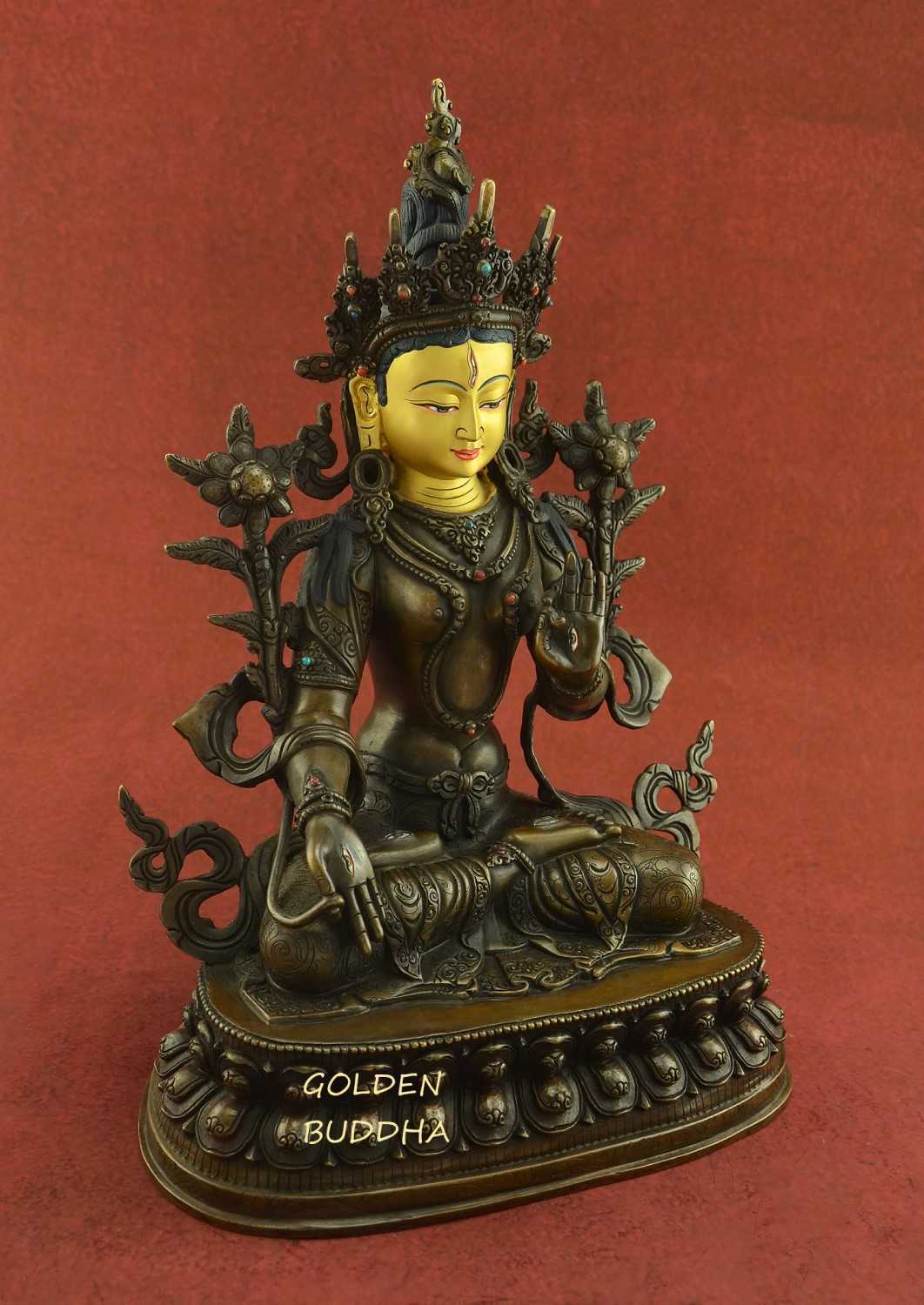
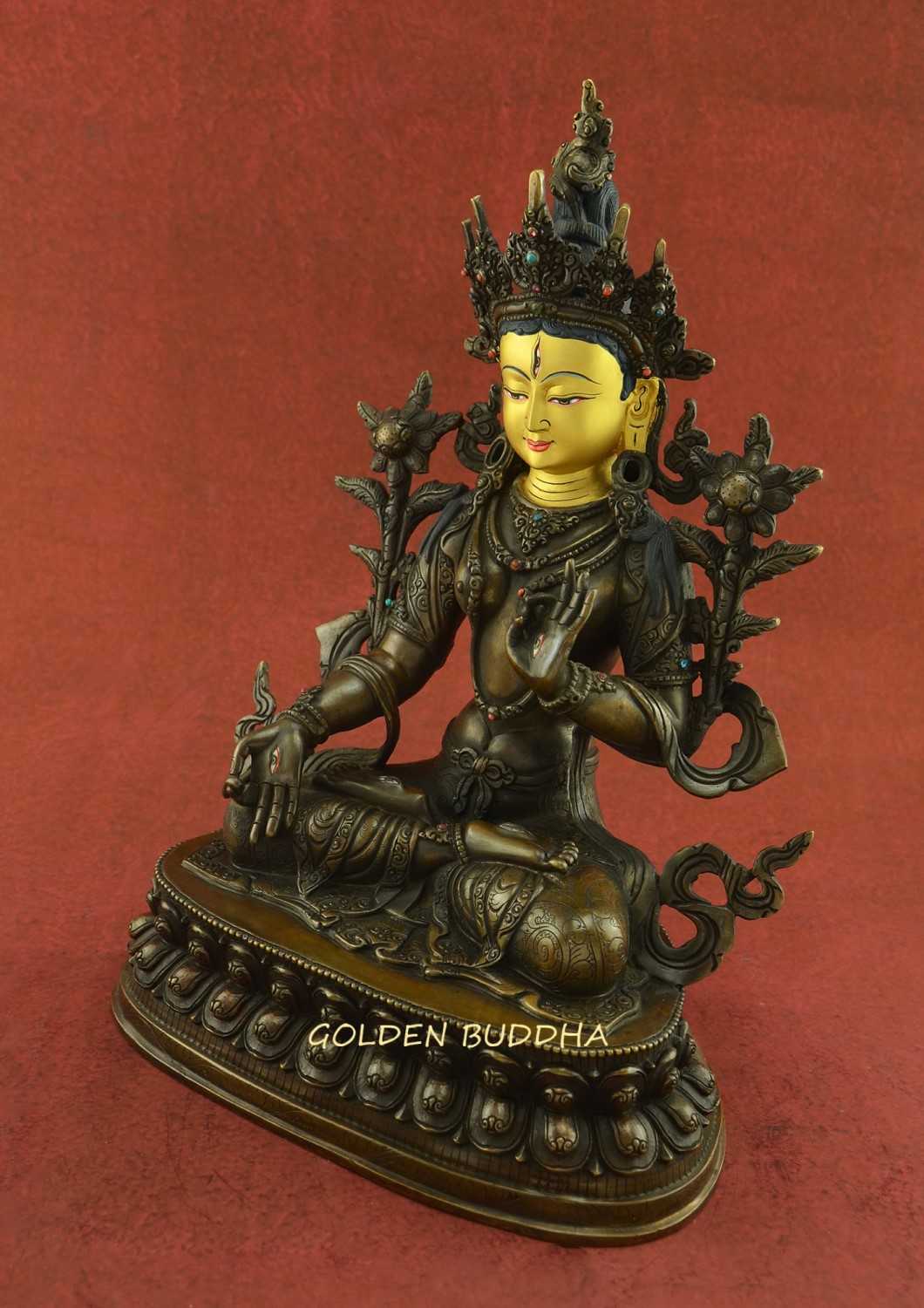


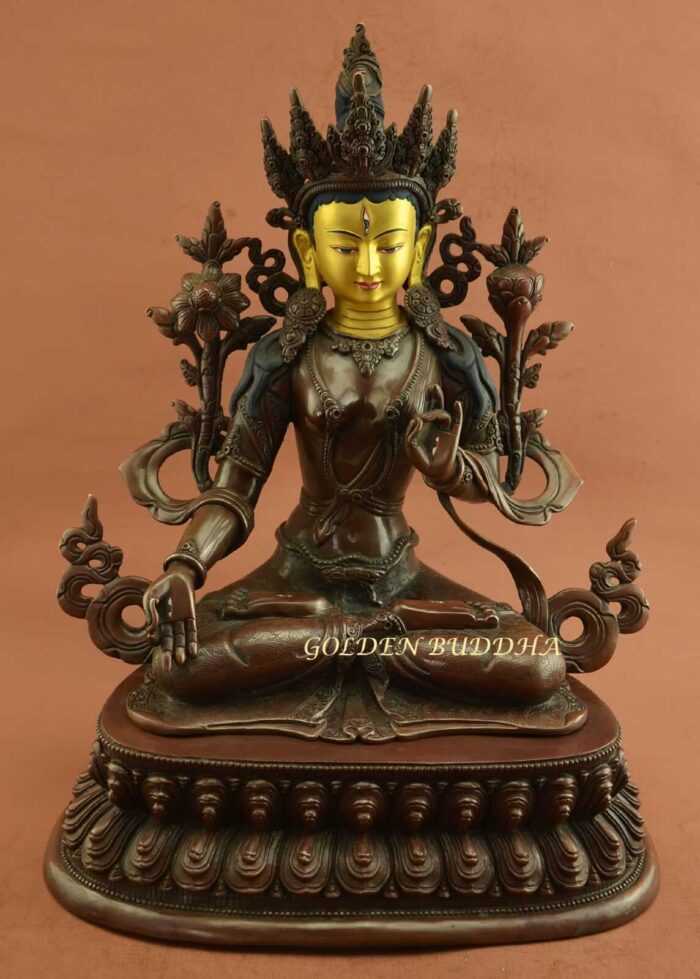
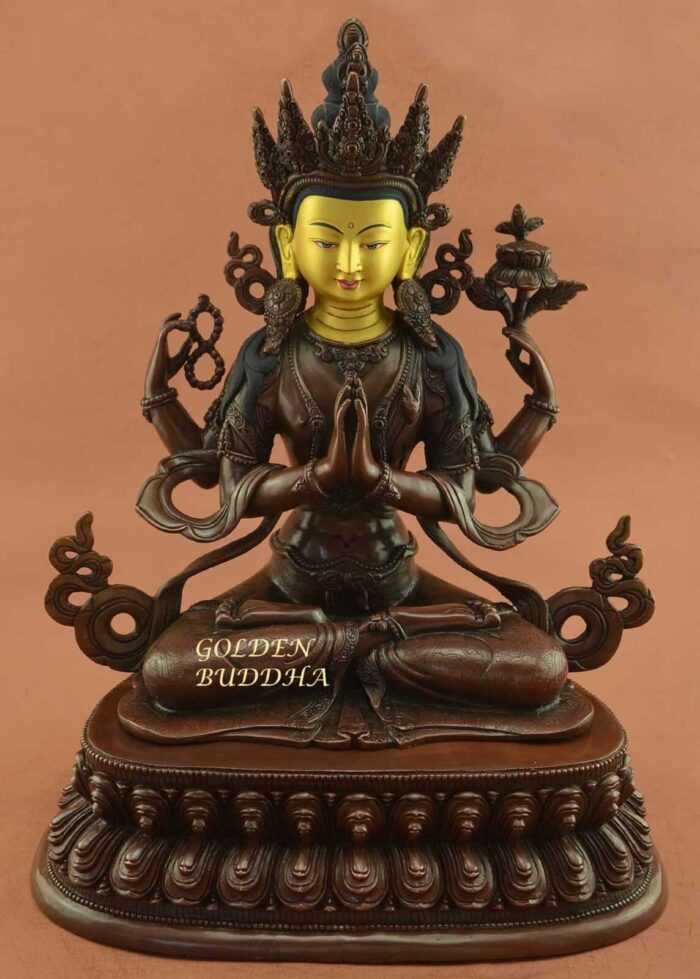
A beautifully engraved statue featuring a luminous real gold-painted face emerging from a deep oxidized copper finish gives this 13.25″ antiquated White Tara sculpture an especially peaceful and contemplative presence. Handcrafted from copper alloy in Patan, Nepal, the sculpture combines the restrained beauty of an antiquated patina with carefully placed turquoise and red coral stones already embedded throughout the Bodhisattva crown and jewelry. The artisan used the traditional lost wax sculpting method to preserve the fine details of Tara’s crown, earrings, necklaces, engraved garments, celestial scarves and double lotus pedestal. Her dark copper body allows the radiant face and seven watchful eyes to become the natural focal point of the sculpture.
White Tara is also known in Tibet as Dolkar and as Cintachakra, the “wish-fulfilling wheel.” She is revered as a peaceful embodiment of compassion, healing and longevity. According to Tibetan Buddhist tradition, Tara arose from the compassion of Avalokiteshvara after a tear fell from his eye as he witnessed the suffering of sentient beings. She later vowed to continue appearing in female form while working for their liberation. Read more about Tara’s origin and sacred meaning, or visit our White Tara statue FAQ for answers about her iconography, practice and traditional placement on a Buddhist altar.
Antiquated White Tara Sculpture Features
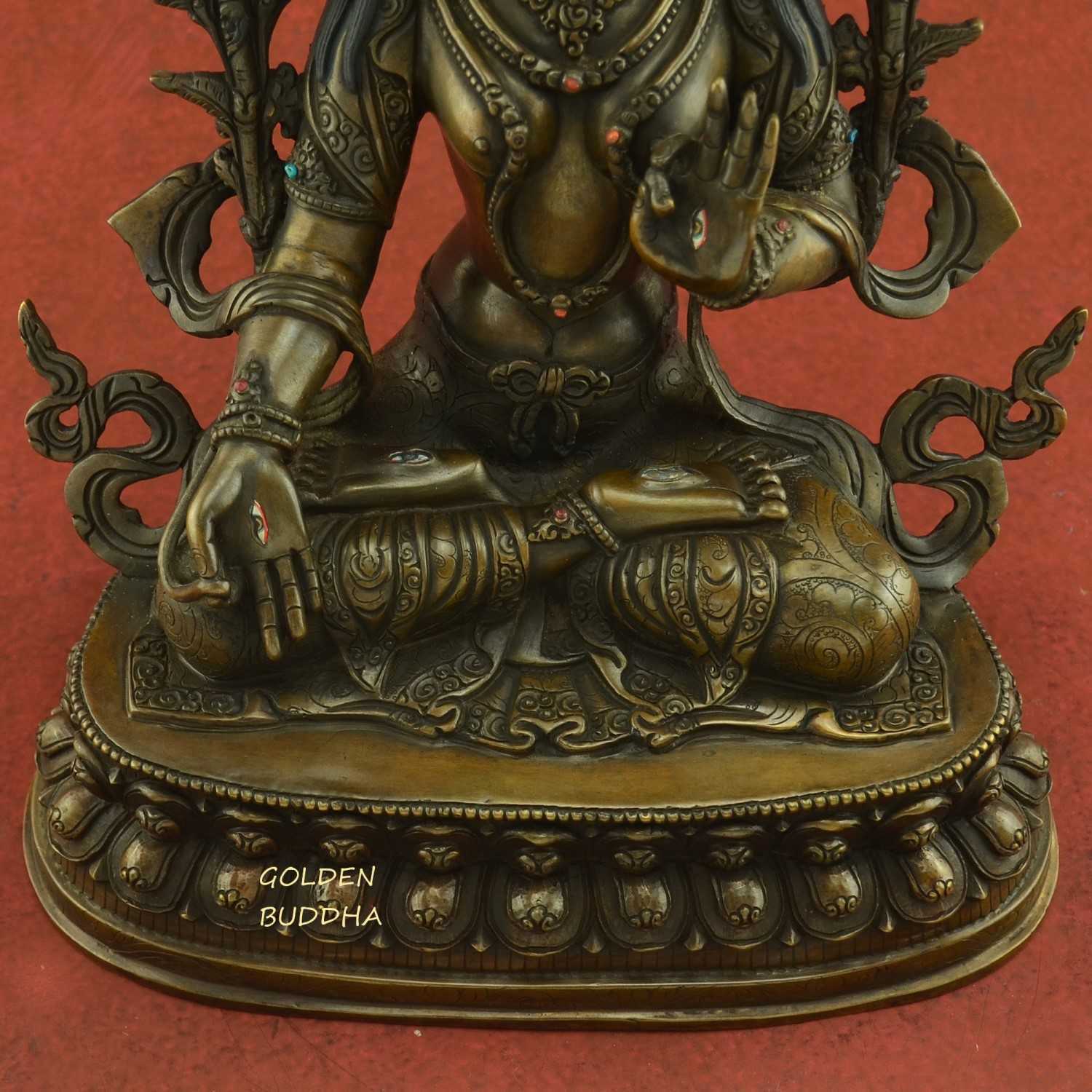
The seven eyes are the defining attributes of this antiquated White Tara statue. In addition to her two natural eyes, she has an upright eye of wisdom on her forehead and an eye in each palm and sole. Together, these eyes represent compassionate awareness extending in every direction. Tara does not merely observe suffering; she perceives its physical, emotional and spiritual causes and responds with wisdom appropriate to the needs of each being.
Her right hand extends over the knee in the Varada mudra, the gesture of generosity, blessings and compassionate giving. The eye visible in her open palm reinforces her ability to unite compassionate activity with insight. Her raised left hand offers reassurance and protection while gently holding the stem of a lotus blossom. A second lotus rises beside the opposite shoulder, creating a balanced floral frame around the crown and face. Both blossoms are open in the photographs, symbolizing the awakened qualities that have reached fruition.
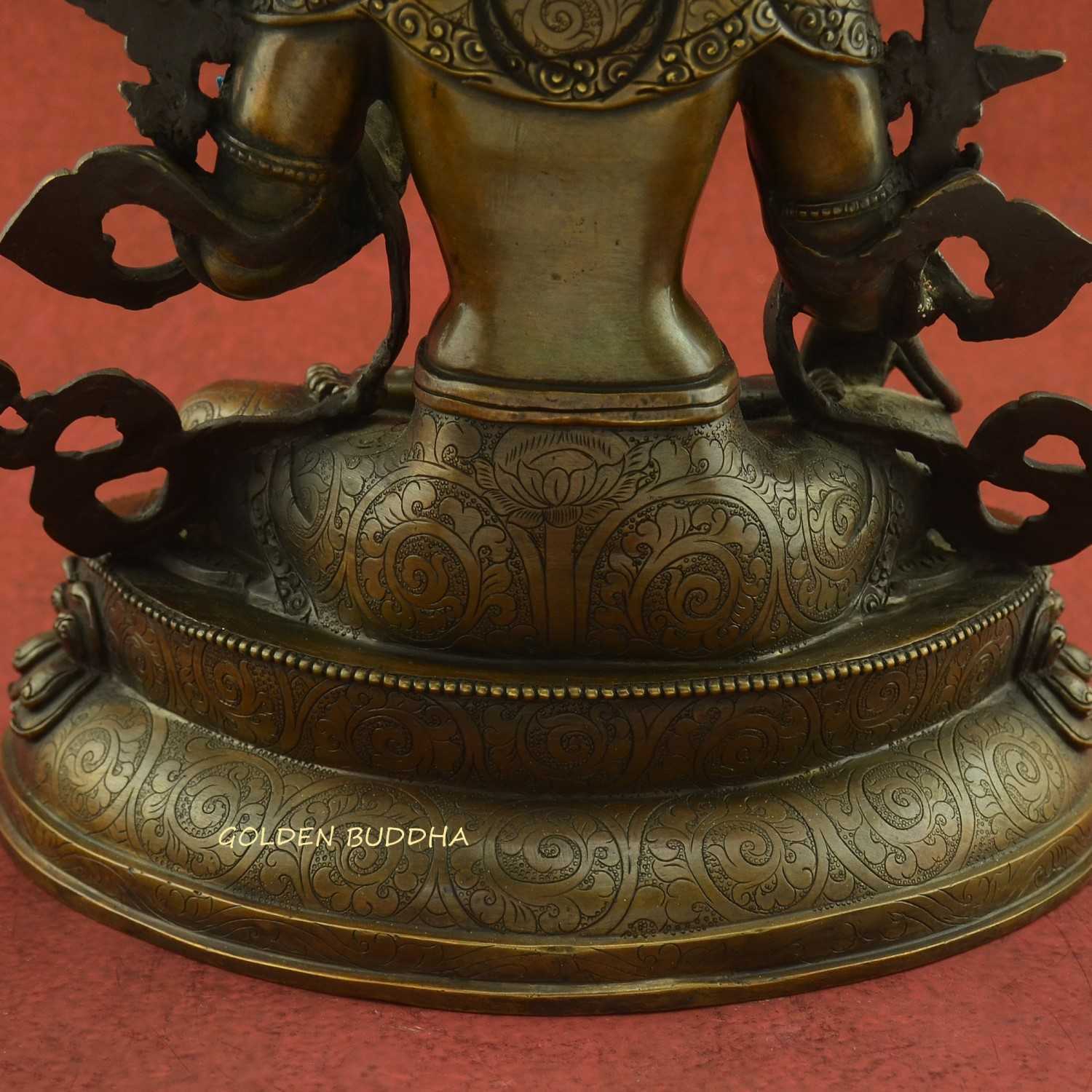
White Tara sits in full lotus posture upon a substantial double lotus pedestal. Fine floral and scrolling engravings cover the dhoti, shoulder covering and reverse of the pedestal, while the celestial scarves form open loops beside her arms and terminate in elegant curling flourishes. The crown, necklaces, armbands and other ornaments are already accented with turquoise and red coral stones, adding restrained color without overwhelming the rich antiquated surface.
Antiquated White Tara Sculpture for Healing and Long Life
White Tara is one of the three principal long-life deities in Tibetan Buddhism, together with Amitayus and Namgyalma. Her practice is associated with healing, serenity, protection from conditions that shorten life and the removal of obstacles that prevent sustained Dharma practice. Longevity is not sought merely for worldly enjoyment; additional time allows practitioners to accumulate merit, cultivate wisdom and benefit other beings. Explore the complementary roles of White Tara, Amitayus and Namgyalma, or compare this sculpture with other finishes in our complete collection of White Tara statues.
White Tara and Chenrezig Matching Statue Pair
This antiquated White Tara statue forms a particularly harmonious altar pair with our 15.25″ four-armed Chenrezig statue. Both sculptures were produced by the same master artisan and share a deep oxidized copper finish, radiant gold-painted face, ornate Bodhisattva crown, engraved garments, flowering lotus stems and a substantial double lotus pedestal. Their compatible proportions and nearly identical artistic treatment allow them to appear as a deliberately commissioned pair rather than two unrelated statues. The pairing is also meaningful in Tibetan Buddhist tradition: White Tara is believed to have arisen from the compassion of Avalokiteshvara, while Chenrezig embodies that universal compassion directly. Displayed together, the two sculptures represent compassion expressed through healing, protection and long life.
Custom Antiquated White Tara Statues
Collectors, Dharma centers and practitioners may also commission a White Tara sculpture through our custom Tibetan Buddhist statue service. A custom statue can be created in a preferred size and finished in oxidized copper, fire gilded in 24K pure gold, or produced with a combination of gilded and antiquated surfaces. The crown and jewelry may be designed with turquoise, coral or other appropriate stone embellishments, and a coordinated Chenrezig companion statue can be commissioned at the same time to ensure consistent scale, pedestal design and workshop finish. Because each wax model is sculpted individually and destroyed during casting, every completed commission remains a distinctive work of handmade Himalayan Buddhist art.
Authentic, Handmade in Nepal
Every statue and ritual item is handcrafted in Patan, Nepal, using traditional lost wax casting and comes with a certificate of authenticity issued by Nepal's Department of Archaeology, verifying its materials, technique, and origin.
Reviews
There are no reviews yet.