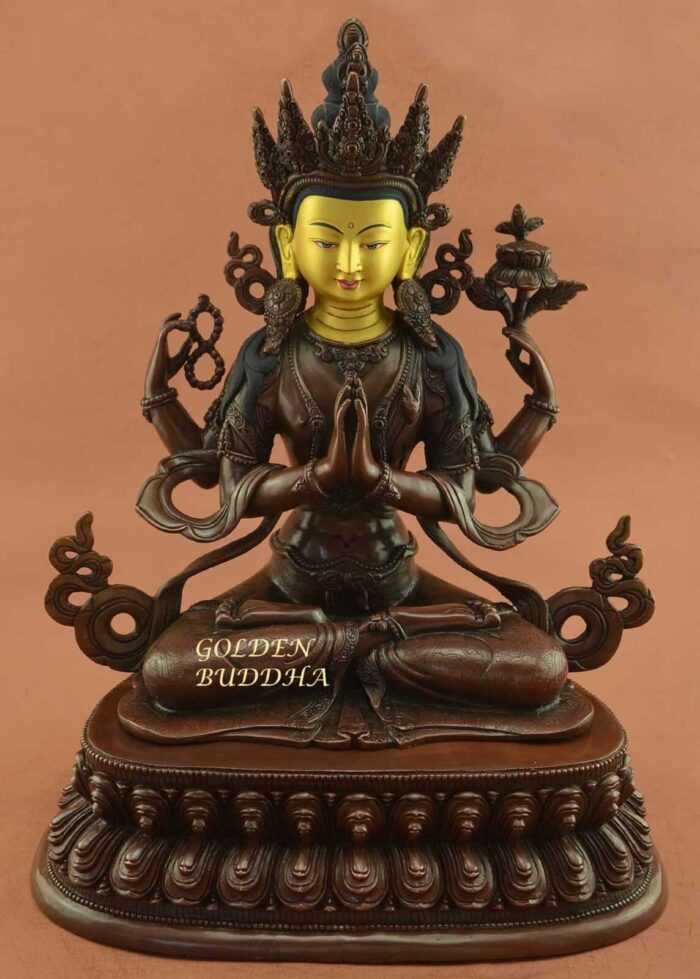

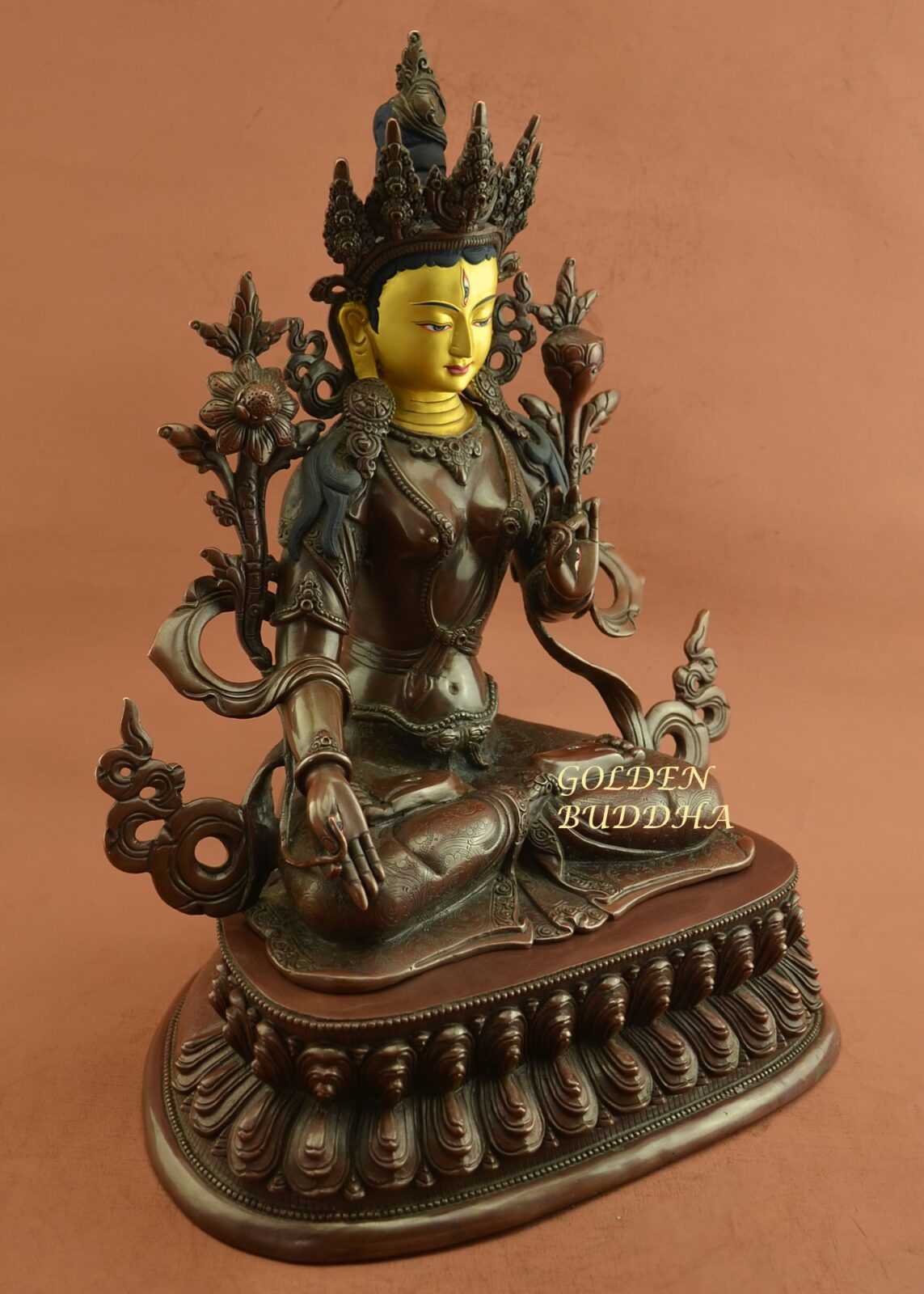
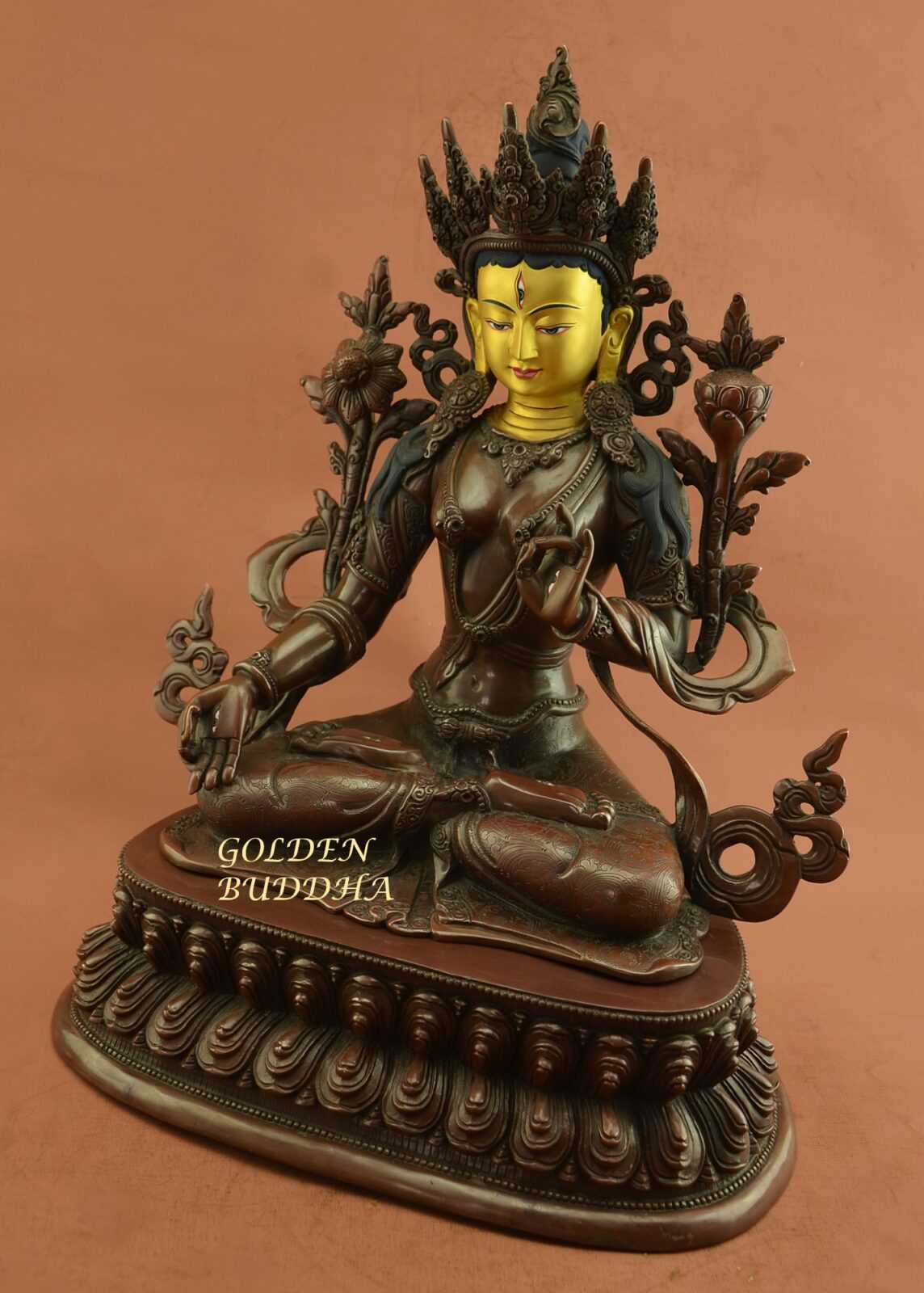
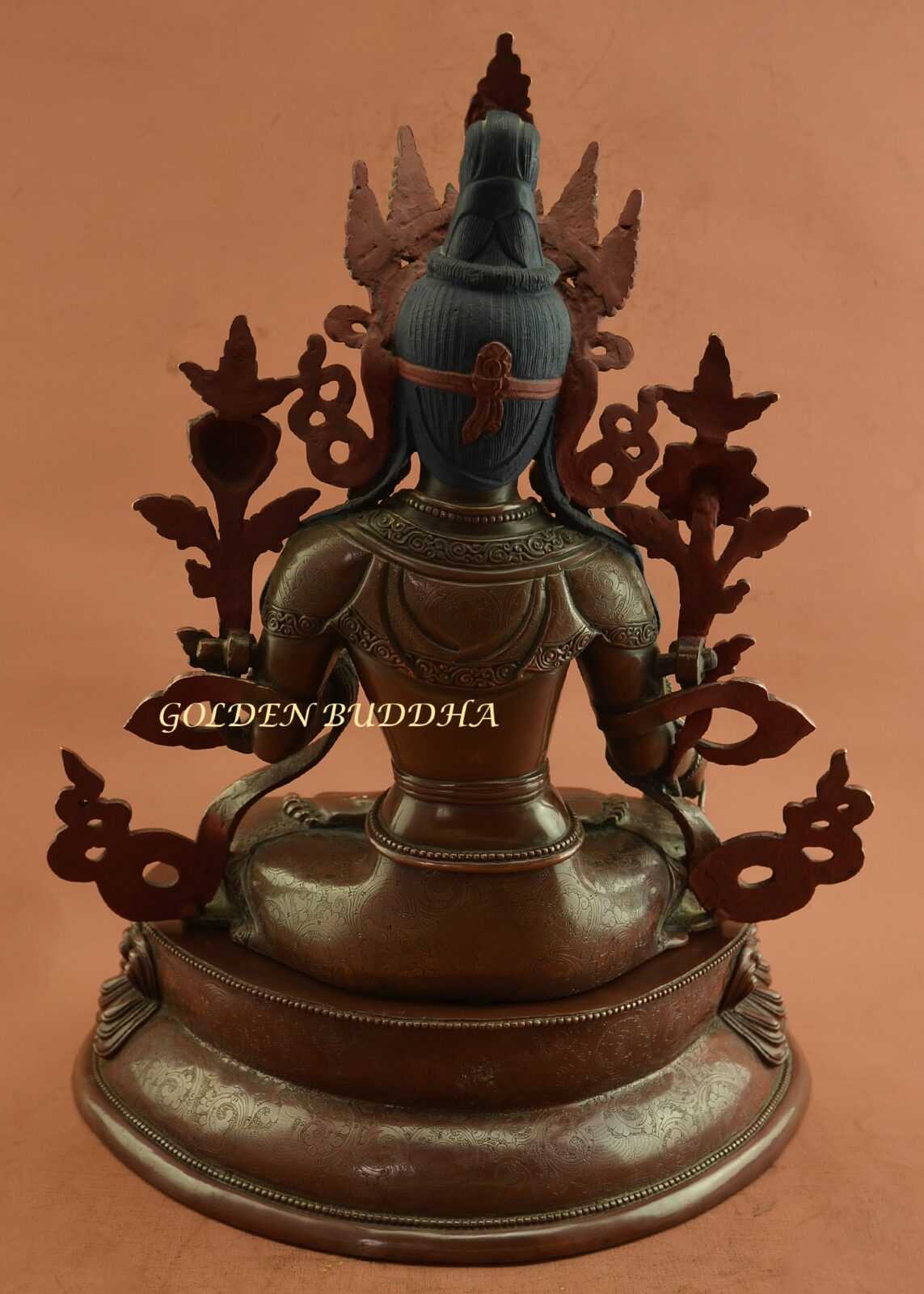
A luminous gold-painted face rises from the deep antiquated surface of this 15.5″ beautiful Dolkar sculpture, creating a dramatic focal point within an otherwise restrained oxidized copper composition. Handcrafted in Patan, Nepal from copper alloy using the traditional lost wax sculpting method, the statue weighs approximately 8 kg and has the substantial presence needed for a dedicated shrine room, meditation space or Buddhist altar. The dark finish allows the engraved jewelry, flowing garments, celestial ribbons and double lotus pedestal to emerge gradually as the sculpture is viewed from different angles.
Dolkar is the Tibetan name for White Tara, the female Buddha associated with compassion, healing, serenity and long life. This beautiful Dolkar sculpture is distinguished by her seven eyes: two ordinary eyes, an upright eye of wisdom on the forehead, one eye in each palm and one on the sole of each foot. Together, the seven eyes symbolize compassionate awareness extending in every direction. Nothing remains outside the field of her attention, making Seven-Eyed Tara an especially meaningful figure for practitioners seeking protection, longevity and the wisdom to recognize suffering clearly.
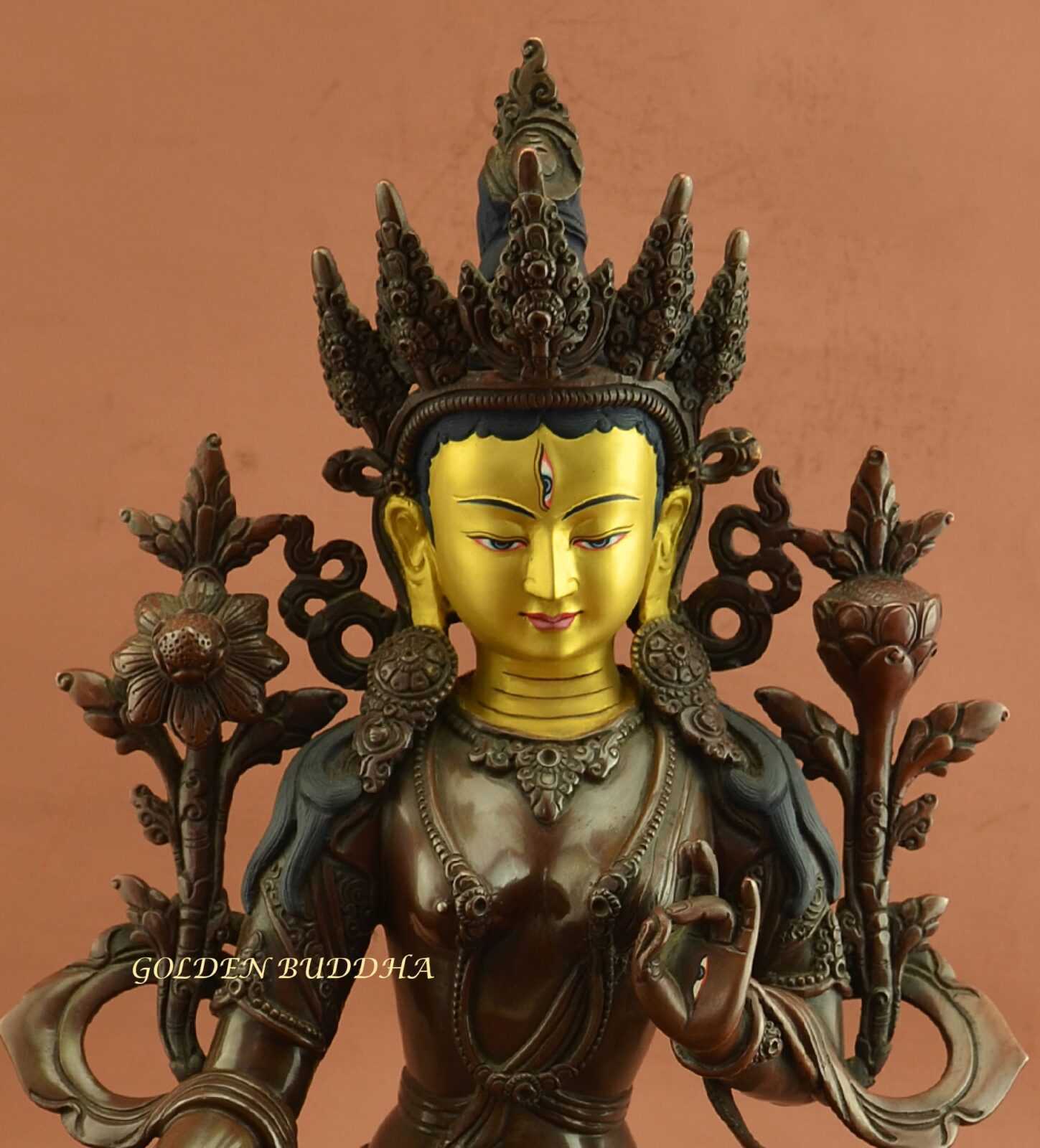
The artisan painted the face in gold and carefully defined the eyes, brows, urna and lips with contrasting pigments. Her dark blue-black hair is arranged behind an elaborate Bodhisattva crown and gathered into a tall royal topknot. The crown and jewelry are presently shown without prominent stone inlays. At the buyer’s request, selected areas may be embellished with turquoise and red coral stones before shipping, allowing the adornments to stand out more vividly against the antiquated copper surface.
Beautiful Dolkar Sculpture Features
This beautiful Dolkar sculpture sits in full lotus posture upon a broad double lotus pedestal. The pedestal is arranged in two distinct registers of deeply modeled petals, framed by beaded borders and supported by a gently flared base. Her right hand extends over the knee in the Varada mudra, the boon-granting gesture associated with generosity, compassion and the bestowal of blessings. The eye in the open palm emphasizes that Tara’s generosity is guided by wisdom rather than offered without discernment.
Her raised left hand gently holds the stem of a lotus between the joined fingers in a teaching gesture closely associated with the Vitarka mudra. Two lotus stems rise beside her body: a fully opened blossom appears above her right shoulder, while a closed bud rises above her left. The open flower can be understood as awakened wisdom brought to fruition, while the unopened bud suggests the enlightened potential that remains present within beings who are still progressing along the Dharma path. Flowing celestial scarves pass around her arms and end in balanced scrolls beside the throne, adding movement to the otherwise composed posture.
White Tara is also known as Cintachakra, the “wish-fulfilling wheel,” and belongs to the traditional group of three longevity deities together with Amitayus and Namgyalma. Her practice is commonly associated with extending the conditions that support spiritual development rather than merely prolonging life for its own sake. Learn more about White Tara, Amitayus and Namgyalma as the three long-life deities, or explore Tara’s origins and compassionate vow.
Beautiful Dolkar & Chenrezig Companion Statues
This beautiful Dolkar sculpture was created by the same master Newar artisan who produced our matching 15.25″ Chenrezig Bodhisattva statue. Sharing nearly identical proportions, antiquated oxidized copper finishes, gold-painted faces and complementary lotus pedestals, the two sculptures display exceptional visual harmony when placed together on a home shrine or meditation altar. The pairing also reflects one of the most meaningful relationships in Tibetan Buddhism. According to tradition, White Tara arose from a compassionate tear shed by Chenrezig (Avalokiteshvara) as he looked upon the suffering of sentient beings. Displaying these statues together beautifully symbolizes the union of infinite compassion embodied by Chenrezig and the healing, longevity and maternal wisdom embodied by Dolkar, creating a shrine that is both artistically balanced and spiritually significant.
Custom Made Dolkar and Chenrezig Statues
Practitioners, collectors and Dharma centers may also commission a custom made Dolkar statue or a coordinated Dolkar and Chenrezig altar set from our master artisans in Patan. A custom order may specify the dimensions, copper-alloy finish, lotus pedestal, facial treatment, crown design and level of engraving. Available surface options include an antiquated oxidized copper finish, selective gilding or fire gilding in genuine 24K gold using traditional techniques. Turquoise, coral and other suitable stones may also be incorporated into the crown and jewelry. Commissioning the figures together allows their heights, body proportions, throne designs and finishes to be planned as a unified ensemble while preserving the correct iconography of each deity.
Authentic, Handmade in Nepal
Every statue is handcrafted in Patan, Nepal, using traditional lost wax casting and comes with a certificate of authenticity issued by Nepal’s Department of Archaeology, verifying its materials, technique, and origin.