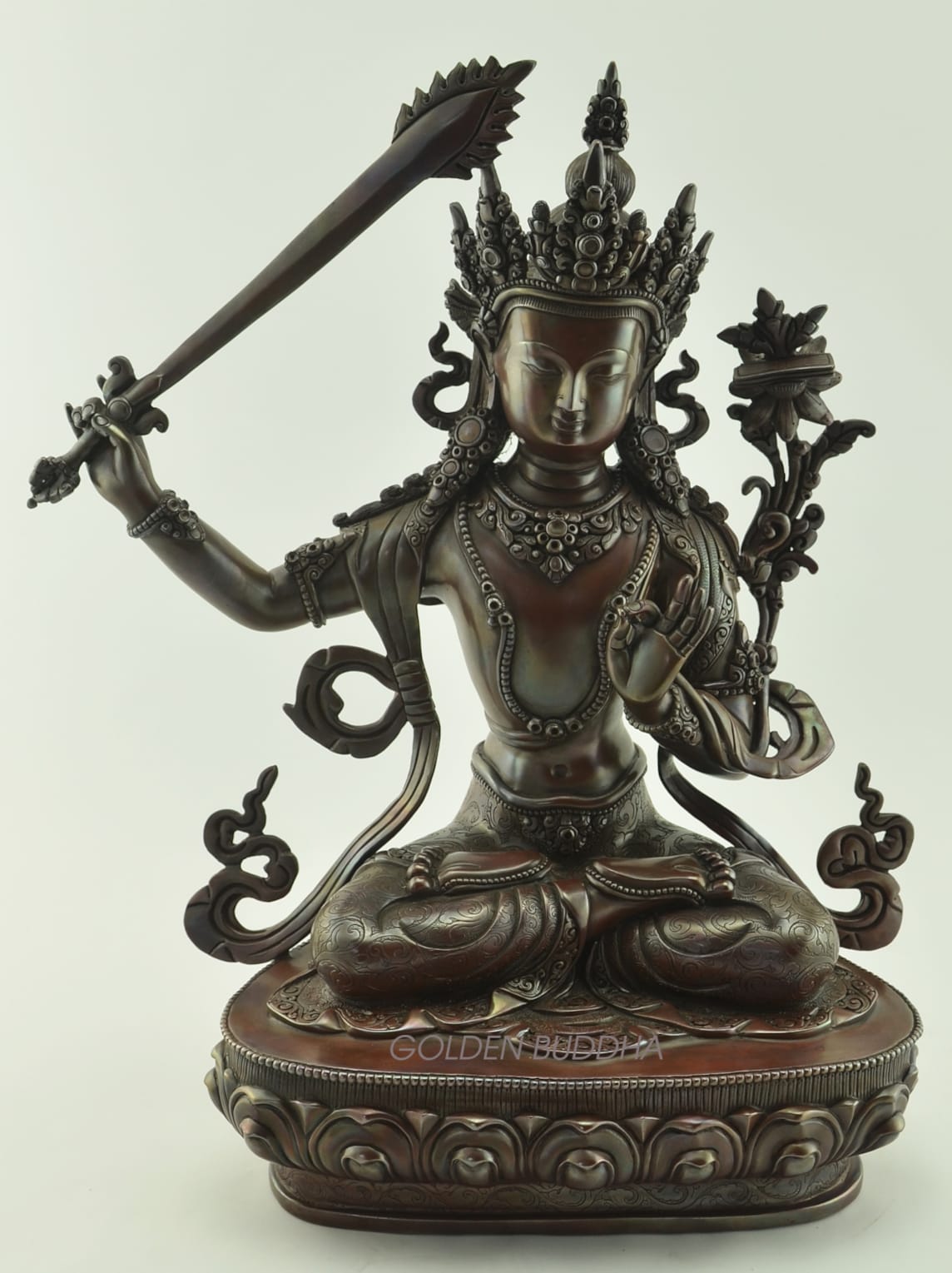


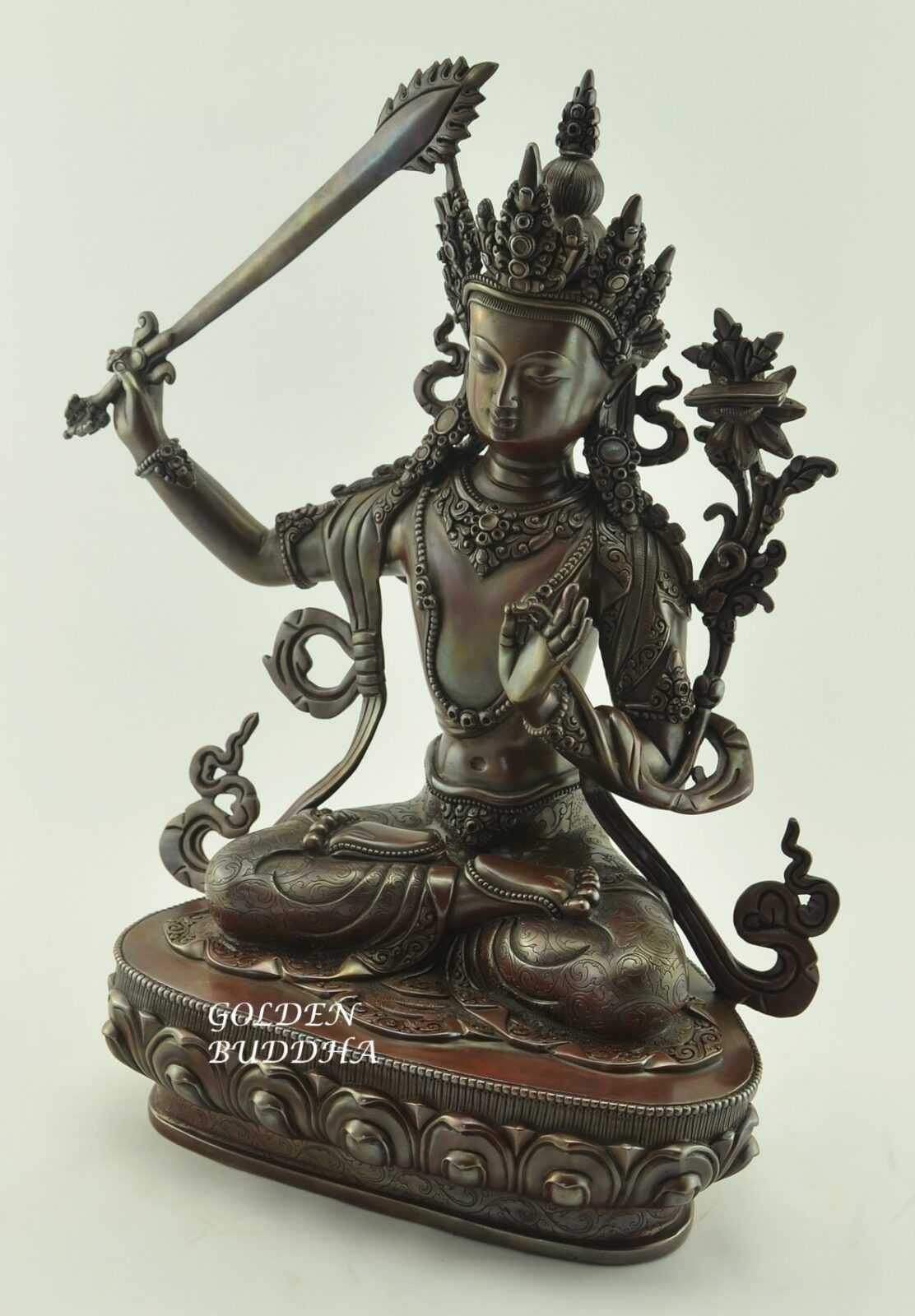

The Nepali master artisan created our beautifully antiquated Manjushri sculpture using the traditional lost wax sculpting method. As a result, there are fine detailed engravings covering the robe and pedestal — an unusually rich level of hand carved finishing for an antiquated piece, continuing fully in the round across the back. Additionally, the statue features a hand carved bodhisattva crown and jewels. At the request of the buyer, we would be glad to adorn the crown and jewels with turquoise and red coral stones before delivery. The statue will certainly stand out and inspire all those who see it.
Manjushri was first introduced in the Prajnaparamita Sutra as the Bodhisattva who symbolizes the wisdom of the Buddha. As a result, this book of wisdom is featured resting inside the lotus blossoming over his left shoulder. Indeed, our Manjushri sculpture is strongly affiliated with transcendental wisdom. However, his most traditional symbol of the highest wisdom is the flaming sword that he wields above his right shoulder. To learn more about the symbolism of the flaming sword and the Prajnaparamita scripture, see our guide to Manjushri statue meaning and symbolism.
Antiquated Manjushri Sculpture ‒ Special Features
His left hand is held at the chest with the palm turned open toward devotees — a graceful Buddhist hand gesture of teaching and discussion, expressing the transmission of wisdom to those who receive it with sincere heart. Explore the meaning of the many Buddhist hand gestures in our full guide to Buddha statue meaning. The lotus itself is very symbolic in Buddhism: since the lotus flower is very common in Asia, it has become the symbol for enlightenment, and Buddhist devotees who struggle through the sea of samsara use this symbol for inspiration — in the same way that the lotus seed grows from the muddy pond bottom to blossom above the surface in the clean air and sunshine.
Additional features of our antiquated Manjushri sculpture include the elaborate crown and jewels of a Bodhisattva. He is also depicted wearing the ushnisha topknot, necklines, and elongated ears which are the signs of high social status in ancient India. In Vajrayana Buddhism Manjushri is also a meditation deity considered to be a fully enlightened Buddha — one of the Three Protector Bodhisattvas alongside Avalokiteshvara and Vajrapani, and a favored deity for anyone pursuing study or clear insight. Read more in our full guide to the meaning of Manjushri statues.
Manjushri Mantra
Manjushri is also highly associated with the Manjushri Mantra “om arapacana dhih”. The association is so strong that he is also known by the name “Arapacana”. The Tibetan pronunciation has a slight deviation, “om a ra pa tsa na dhih”. The benefits of the mantra will enhance your ability to debate, memorize, read, write, and absorb knowledge. Thus, it may enhance the academic performance of students – try it now “om a ra pa tsa na dhih“.
Shakya Artisans and the Lost Wax Method
This statue was cast by master craftsmen of the Shakya caste of Newar artisans in Patan, Nepal — the same lineage that has supplied Tibetan monasteries with their most important sculpture for over a thousand years. Every piece begins as a hand-sculpted beeswax model, encased in clay, then fired so the wax melts away and molten copper alloy is poured into the resulting mould. The clay is broken, the metal figure is cold-worked by hand — chased, engraved, and refined — before the copper is treated to develop the deep, iridescent antiquated patina you see here. Because each wax model is destroyed in the casting, no two statues from the workshop are ever identical.
Antiquated Manjushri Statue + Three Buddhas
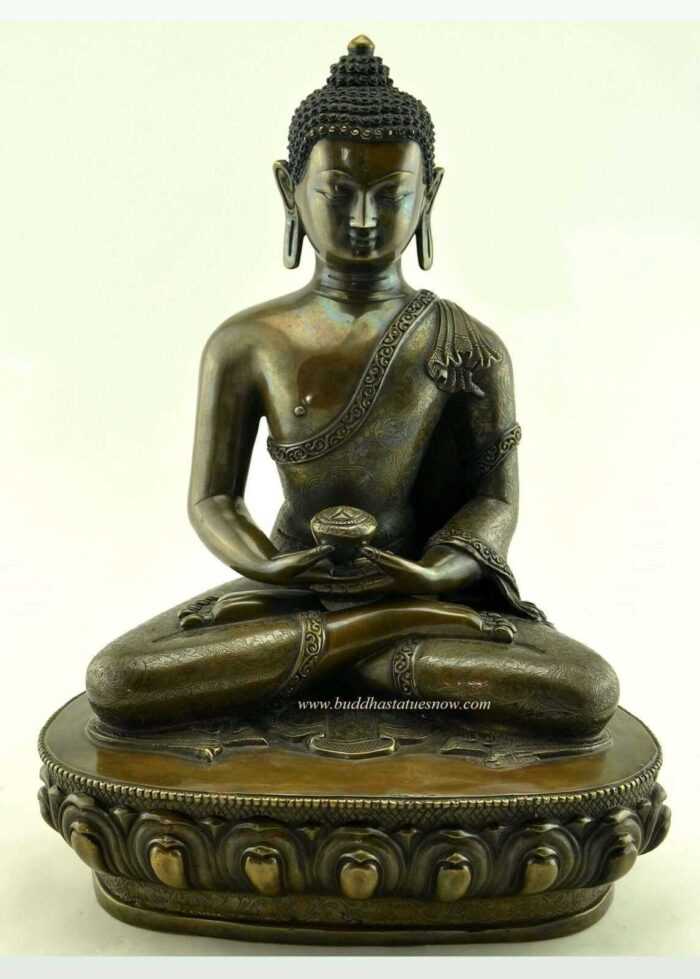
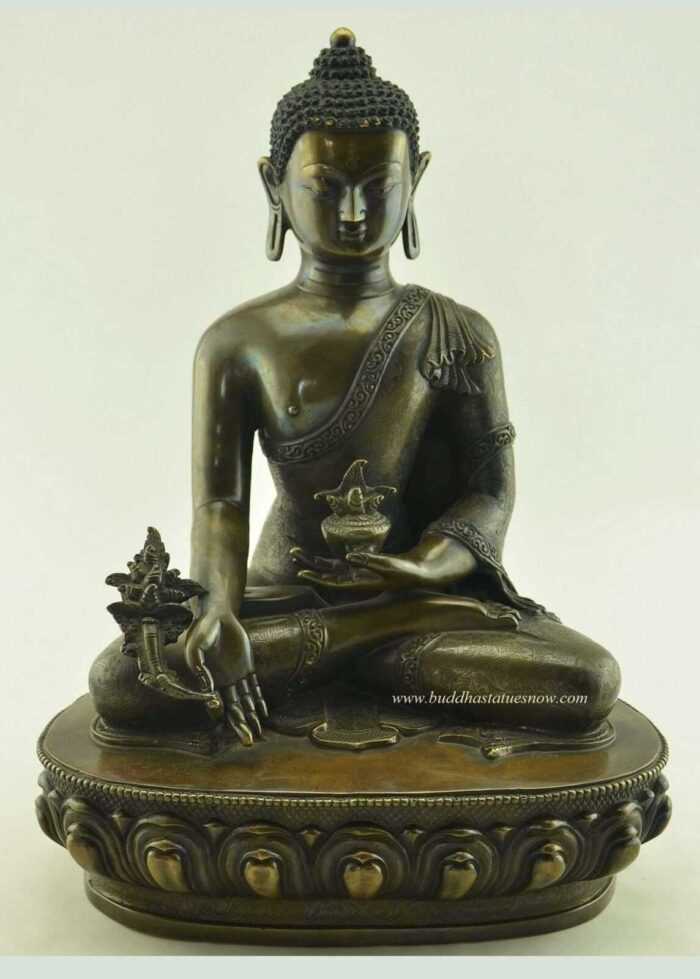
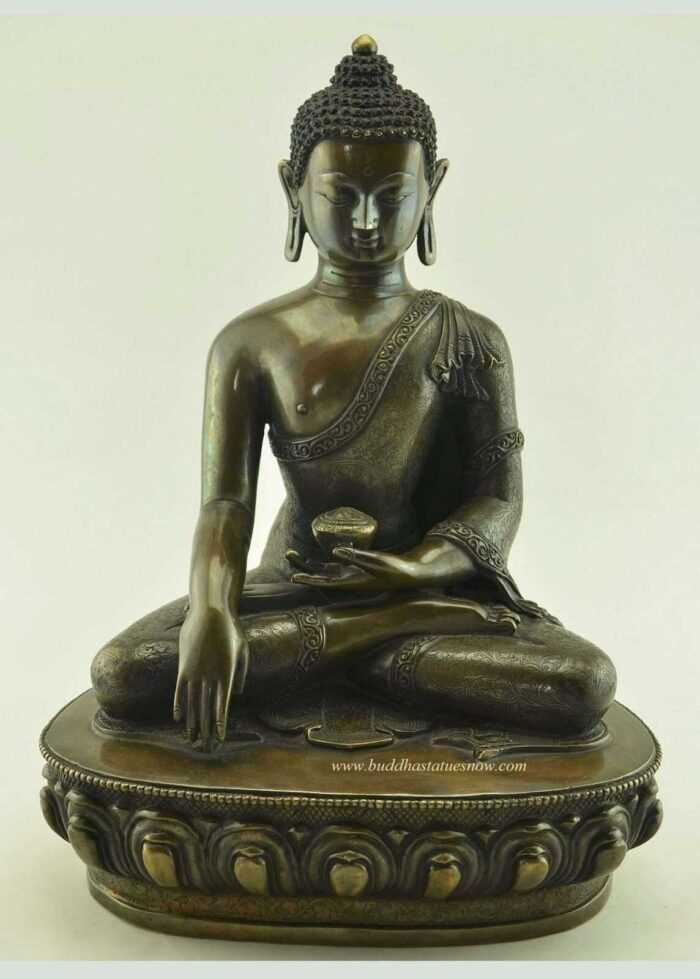
This Antiquated Manjushri Statue can be combined with our matching Shakyamuni Buddha statue, Medicine Buddha Statue and Amitabha Buddha Statue. These four antiquated sculptures were created by the same master artisan and share closely coordinated dimensions, oxidized copper finishes, single lotus pedestals, and engraving styles. Together they form a harmonious altar arrangement representing Shakyamuni as the historical teacher, Medicine Buddha as the embodiment of enlightened healing, Manjushri as the embodiment of transcendental wisdom, and Amitabha as the Buddha of Infinite Light and guide to the Pure Land of Sukhavati.
Custom Orders
If you would prefer this Manjushri in a different size, or with a fully gilded, gold face painted, partly gilded, or silver plated finish rather than the fully antiquated patina, we can commission it directly with the artisan on your behalf. In addition, the statue can be commissioned with Shakyamuni Buddha, Amitabha Buddha and Medicine Buddha as a matching set with coordinated dimensions. identical size, finish and engraving styles. Explore our custom Tibetan Buddhist statues page for the full commissioning process and to see recent custom pieces we have delivered.
Authentic, Handmade in Nepal
Every statue and ritual item is handcrafted in Patan, Nepal, using traditional lost wax casting and comes with a certificate of authenticity issued by Nepal's Department of Archaeology, verifying its materials, technique, and origin.