
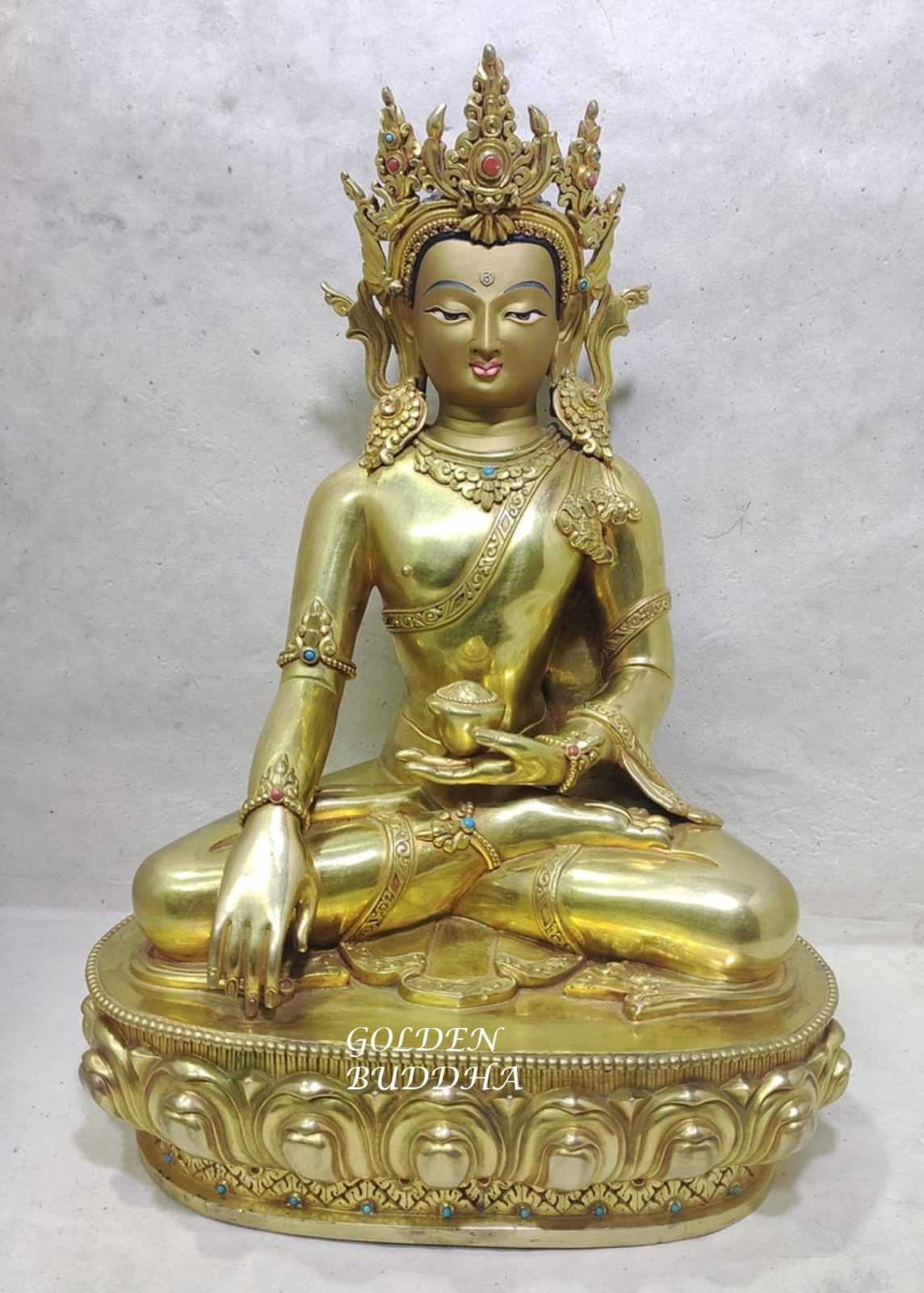
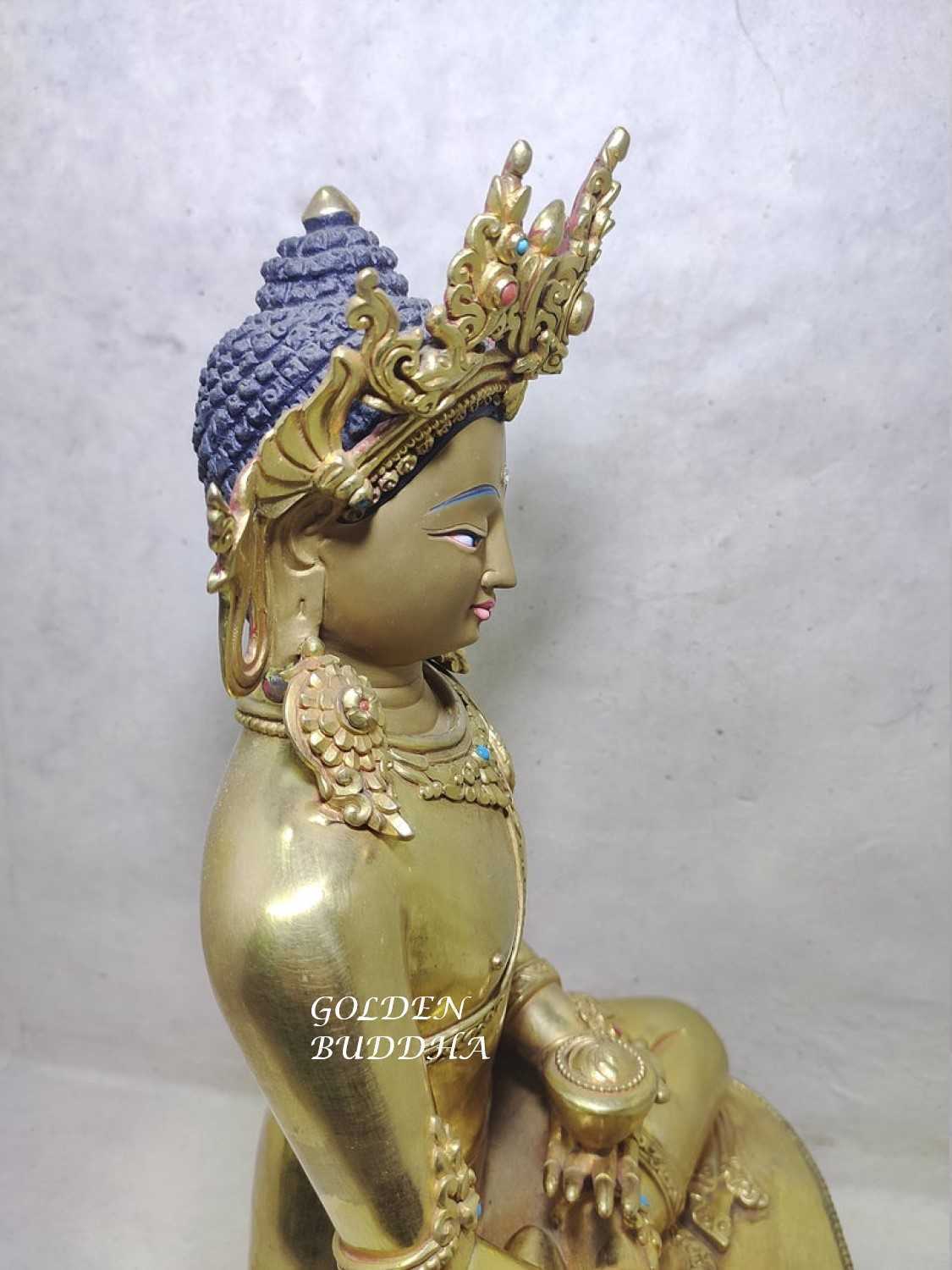
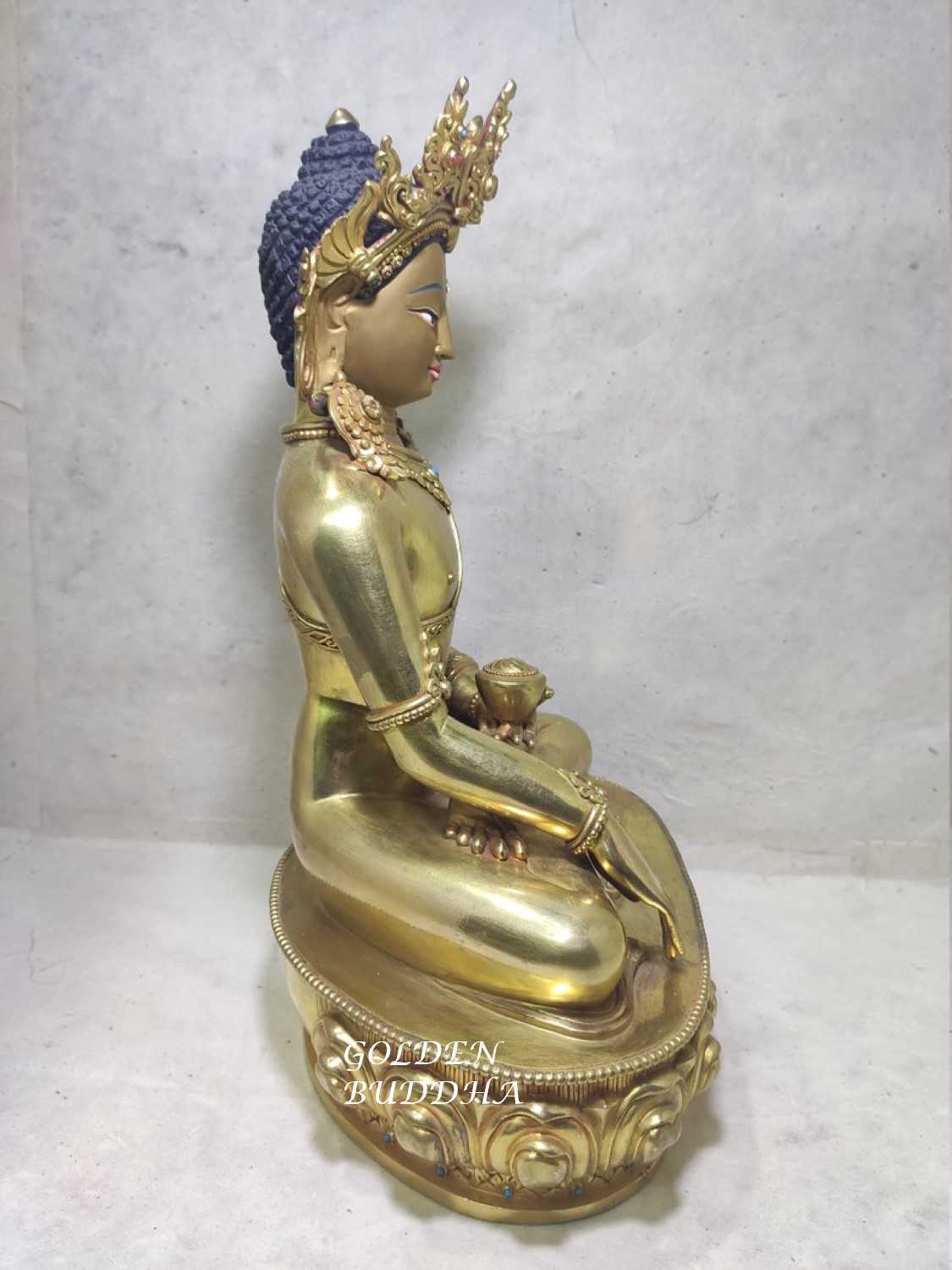
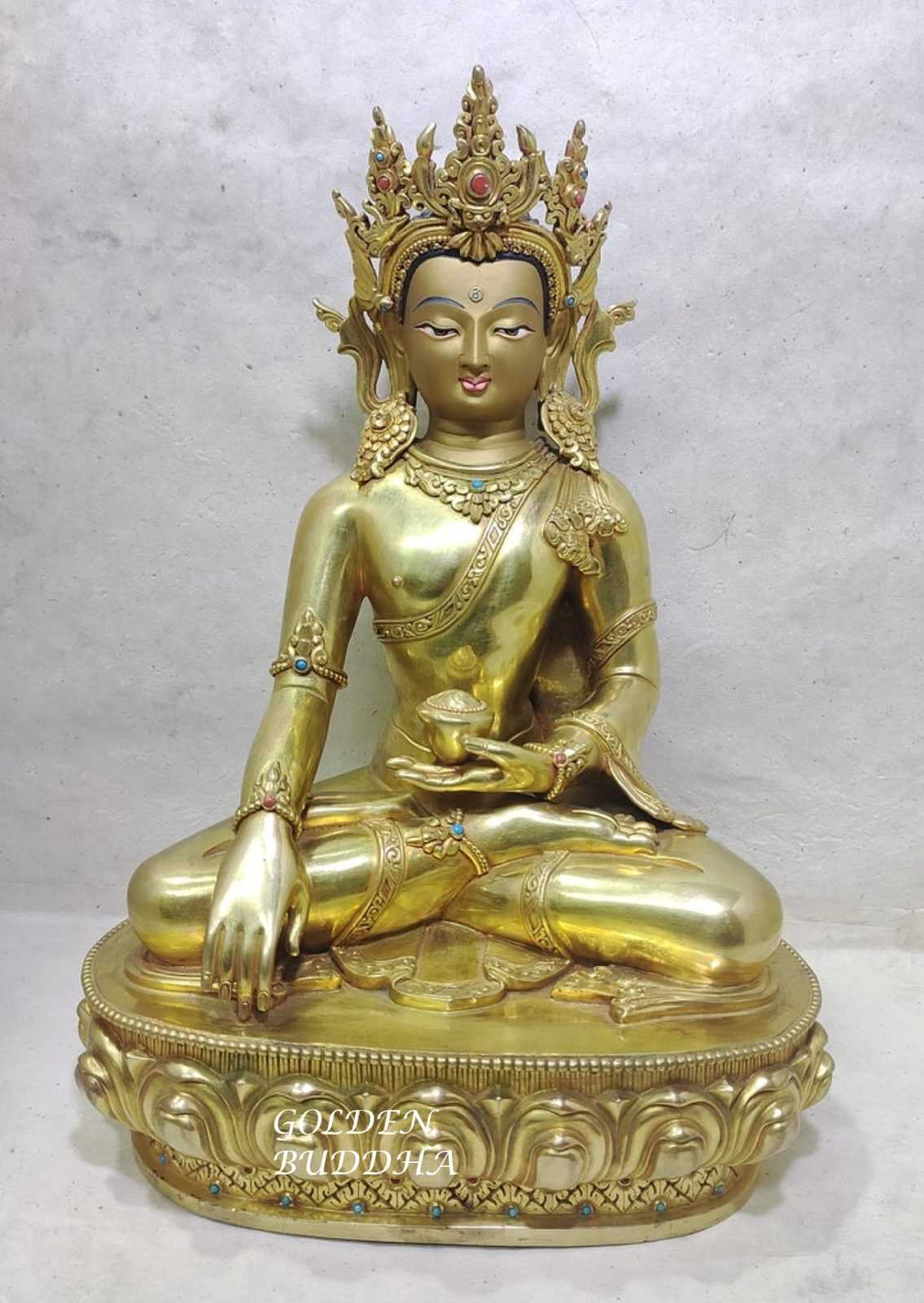
Sculpted with exceptional elegance, this 14″ crowned Shakyamuni Buddha statue presents the Buddha not in his plain monastic robes, but crowned and adorned — a traditional form known in Tibetan iconography as Jowo Rinpoche, honoring the Buddha as the King of the Dharma, sovereign of the teaching he discovered. The tall gold crown is inset with coral and turquoise stones and framed by fan-shaped ribbons beside the ears, while large floral ear ornaments, a jeweled collar, armbands, and wristlets — each set with red and blue stones — complete the royal presentation.
Attributes of our Crowned Shakyamuni Buddha Statue
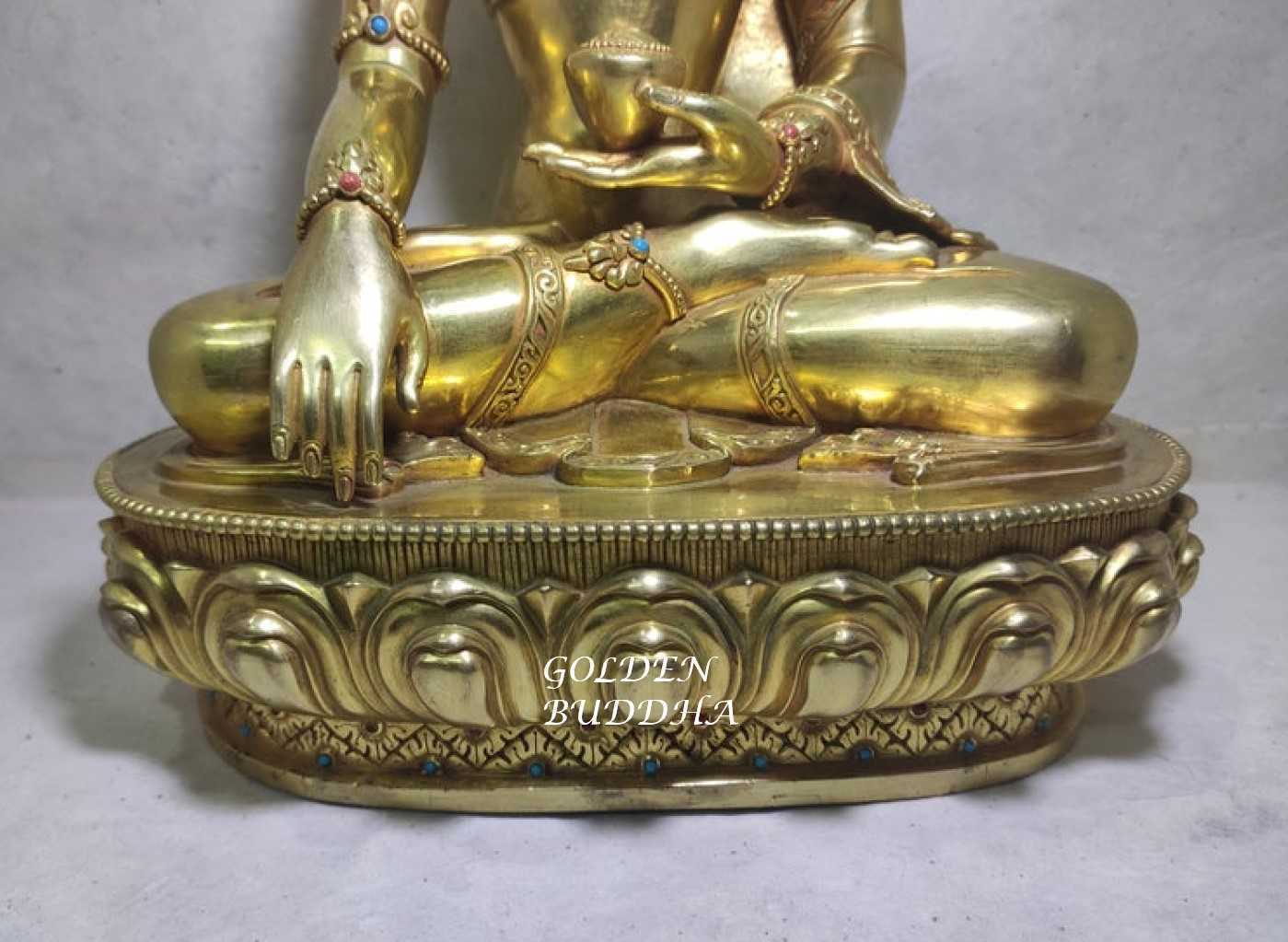
He depicts the Bhumisparsha, or “earth touching,” mudra — the gesture of his enlightenment under the Bodhi tree — with the right hand draped over the right knee and fingers reaching toward the earth, while the quintessential alms bowl rests in the palm of his left hand in the Dhyana meditation gesture. His face is hand painted with lifelike expression: finely arched brows, the urna of wisdom between them, and lips finished in red, above the three neck lines counted among the traditional marks of an enlightened being.
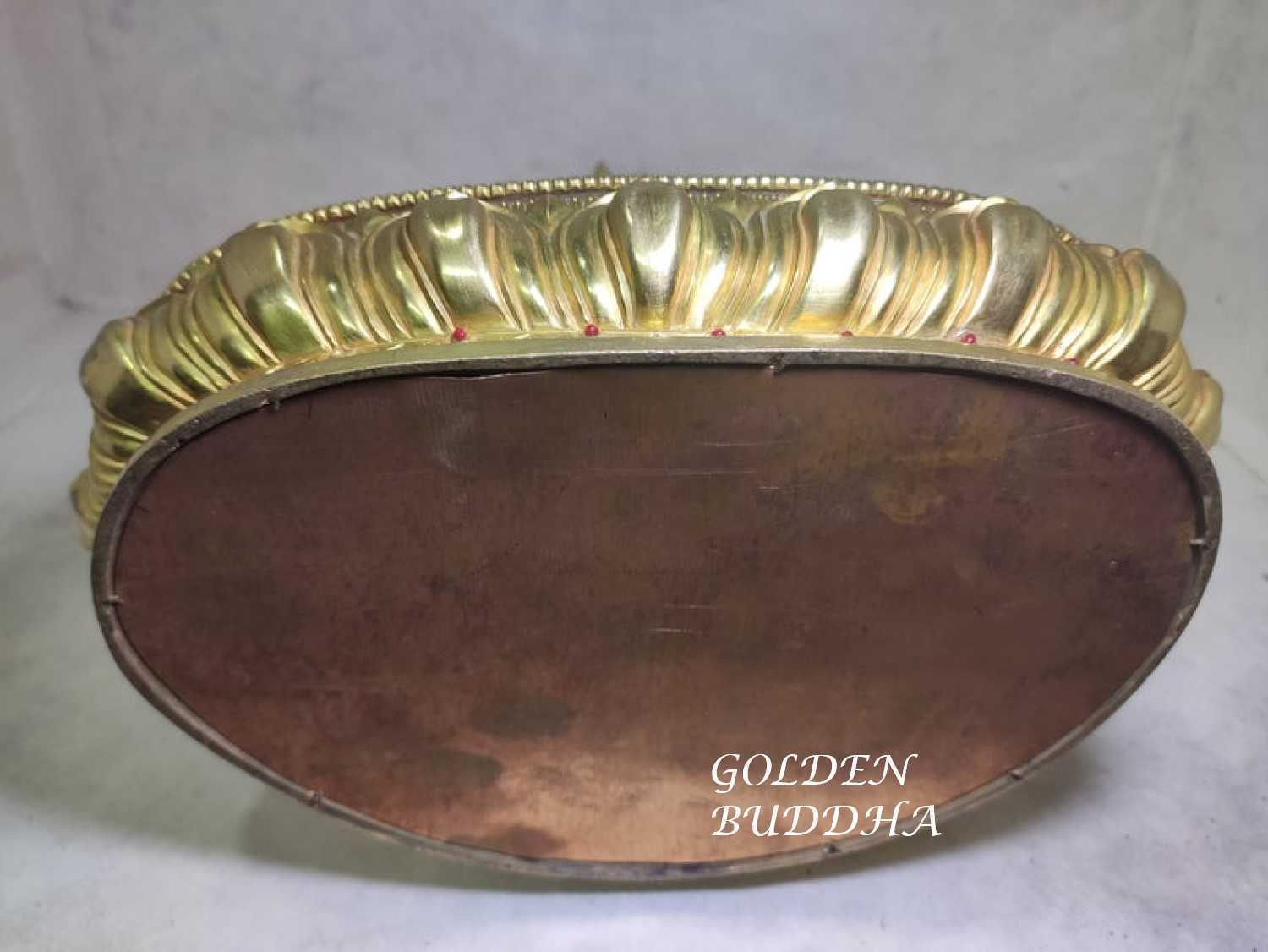
The full lotus pose is itself a sign of supreme virtue — it is also known as the vajra pose, from the Sanskrit word meaning “diamond” or “thunderbolt,” making this sitting posture a symbol of unshakable moral resolve. The statue sits on a single lotus pedestal ringed with bold petals, its lower band dotted with small inset turquoise stones that echo the jewels of the crown. Have questions about Shakyamuni Buddha statues? Read our Shakyamuni Buddha FAQ, covering iconography, mudras, and the historical Buddha’s life story.
The urna, or third eye of wisdom, is depicted between the brows. A statue bearing the urna signifies a fully enlightened Buddha or high Bodhisattva: it represents transcendent wisdom, superior to mundane knowledge, acquired over many Bodhisattva lifetimes. The elongated earlobes and three folds of the neck are likewise counted among the 32 traditional marks of an enlightened being — explore the complete set in our guide to Buddha physical characteristics, or browse our full collection of Shakyamuni Buddha statues to compare sizes and finishes.
Shakya Artisans and the Lost Wax Method
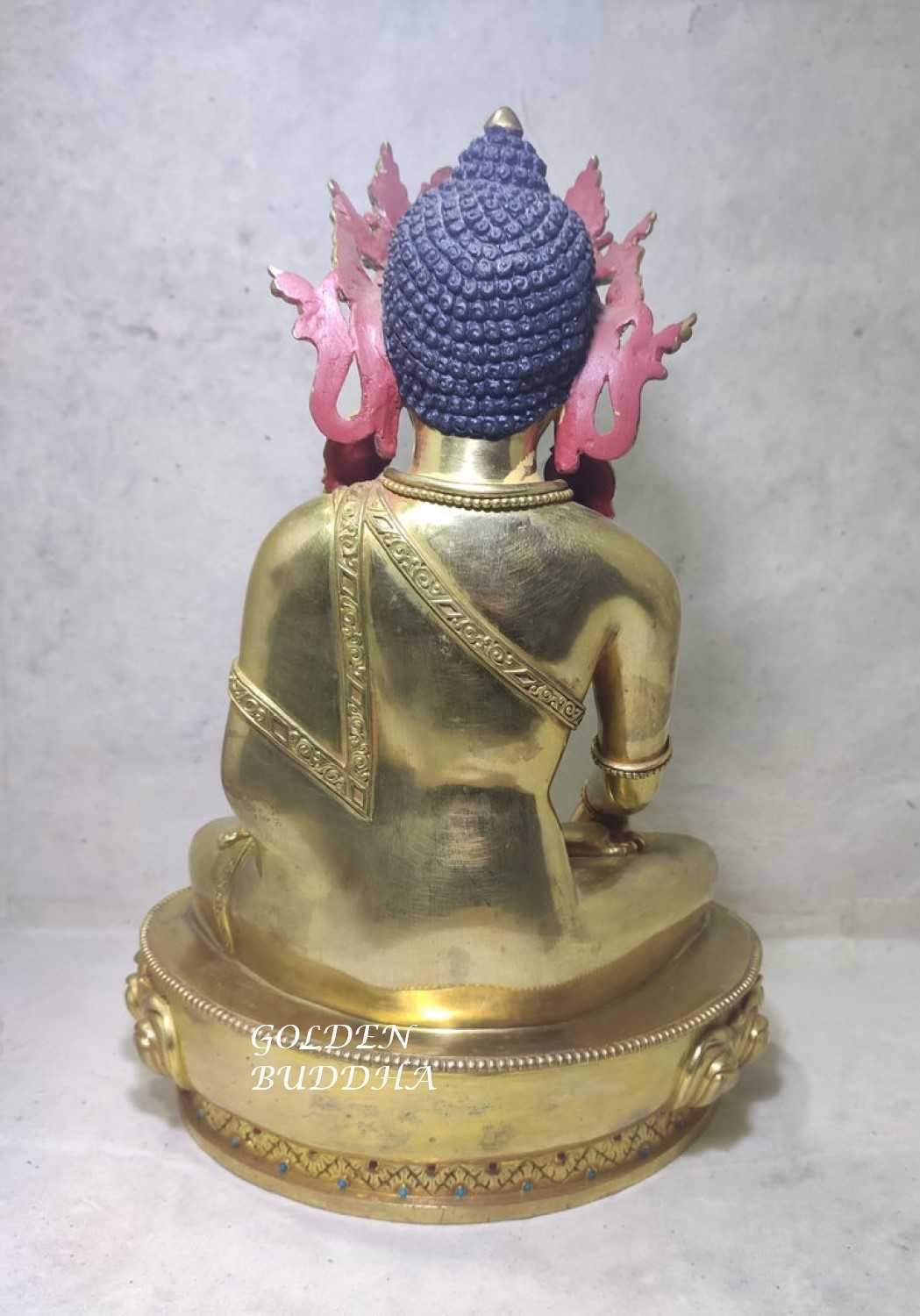
This statue was cast by master craftsmen of the Shakya caste of Newar artisans in Patan, Nepal — the same lineage that has supplied Tibetan monasteries with their most important sculpture for over a thousand years. Every piece begins as a hand-sculpted beeswax model, encased in clay, then fired so the wax melts away and molten copper alloy is poured into the resulting mould. The clay is broken, the metal figure is cold-worked by hand — chased, engraved, and set with turquoise and coral stones — before the surface is fire gilded with pure 24K gold. The face itself is the one exception: rather than fire gilded, it is hand painted with a mix of 18K gold and natural pigments, since fire gilding cannot render the subtle life of a face — read more in our buyer’s guide to the gold face painting technique. Because each wax model is destroyed in the casting, no two statues from the workshop are ever identical.
Custom Orders
If you would prefer this crowned Shakyamuni in a different size, or in an oxidized copper, partly gilded, or silver plated finish, we can commission it directly with the artisan on your behalf. Explore our custom Tibetan Buddhist statues page for the full commissioning process and to see recent custom pieces we have delivered.
Authentic, Handmade in Nepal
Every statue and ritual item is handcrafted in Patan, Nepal, using traditional lost wax casting and comes with a certificate of authenticity issued by Nepal's Department of Archaeology, verifying its materials, technique, and origin.