

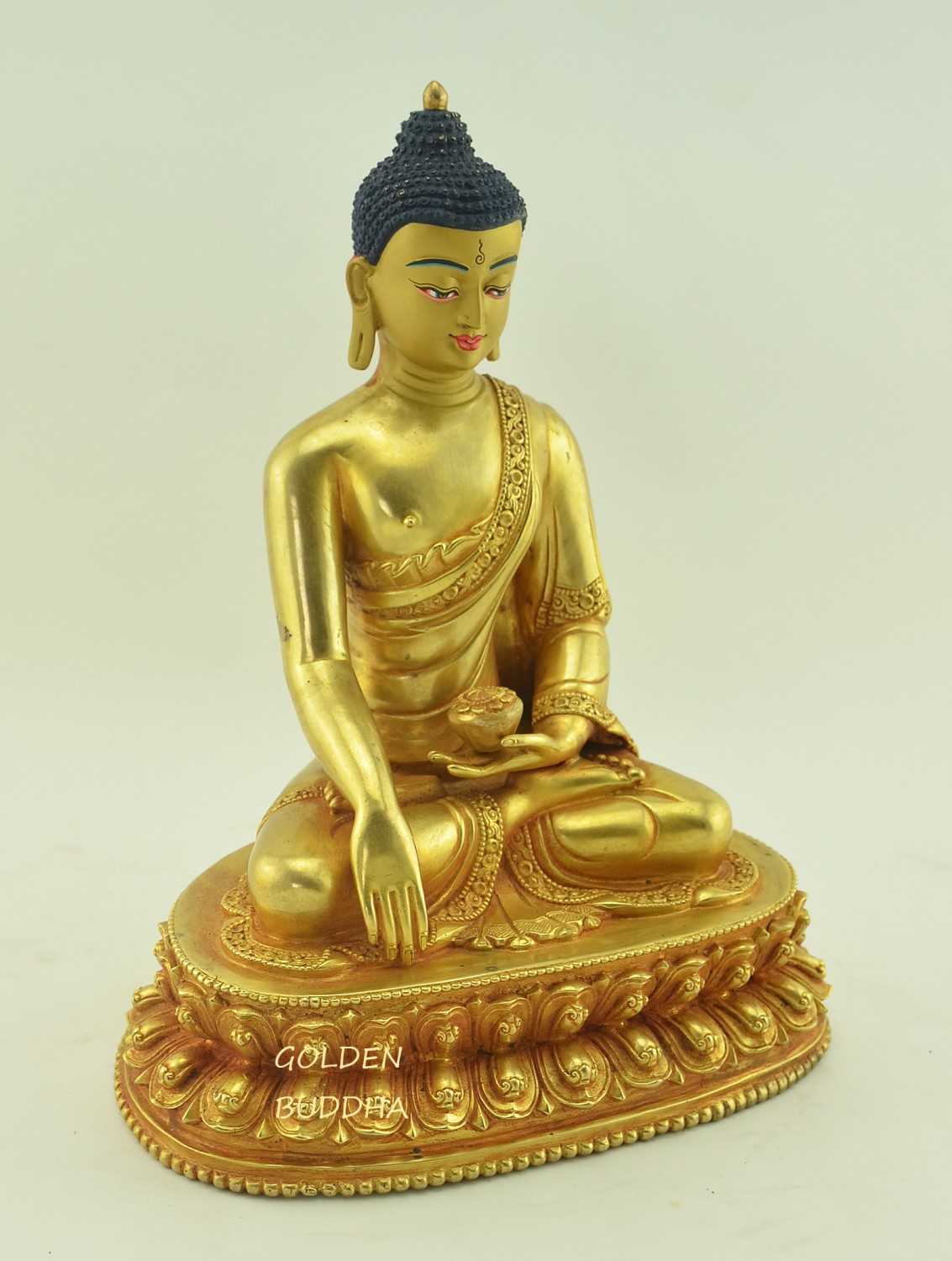


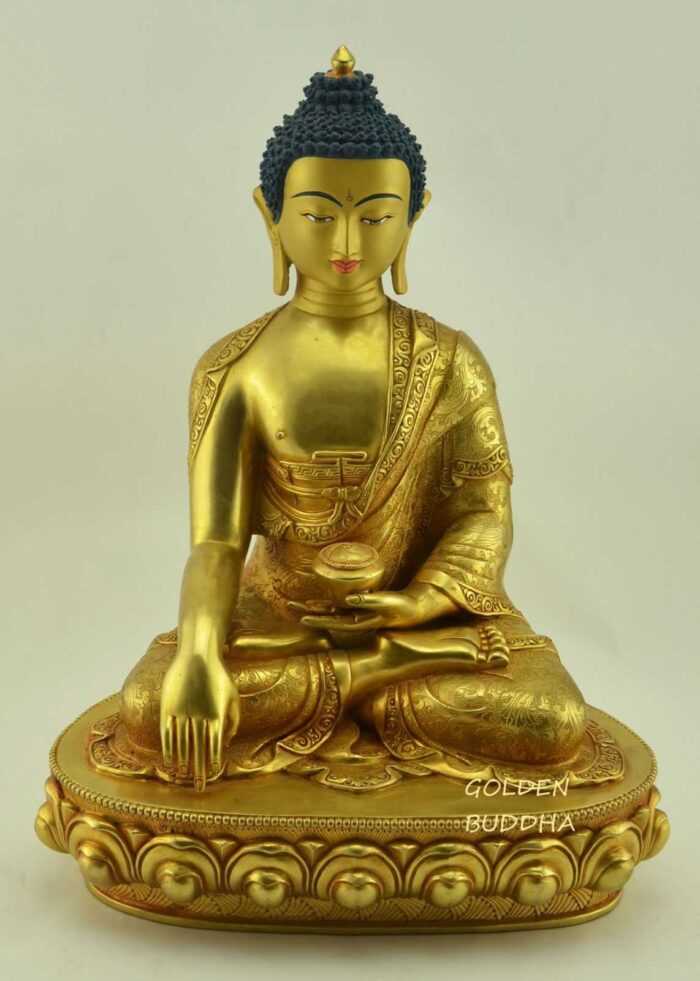
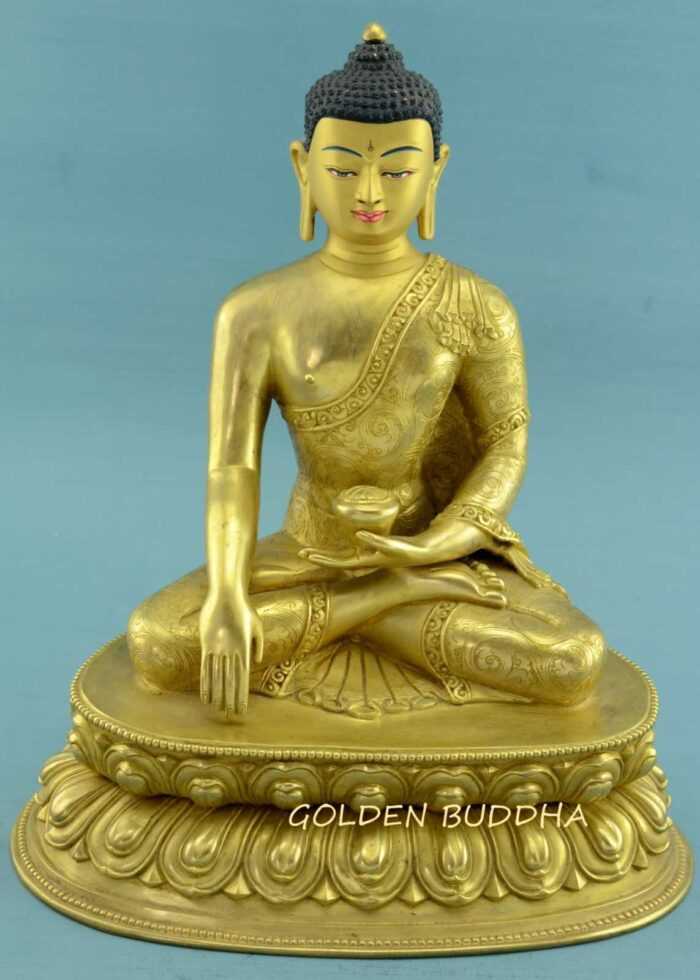
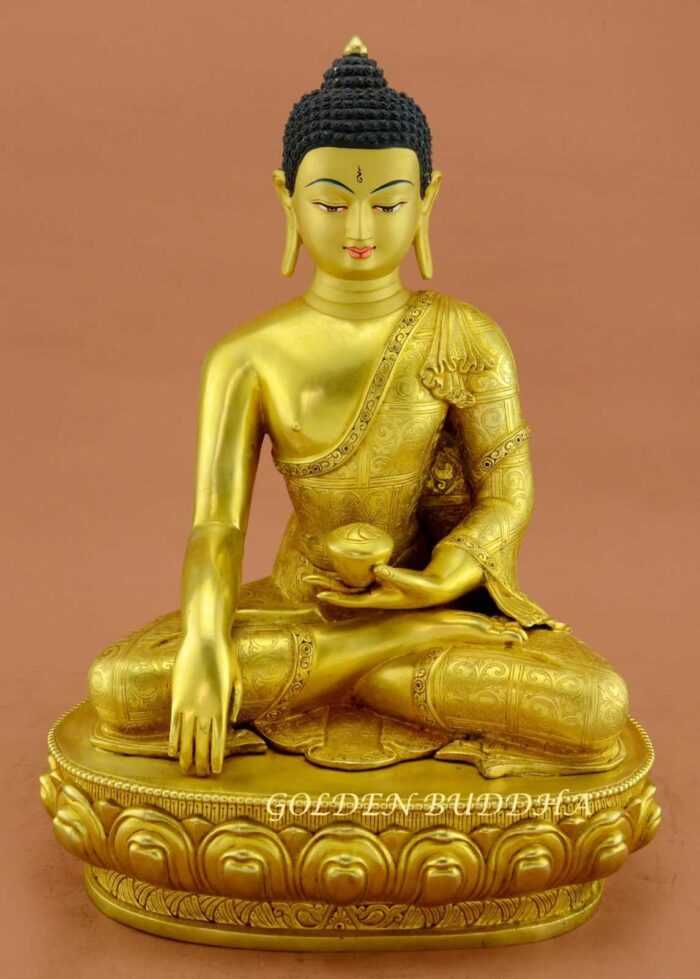
This 8.5″ Shakyamuni Buddha statue is fully fire gilded in 24K gold and seated on a double lotus throne — two tiers of lotus petals rising one above the other beneath the figure, rather than the single lotus pedestal standard on most Shakyamuni statues. The double lotus throne is an iconographic mark of heightened spiritual distinction, associated in Himalayan Buddhist art with figures of supreme attainment, and it gives this statue a formal presence that reads as significantly more substantial than its 8.5″ height might suggest. The statue was handcrafted in Patan, Nepal by master artisans of the Shakya caste using the traditional lost wax sculpting method, with intricate hand-carved engravings on the robe and pedestal and a face hand-painted in real gold.
Shakyamuni is depicted in full lotus posture — the sitting position also known in Sanskrit as vajrasana, the vajra seat — representing the unshakable stability of a being who has permanently transcended the cycle of rebirth. The posture is specifically associated with the seat of enlightenment at Bodh Gaya, where the historical Buddha sat as he attained full realization. Learn more about the meaning behind the name Shakyamuni Buddha in our complete guide to Shakyamuni statues.
Bhumisparsha Buddha Statue Features
The right hand displays the Bhumisparsha mudra — the earth-touching gesture — draped over the right knee with the palm facing inward and the fingers extended downward toward the ground, the mudra Shakyamuni displayed under the Bodhi tree as he called the earth deity to witness his enlightenment against the challenge of Mara. His left hand holds the alms bowl in the open palm of the Dhyana mudra — the meditation gesture — the bowl symbolizing his renunciation of royal life and understood to contain the three nectars that counteract the three poisons of ignorance, attachment, and hatred.
The statue bears the traditional physical characteristics of the historical Buddha as described in the Pali Canon: the urna (third eye of wisdom between the brows), the ushnisha (crown protuberance), and the three neck folds. The ushnisha and neck folds were also marks of royalty and high social distinction in ancient India — appropriate to Shakyamuni’s birth as Prince Siddhartha into the Shakya royal family — and their adoption into Buddhist iconography connects every statue of the historical Buddha to his origins as a prince who renounced everything that those marks represented.
Authentic, Handmade in Nepal
Every statue and ritual item is handcrafted in Patan, Nepal, using traditional lost wax casting and comes with a certificate of authenticity issued by Nepal's Department of Archaeology, verifying its materials, technique, and origin.
Reviews
There are no reviews yet.