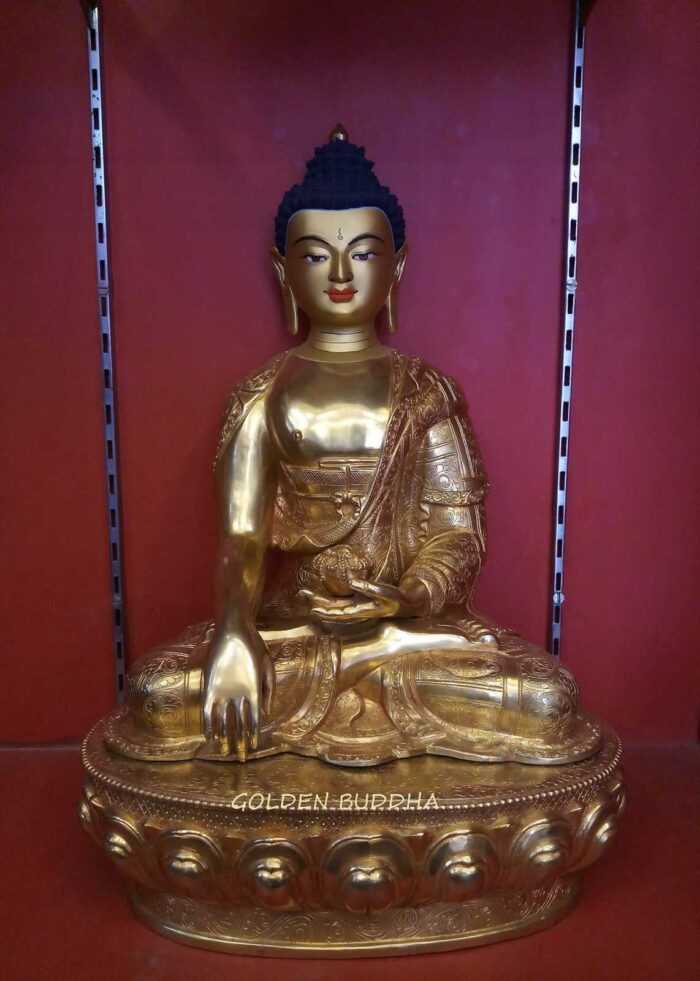
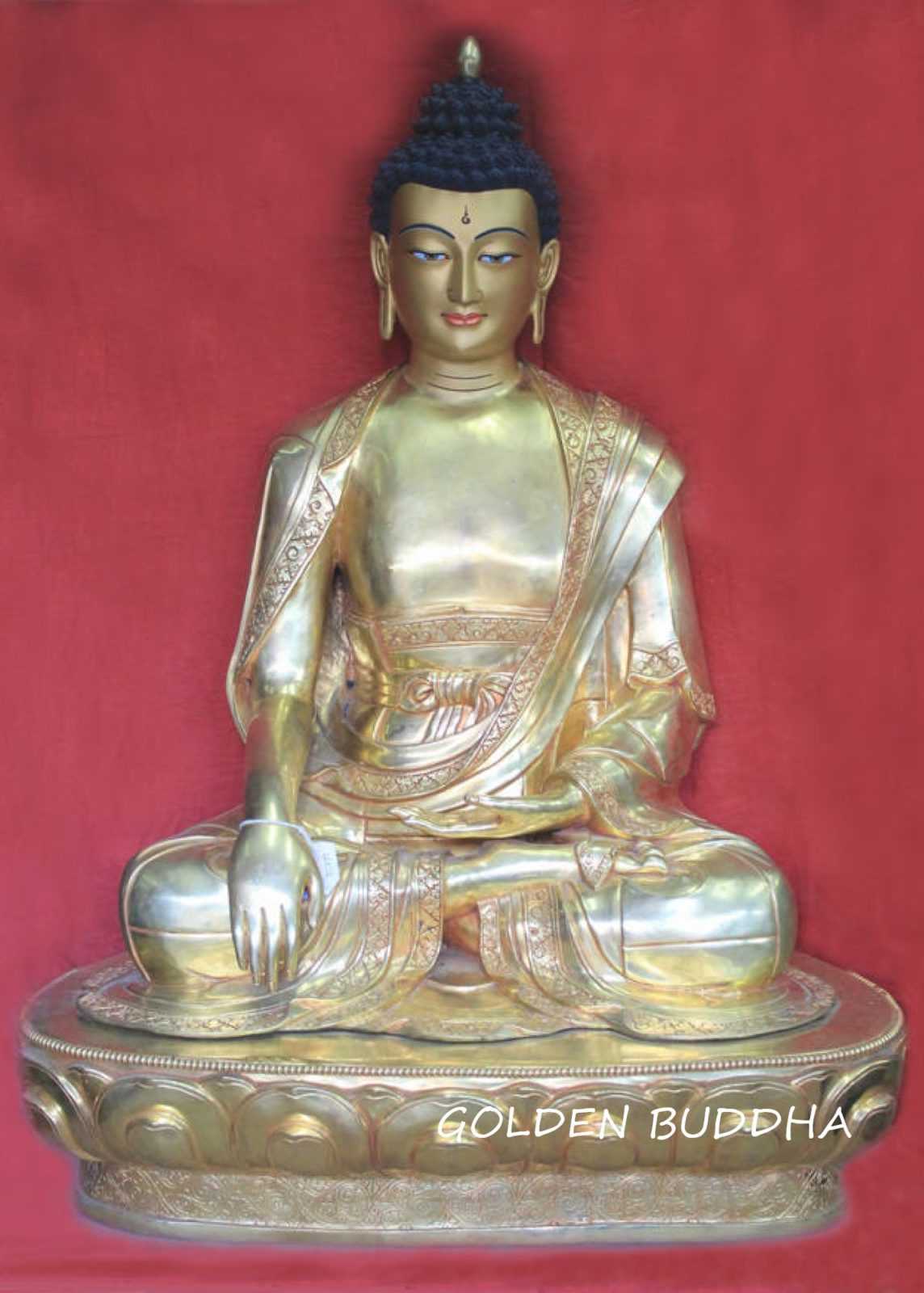
This magnificent 36-inch Large Shakyamuni Buddha Statue is a monumental representation of Siddhartha Gautama, the historical Buddha and enlightened teacher of our age. Handmade in Patan, Nepal from copper alloy using the traditional lost-wax casting method, the sculpture is fire gilded in 24K gold and finished with an individually hand-painted face. Measuring three feet tall and 24 inches wide, this substantial 15kg sculpture commands considerably greater presence than a conventional personal altar statue, making it especially appropriate for a Buddhist temple, monastery, Dharma center, meditation hall or spacious dedicated shrine room.
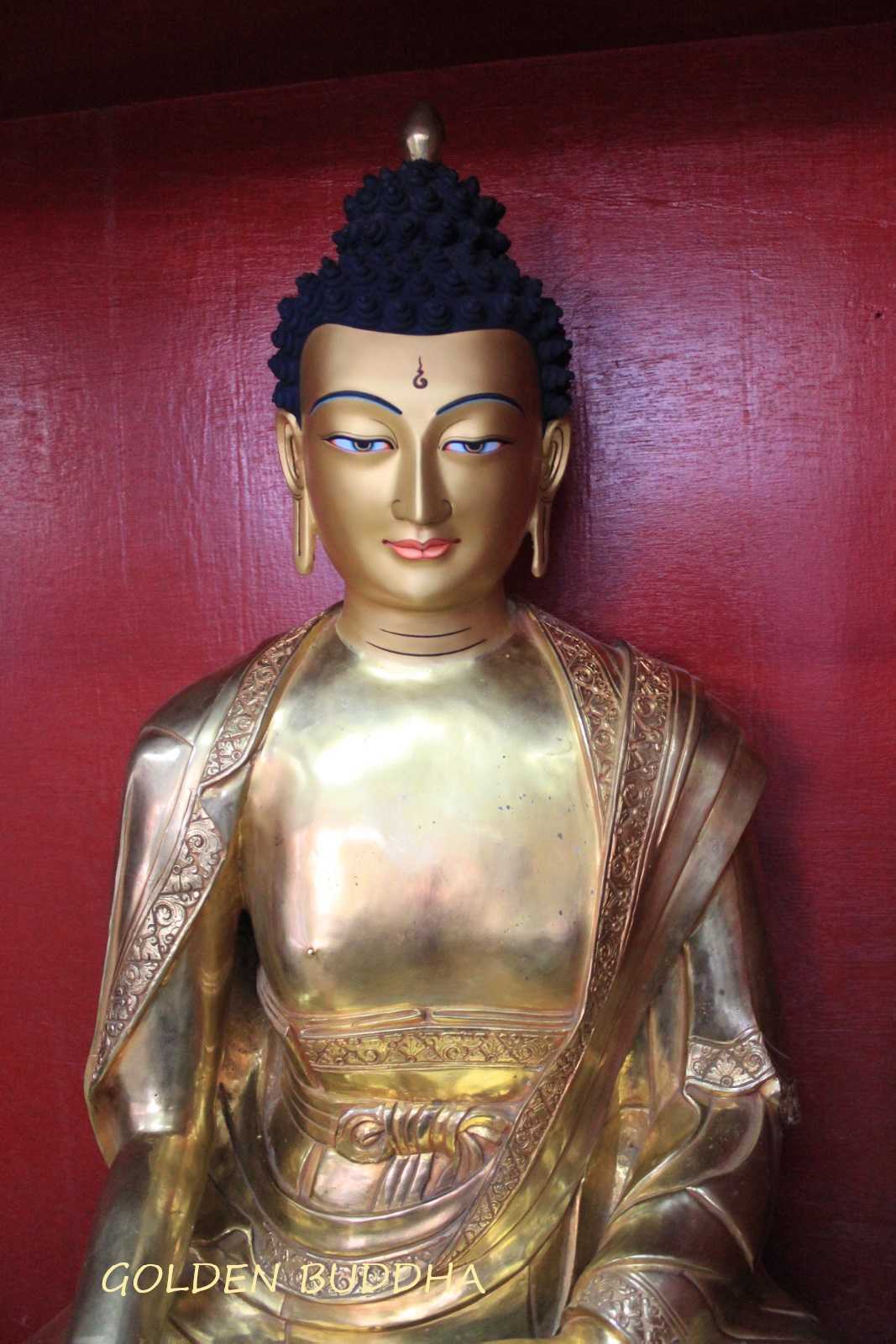
The photographs reveal an imposing yet remarkably serene composition. Shakyamuni sits upright in the full lotus meditation posture upon a broad lotus throne, his shoulders balanced and expression composed. The monastic robes are particularly noteworthy. Fine scrolling patterns and decorative borders follow the robe edges across the shoulders, waist, sleeves and layered folds covering his crossed legs. Beneath the figure is a substantial single-lotus pedestal formed from a prominent register of large rounded petals, bordered above by fine beading and completed by an engraved lower band. These carefully worked surfaces give the sculpture visual richness without compromising the simplicity traditionally associated with the historical Buddha.
Shakyamuni “Sage of the Shakya”
Shakyamuni means the “Sage of the Shakya Clan,” while the Tibetan name Shakya Thubpa can be translated as “The Capable One of the Shakyas.” Born Siddhartha Gautama in Lumbini, Nepal, he renounced his privileged life as a prince in search of an answer to suffering, eventually attaining perfect enlightenment beneath the Bodhi tree at Bodh Gaya. His teachings became the foundation of the Buddhist Dharma. Our guide to Shakyamuni Buddha statues and the historical Buddha explores his life, enlightenment and traditional iconography in greater detail.
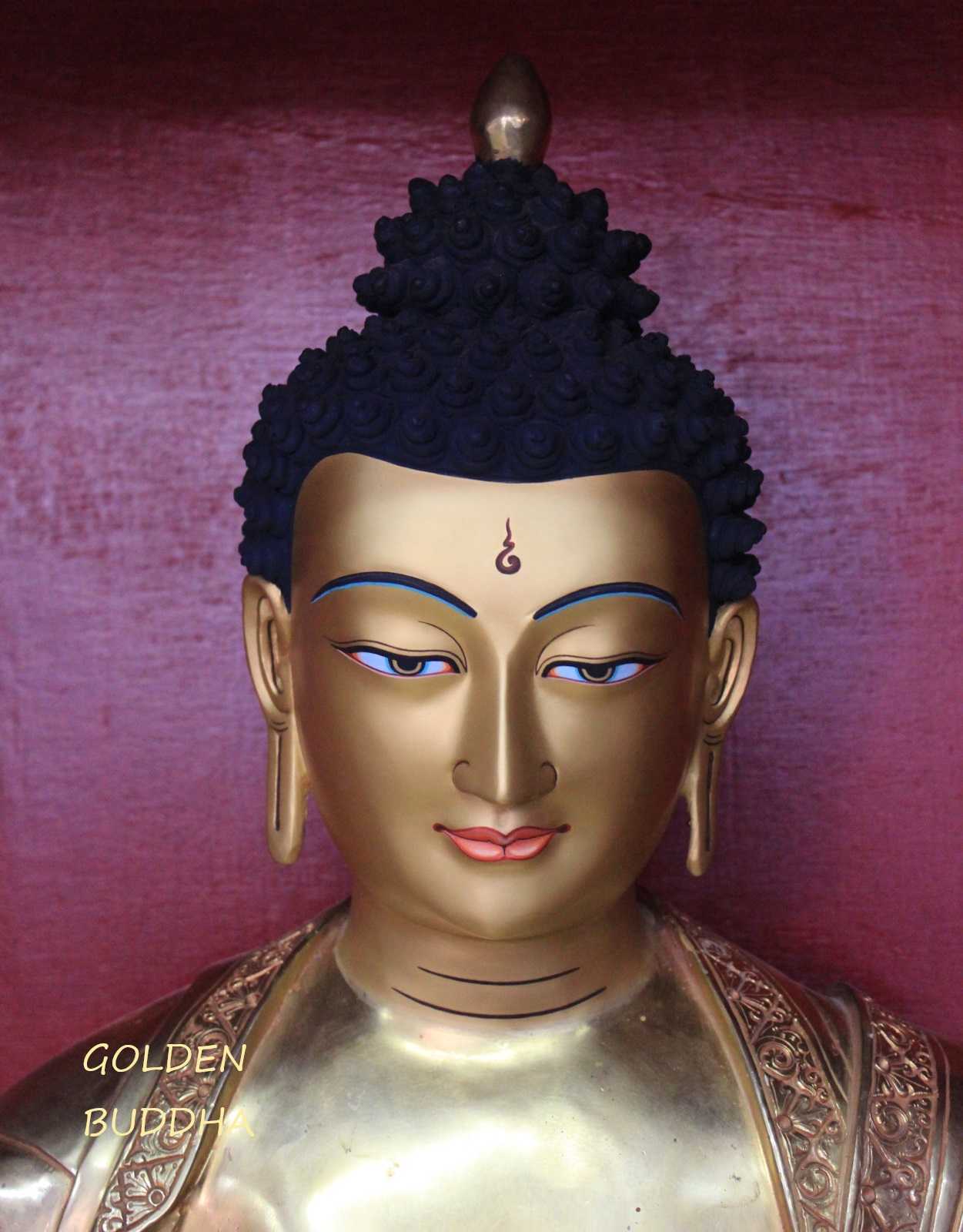
Unlike a richly jeweled Bodhisattva, Shakyamuni appears in the robes of a renunciant. The sculpture nevertheless displays the traditional physical characteristics associated with Buddhahood. His elongated earlobes recall the heavy royal ornaments Siddhartha relinquished when he abandoned palace life. An urna appears prominently between the brows, while the head is covered with tightly curled dark hair rising into the distinctive ushnisha. The restrained ornamentation keeps attention focused on the Buddha’s awakening rather than worldly status.
Mudras of the Shakyamuni Buddha
The right hand extends over Shakyamuni’s knee in the unmistakable Bhumisparsha mudra, or earth-touching gesture. The palm turns inward while the elongated fingers descend toward the earth. This gesture recalls the decisive moment immediately before enlightenment when Siddhartha called the earth to witness his accumulated merit as Mara challenged his right to awakening. It has consequently become one of the defining visual attributes of Shakyamuni Buddha. Learn more about the meaning of Shakyamuni’s Bhumisparsha mudra and related Buddhist hand gestures.
His left hand rests open in his lap in the Dhyana mudra, the gesture of meditation and concentrated awareness. Together the two hands create an especially meaningful composition: the left expresses the meditative discipline through which realization was cultivated, while the earth-touching right hand recalls the moment that realization became complete enlightenment. The full lotus posture reinforces this sense of unwavering meditative stability.
24K Gold Large Shakyamuni Buddha Statue Craftsmanship
Creating a copper-alloy sculpture of this scale through the lost-wax method requires considerable technical skill. The original form must preserve correct proportions across a three-foot figure before casting, after which the metal surface is individually refined and its elaborate robe patterns engraved by hand. Traditional 24K gold fire gilding gives the statue its luminous golden surface, while the face is separately hand painted so the artisan can precisely define the contemplative eyes, arched brows and gently colored lips. The result combines monumental scale with the fine detailing normally associated with smaller Newar devotional sculpture.
Filling and Consecration in Kathmandu, Nepal
A statue intended for an important altar may traditionally be filled with sacred texts, mantras and other blessed substances before ritual sealing and consecration according to the practitioner’s lineage. This process transforms an already sacred representation into a formally prepared object of Buddhist practice. Our guide to Buddha statue filling, blessing and consecration explains the traditional preparation and its purpose.
Custom Made Shakyamuni Buddha Statues
For monasteries, Dharma centers, temples and private collectors requiring a different scale or finish, we can arrange custom Tibetan Buddhist statues handmade by our artisans in Patan, Nepal. A custom made large Shakyamuni Buddha statue can be commissioned in copper alloy to suit the proportions of a particular altar, with options for 24K gold fire gilding, antiquated finishes and specialized hand engraving. Large commissions can also be coordinated according to specific iconographic requirements, allowing the finished sculpture to harmonize with an existing shrine or become the principal Buddha around which a new altar is designed.
Authentic, Handmade in Nepal
Every statue is handcrafted in Patan, Nepal, using traditional lost wax casting and comes with a certificate of authenticity issued by Nepal’s Department of Archaeology, verifying its materials, technique, and origin.