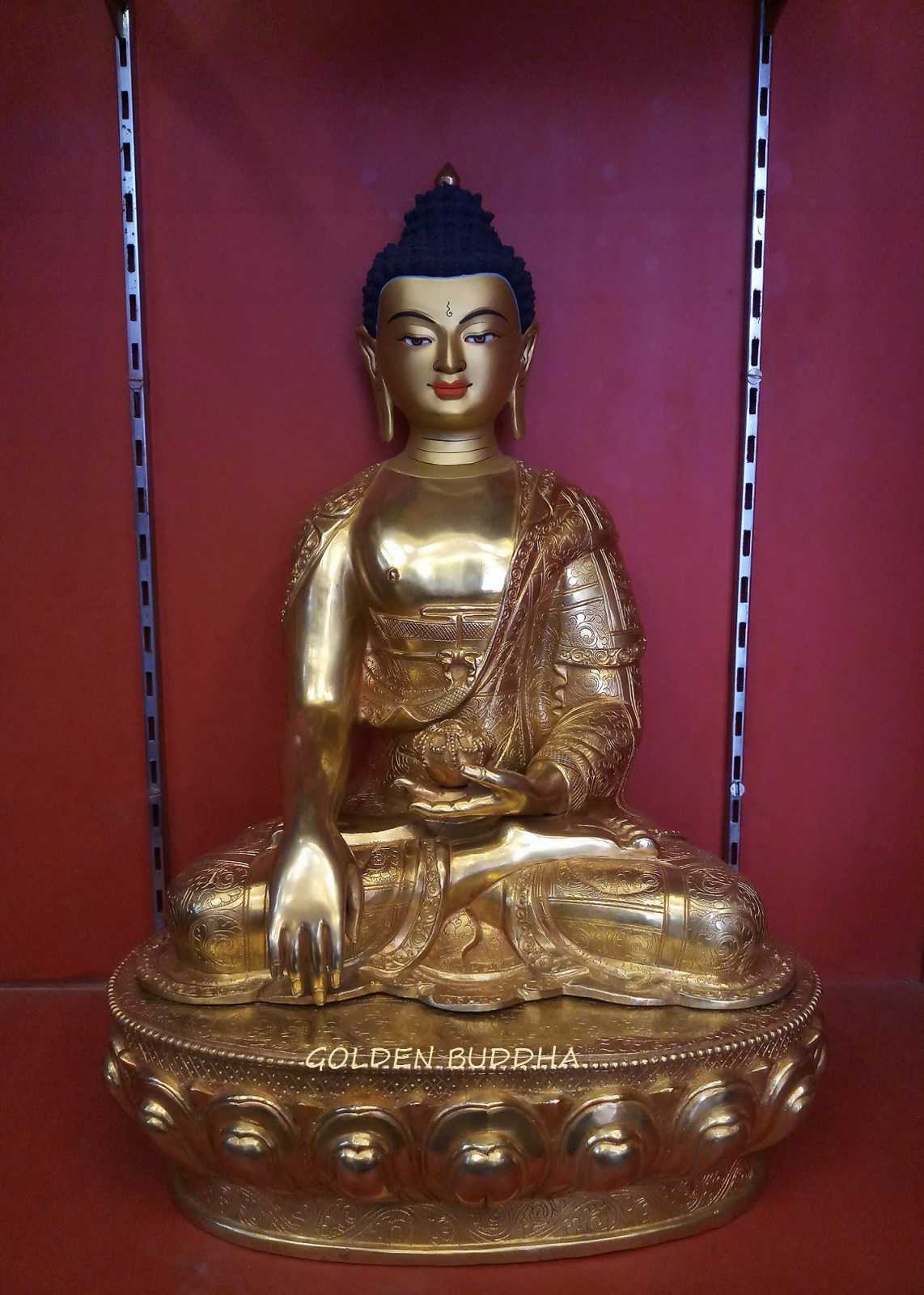
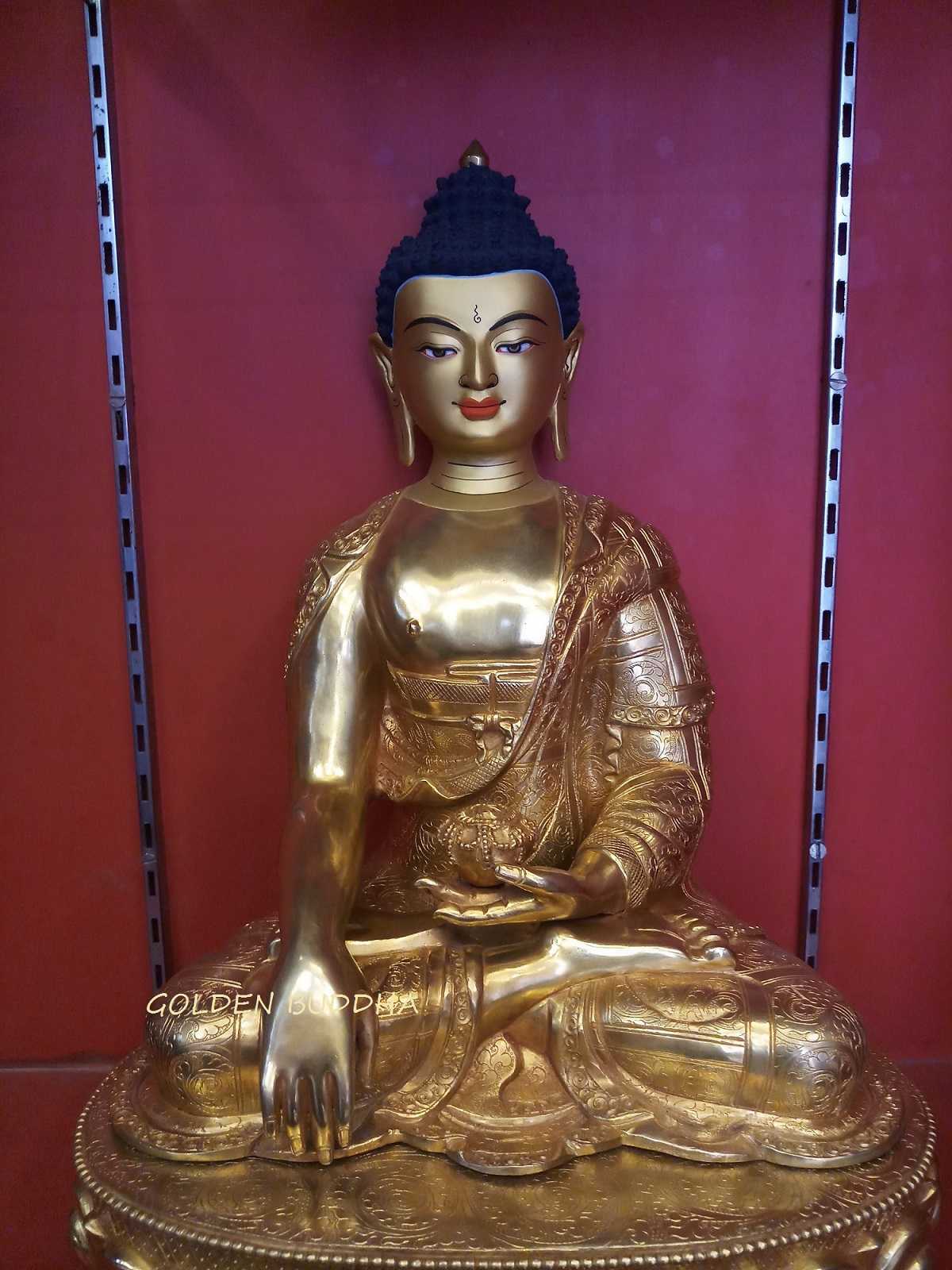
This magnificent 18-inch Beautiful Handmade Shakyamuni Statue portrays the historical Buddha after attaining perfect enlightenment beneath the Bodhi tree at Bodh Gaya. Handmade in Patan, Nepal from copper alloy using the traditional lost-wax casting method, the sculpture is fire gilded in 24K gold, while the serene face is individually hand painted with 18K gold and natural pigments. At 45cm tall and approximately 9,000 grams shipping weight, this substantial sculpture has the scale and visual presence required for a prominent home shrine, meditation room, Dharma center or monastery altar.
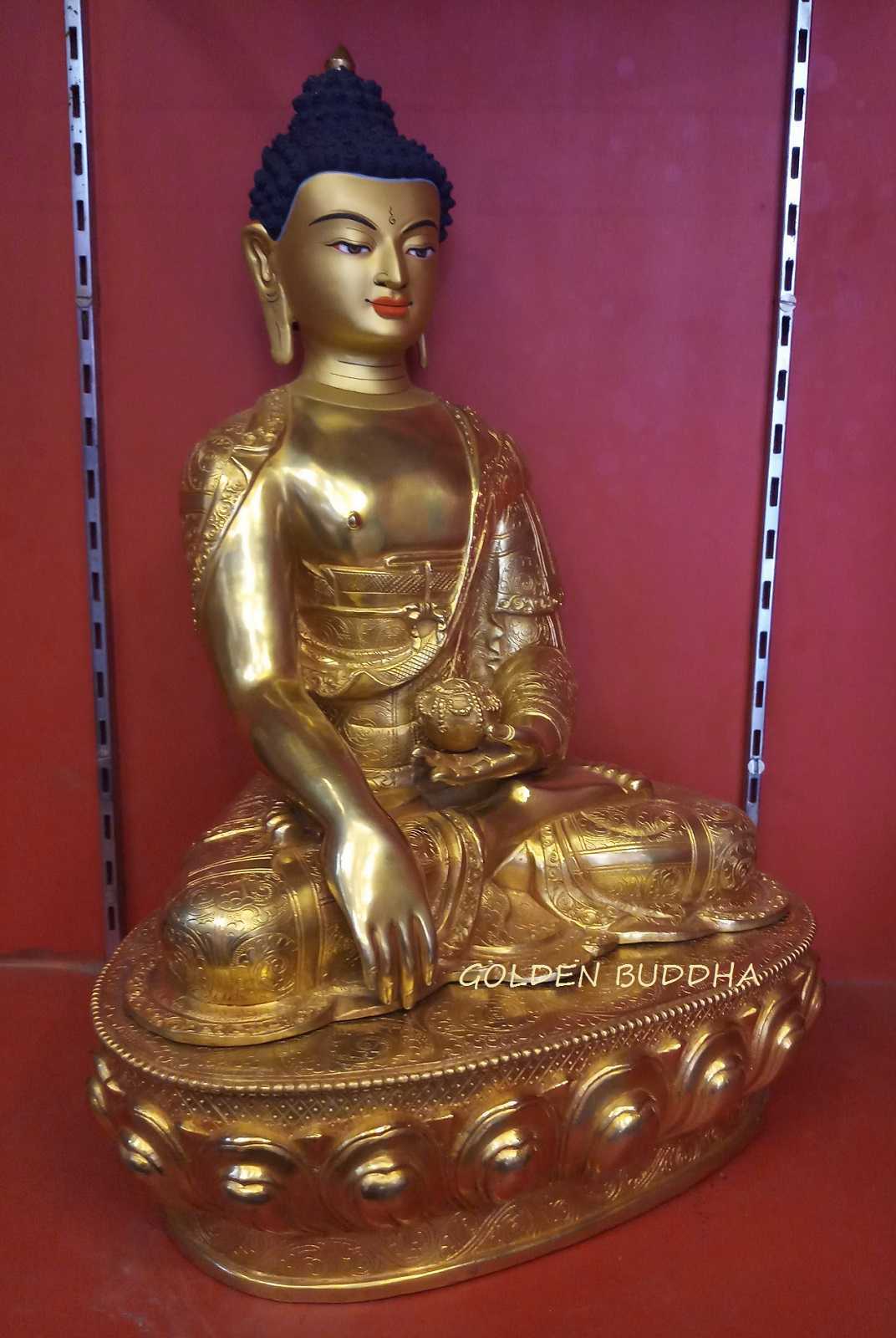
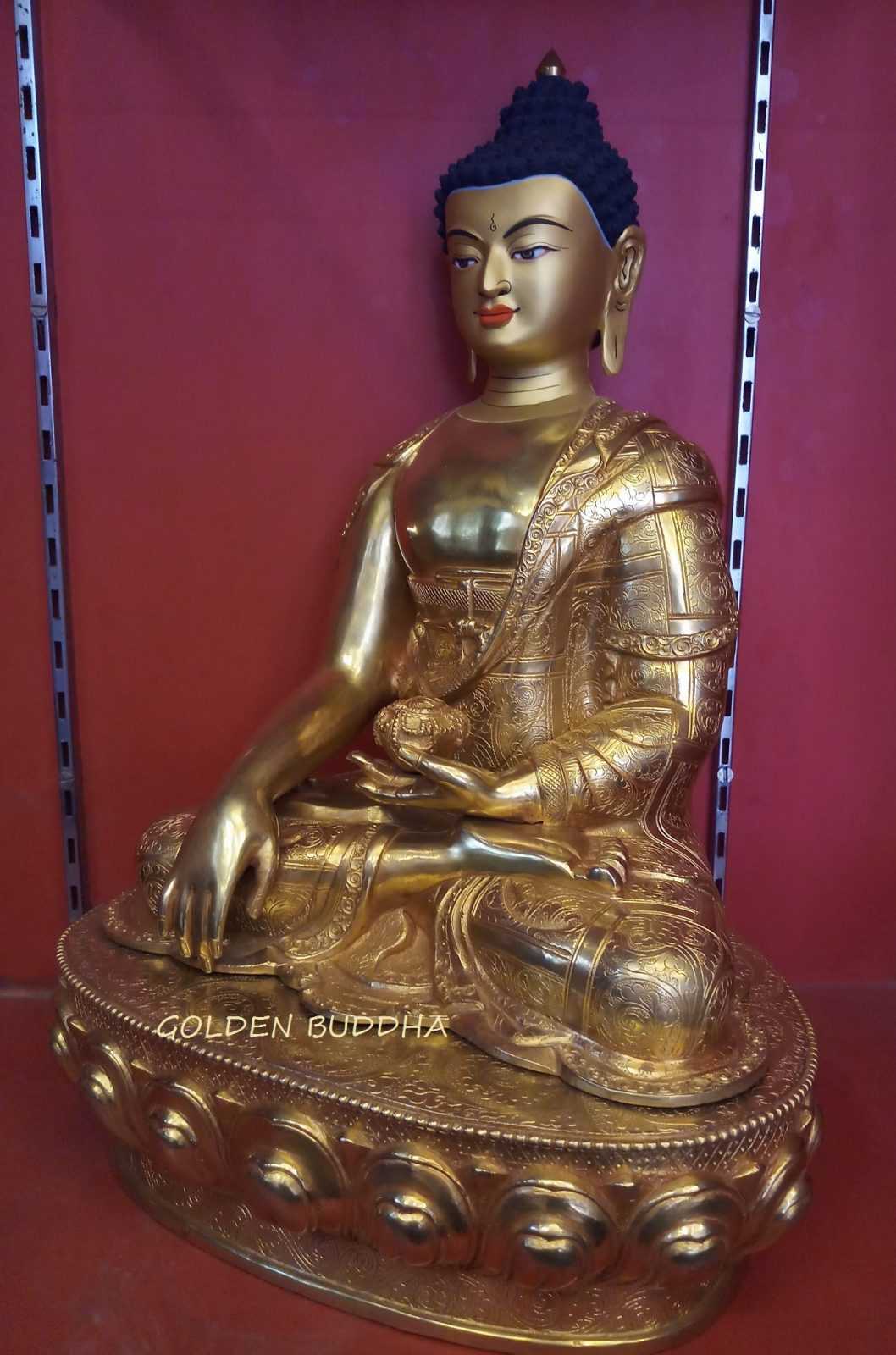
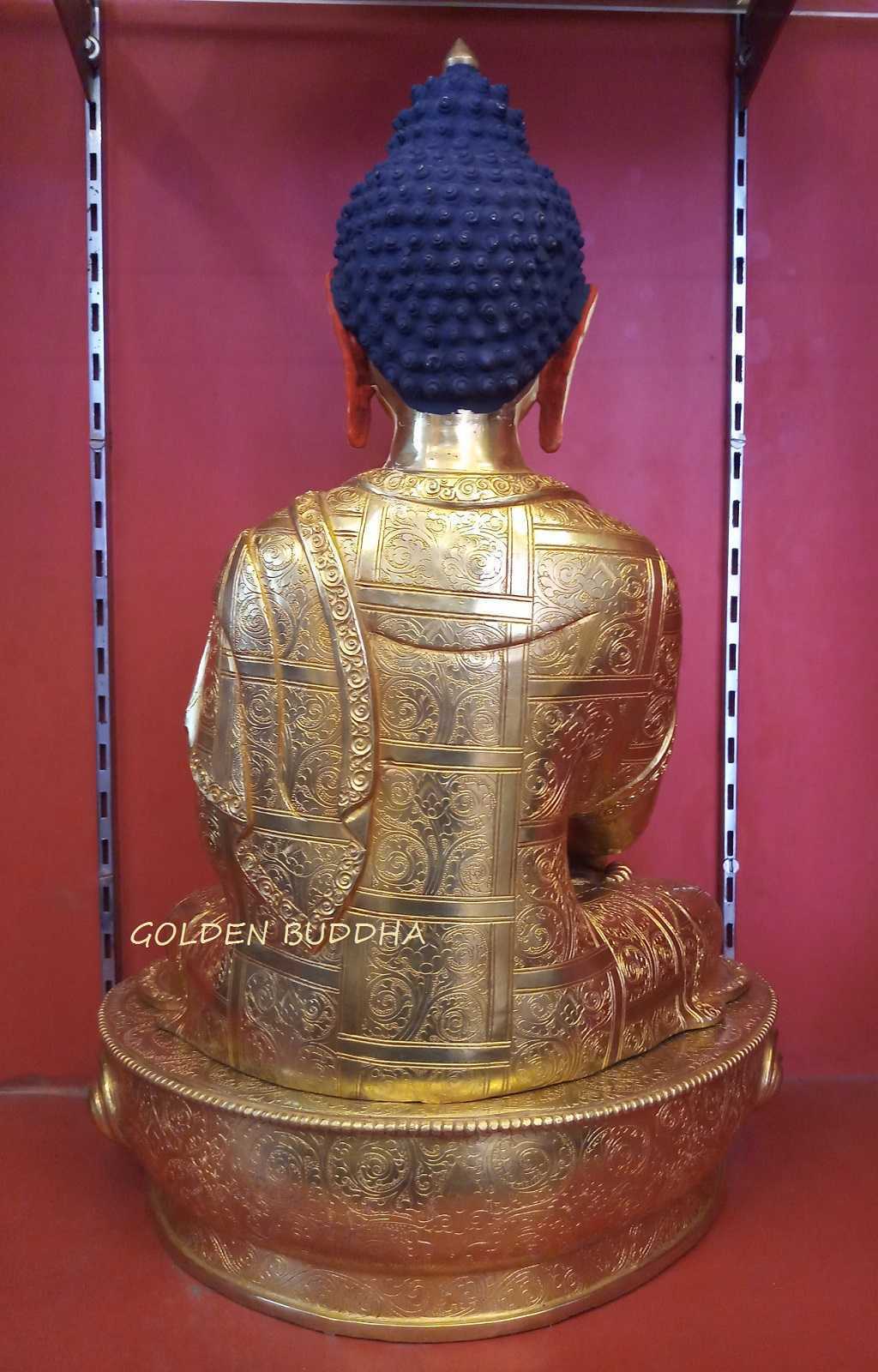
The workmanship becomes especially apparent when the statue is viewed from different angles. Shakyamuni’s monastic robes are covered with exceptionally extensive scrolling floral engravings and precisely defined decorative borders. These designs continue across the shoulders and completely around the back rather than being confined to the visible front. The lower garments covering his crossed legs are similarly engraved, while the broad lotus throne combines large sculpted petals with a beaded upper border and finely engraved surfaces. This attention to areas rarely seen from the front reflects the traditional Newar approach to creating a devotional sculpture as a finished work in the round.
Beautiful Handmade Shakyamuni Statue and the Historical Buddha
Shakyamuni, meaning the Sage of the Shakyas, is the Buddha of our historical age. Born Prince Siddhartha Gautama in Lumbini, Nepal, he abandoned royal life after confronting the realities of aging, illness and death. Following years devoted to the search for liberation, he attained enlightenment and taught the Dharma for the benefit of sentient beings. Our detailed guide to Shakyamuni Buddha statues and their meaning explores his life and significance within Buddhist tradition.
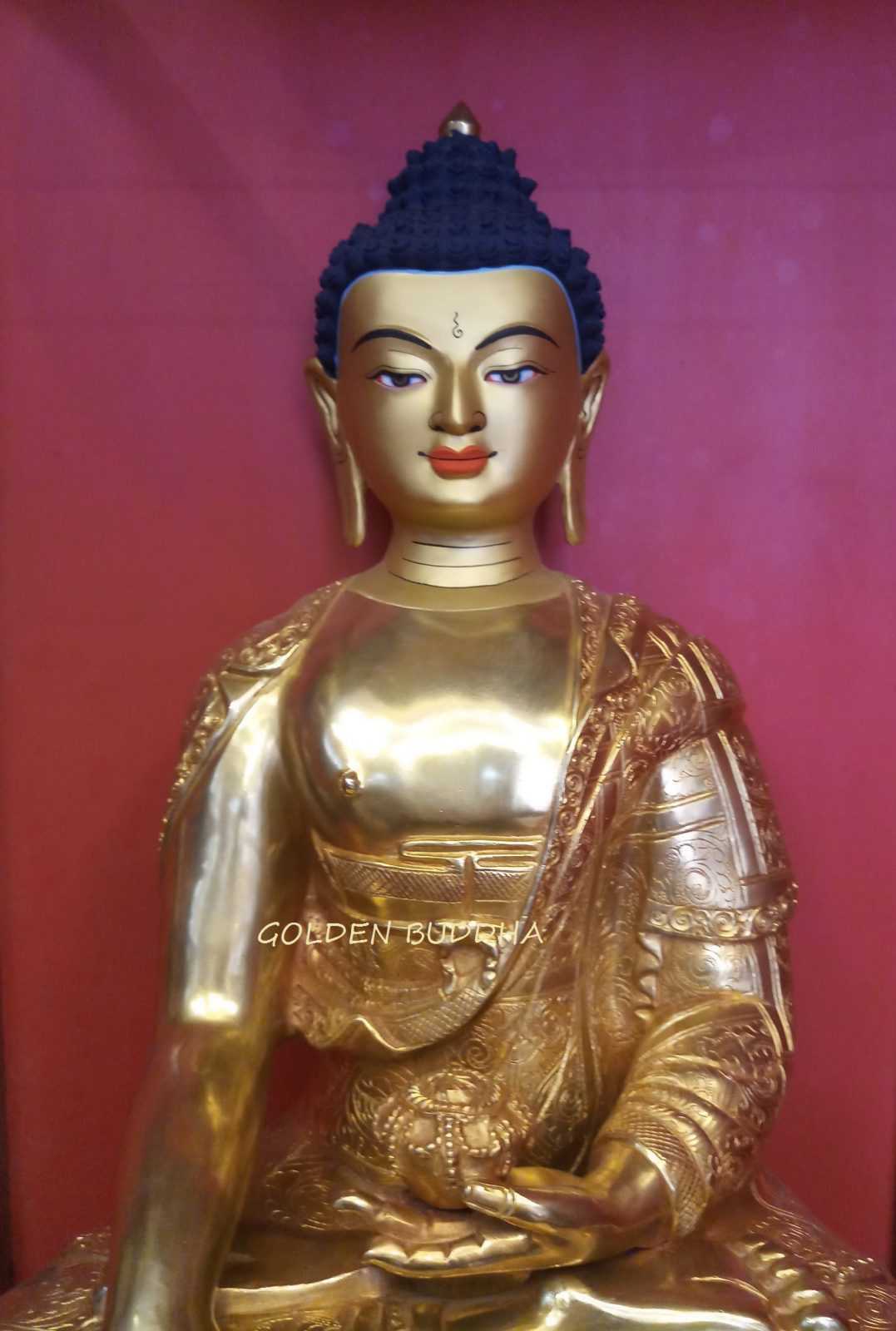
The Buddha is appropriately shown without the crowns and elaborate jewelry worn by Bodhisattvas. His simplicity expresses renunciation. The photographs clearly reveal the traditional auspicious characteristics of Buddhahood: elongated earlobes recalling his former princely life, an urna between the brows, tightly curled lapis-blue hair and the elevated ushnisha associated with supreme wisdom.
Mudras of the Beautiful Handmade Shakyamuni Statue
Shakyamuni’s right arm descends gracefully over his knee in the unmistakable Bhumisparsha mudra. His fingertips reach toward the ground in the earth-touching gesture commemorating the decisive moment before enlightenment when Siddhartha called the earth to witness his accumulated merit against Mara’s challenge. This is among the most recognizable forms of Shakyamuni iconography and directly connects the sculpture with his enlightenment at Bodh Gaya. Our guide to Shakyamuni Buddha mudras explains this gesture in greater detail.
His left hand rests palm upward in his lap while supporting a traditional alms bowl. The bowl recalls Shakyamuni’s renunciation of princely privilege and his life within the mendicant tradition. He sits firmly in the full lotus meditation posture, creating a composition of exceptional stability: the descending right arm visually anchors the Buddha to the earth while the upright torso and ushnisha draw the eye upward.
24K Gold Gilding and Hand-Engraved Monastic Robes
The copper-alloy sculpture was handmade using the lost-wax casting method before its surface was meticulously refined, engraved and fire gilded in 24K gold. The face is treated differently from the body: it is hand painted with 18K gold and natural pigments so that the artisan can precisely render the eyebrows, eyes and warm red lips. The result is a calm, gently focused expression appropriate to a Buddha who has passed beyond ignorance and mental disturbance.
Shakyamuni Buddha with Manjushri and Chenrezig
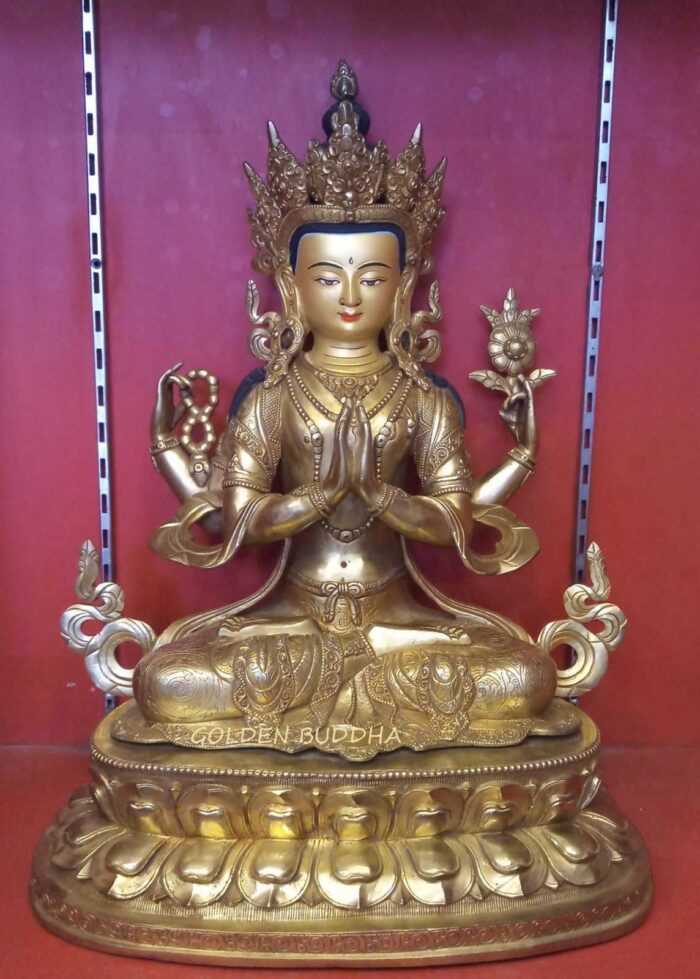
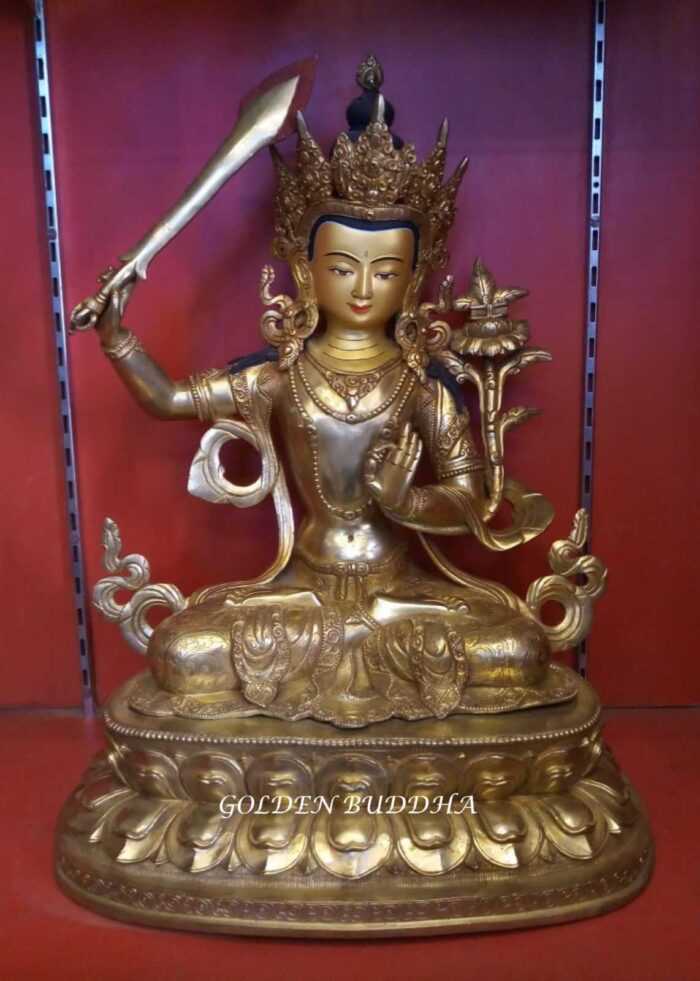
This 18-inch Shakyamuni is particularly well suited as the central figure of a three-statue altar with Manjushri, the Bodhisattva of Wisdom and Four-Armed Chenrezig, the Bodhisattva of Compassion. Together the three form a meaningful expression of the Mahayana path: Shakyamuni represents the enlightened teacher, Manjushri transcendent wisdom, and Chenrezig boundless compassion. Wisdom and compassion are complementary qualities of awakening, making the two Bodhisattvas especially appropriate companions to the historical Buddha. Shakyamuni can occupy the central or slightly elevated position, visually establishing him as the primary Buddha and teacher.
Filling and Consecration of Your Shakyamuni Buddha
As a traditional hollow devotional sculpture, this Shakyamuni can be prepared for Buddhist filling and consecration with appropriate sacred texts, mantras and blessed substances placed within the interior before ritual sealing. Learn about the traditional process in our Buddha statue filling, blessing and consecration guide.
Custom Made Beautiful Handmade Shakyamuni Statues
If you require another size, finish or altar proportion, we can commission a Shakyamuni directly from our Nepali artisans through our custom Tibetan Buddhist statue service. Custom sculptures can be created in copper alloy with 24K gold fire gilding, antiquated finishes and individualized engraving. We can also coordinate matching Shakyamuni, Manjushri and Chenrezig statues with complementary heights, finishes and throne proportions to create a visually unified Buddha, wisdom and compassion altar ensemble.
Authentic, Handmade in Nepal
Every statue is handcrafted in Patan, Nepal, using traditional lost wax casting and comes with a certificate of authenticity issued by Nepal’s Department of Archaeology, verifying its materials, technique, and origin.