


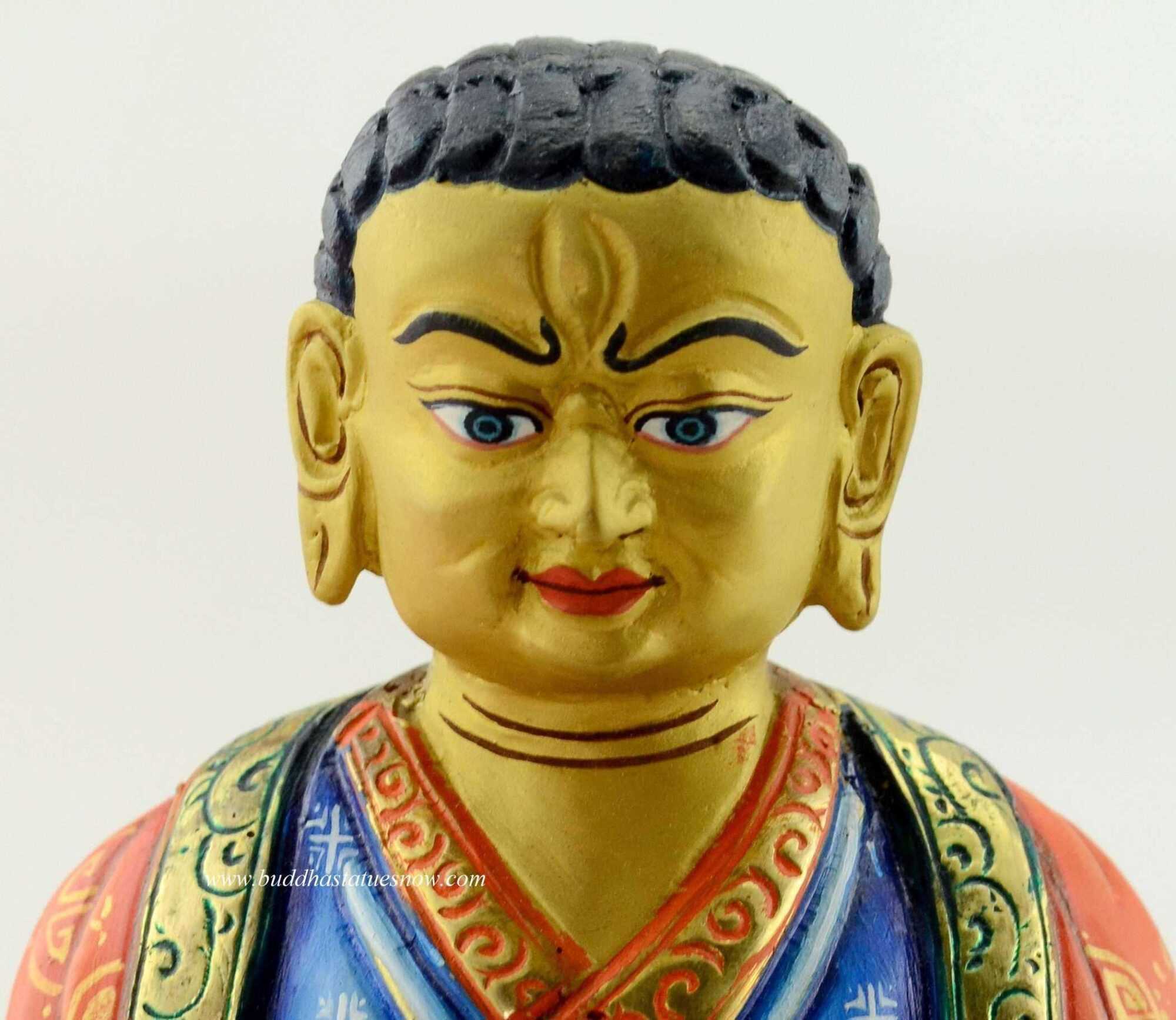
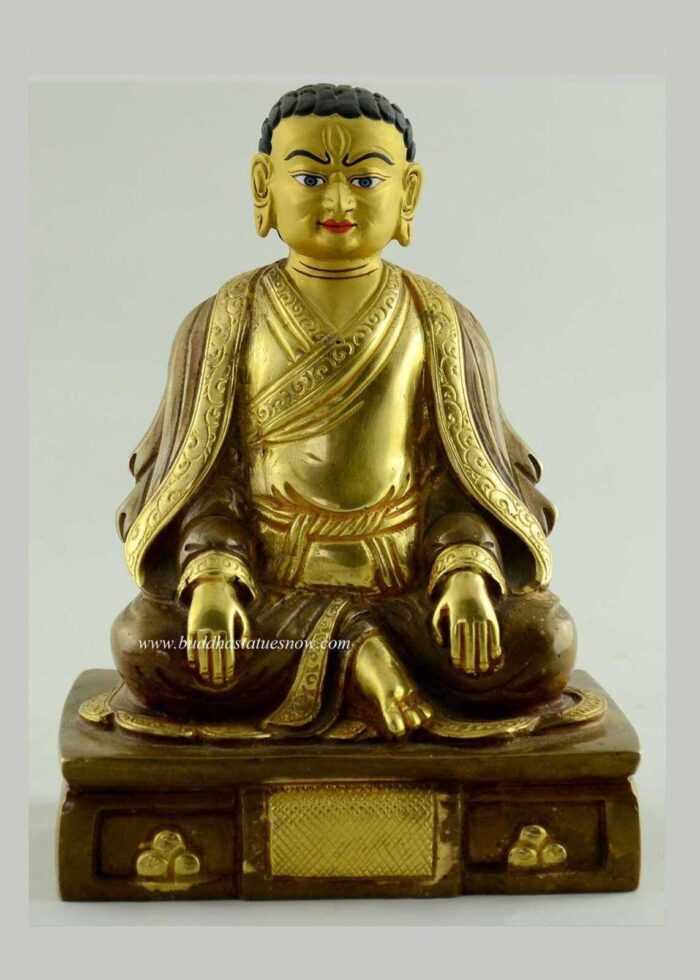
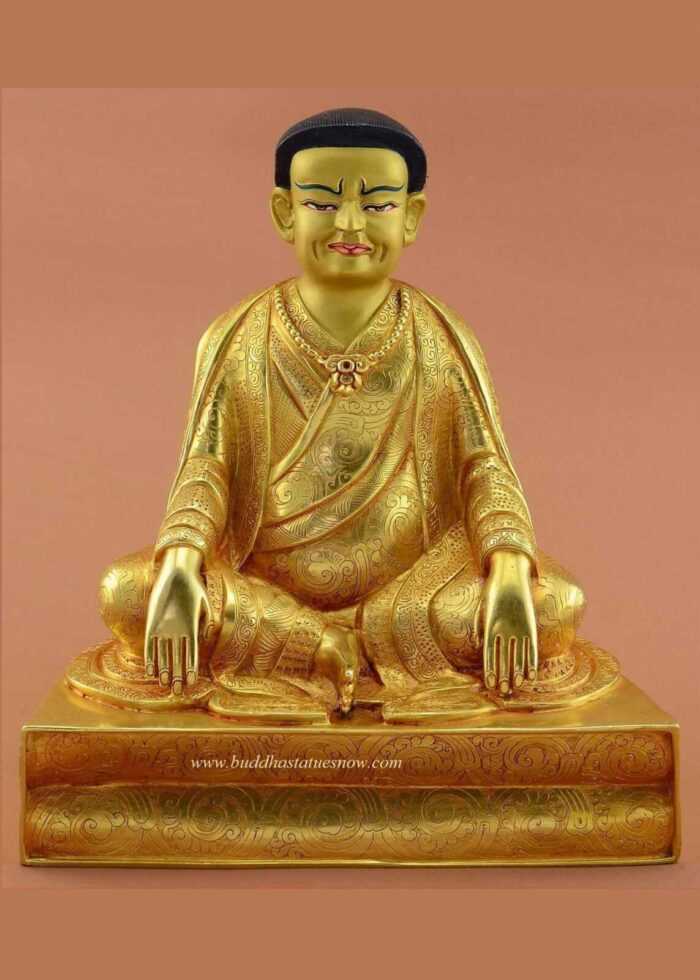
This 6″ Guru Marpa statue is finished in a vivid multicolored treatment partly gilded in 24K gold — the robes painted in the traditional Tibetan palette of orange-red outer robe, blue inner robe, and dark lower garments, with gold trim on the robe borders and gilded hands and face, seated on an engraved multicolored rectangular throne base of blue, red, and green. This presentation closely follows the aesthetic of Tibetan thangka painting rather than the Newar gilded metalwork tradition, making it the more visually colourful of the two Guru Marpa statues in the collection and the more accessible introduction to his iconography for buyers who recognize the Tibetan painted style. The statue was handcrafted in Patan, Nepal by a master Newar artisan using the traditional lost wax sculpting method. Learn more about Guru Marpa statues and his role in founding the Kagyu lineage.
Marpa Lotsawa (Marpa the Translator, 1012–1097 CE) was born in southern Tibet to a wealthy family but converted his inheritance into gold to fund his journeys to India. His primary teacher was the Indian mahasiddha Naropa — one of the most influential figures in the entire Vajrayana transmission lineage — from whom Marpa received the Mahamudra teachings and the Six Yogas that became the foundation of the Kagyu school. He also studied under Naropa’s disciples Chitherpa and Chaindapa, broadening the range of transmissions he brought back to Tibet. Through years of translation work he rendered these Sanskrit teachings into Tibetan, earning the title Lotsawa (Translator) that became his defining epithet — a recognition that his contribution was not merely scholarly but an act of cultural and spiritual transmission that made the living Mahamudra lineage available to Tibetan practitioners for the first time. His most celebrated disciple was Milarepa, who after years of demanding trials became the principal heir of the Kagyu lineage following the death of Marpa’s son.
Guru Marpa Statue Features
This statue depicts Marpa seated on an animal skin — the traditional seat of Tibetan masters trained in the Indian tantric tradition, reflecting Marpa’s identity as a householder tantric practitioner rather than a monk. His expression in this multicolored presentation conveys a quiet authority: historical accounts describe Marpa as having an imposing appearance — some describing fierce features and hair that rose sharply from his head — but the painted format captures a different aspect of the same figure, the master at rest between journeys, the translator at peace with his achievement. Explore the four schools of Tibetan Buddhism in our complete guide to Tibetan Guru statues.
Authentic, Handmade in Nepal
Every statue is handcrafted in Patan, Nepal, using traditional lost wax casting and comes with a certificate of authenticity issued by Nepal’s Department of Archaeology, verifying its materials, technique, and origin.
chr.boesel (verified owner) –
I received this coloured Marpa two weeks ago, beautiful statue, we are totally happy with him. In the Foto Marpa is sitting together with some family members, waiting to be filled and consecrated here in Europe. Five stars also for all the communication with Edwin!