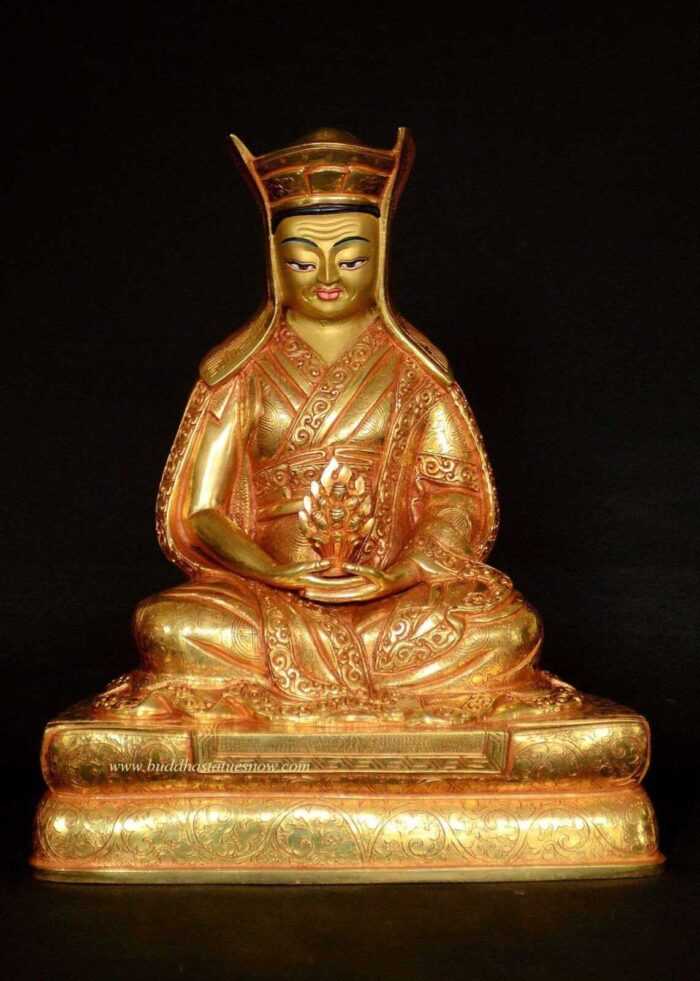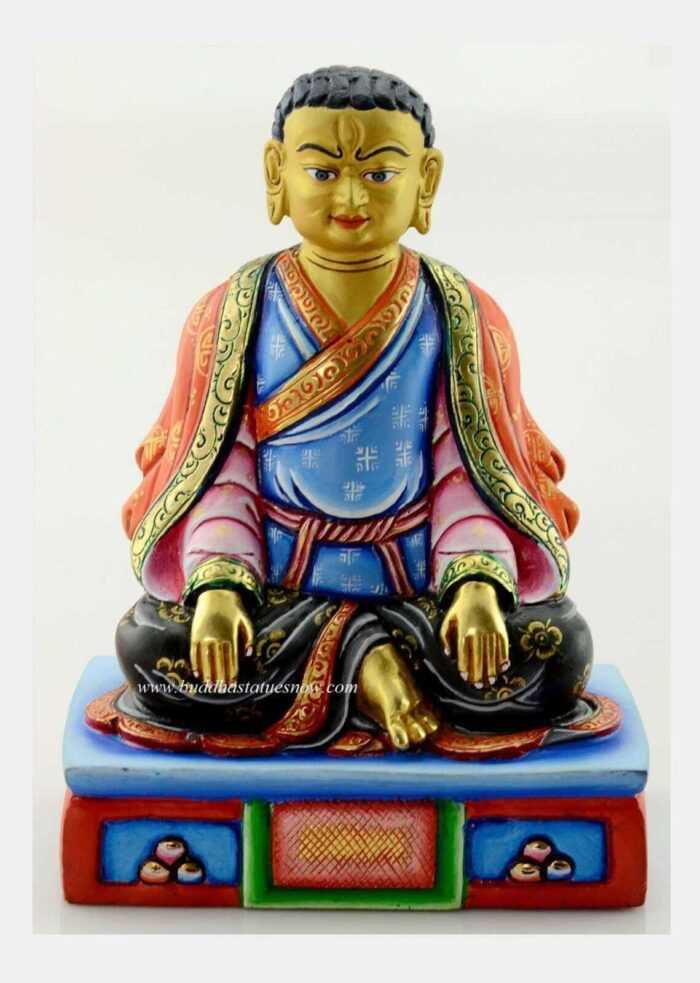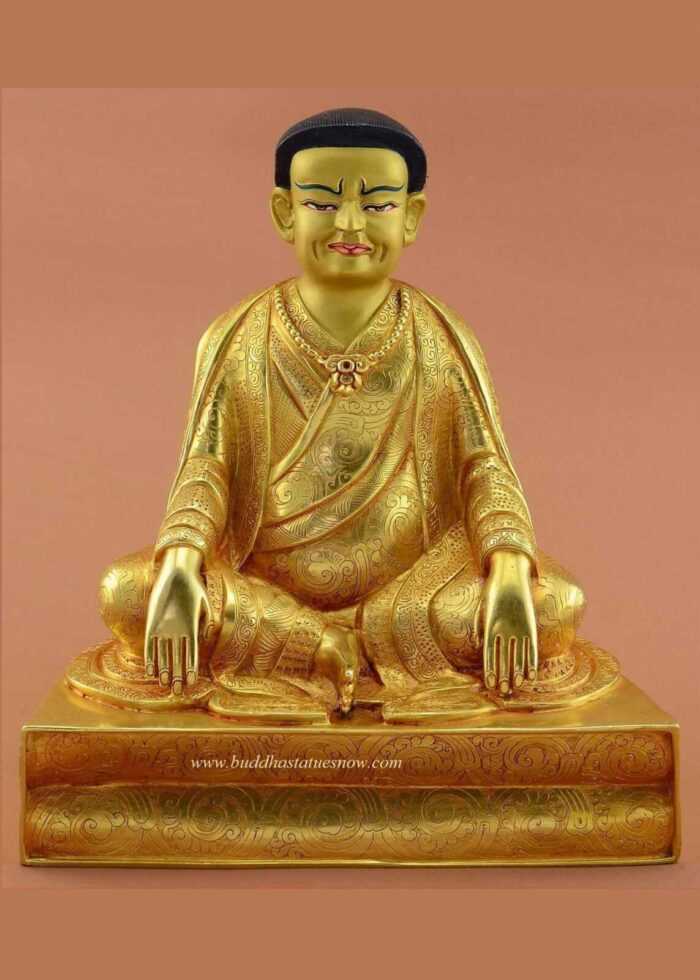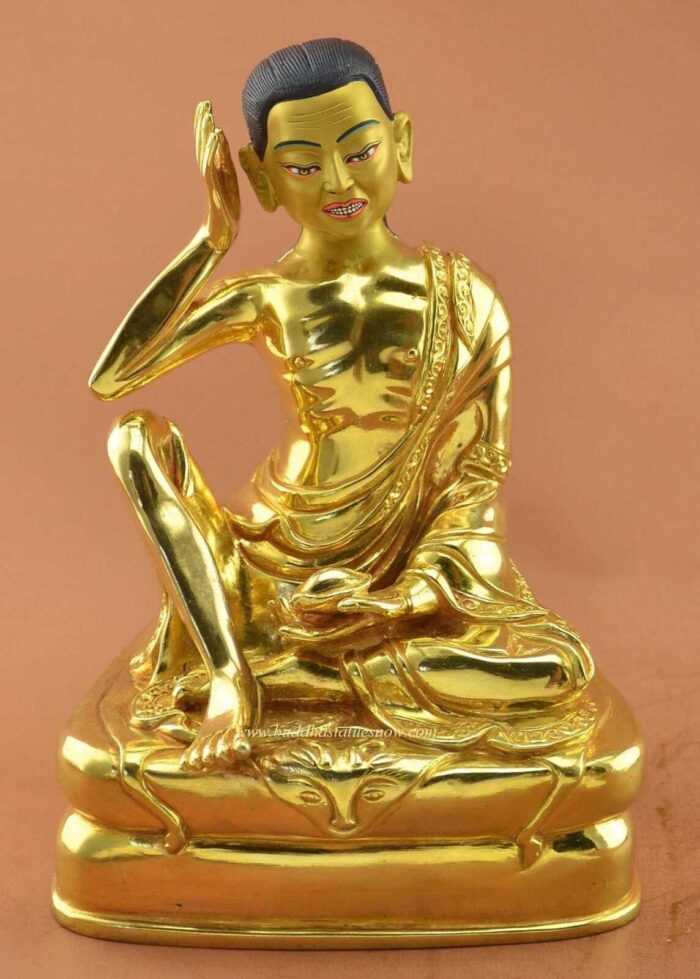

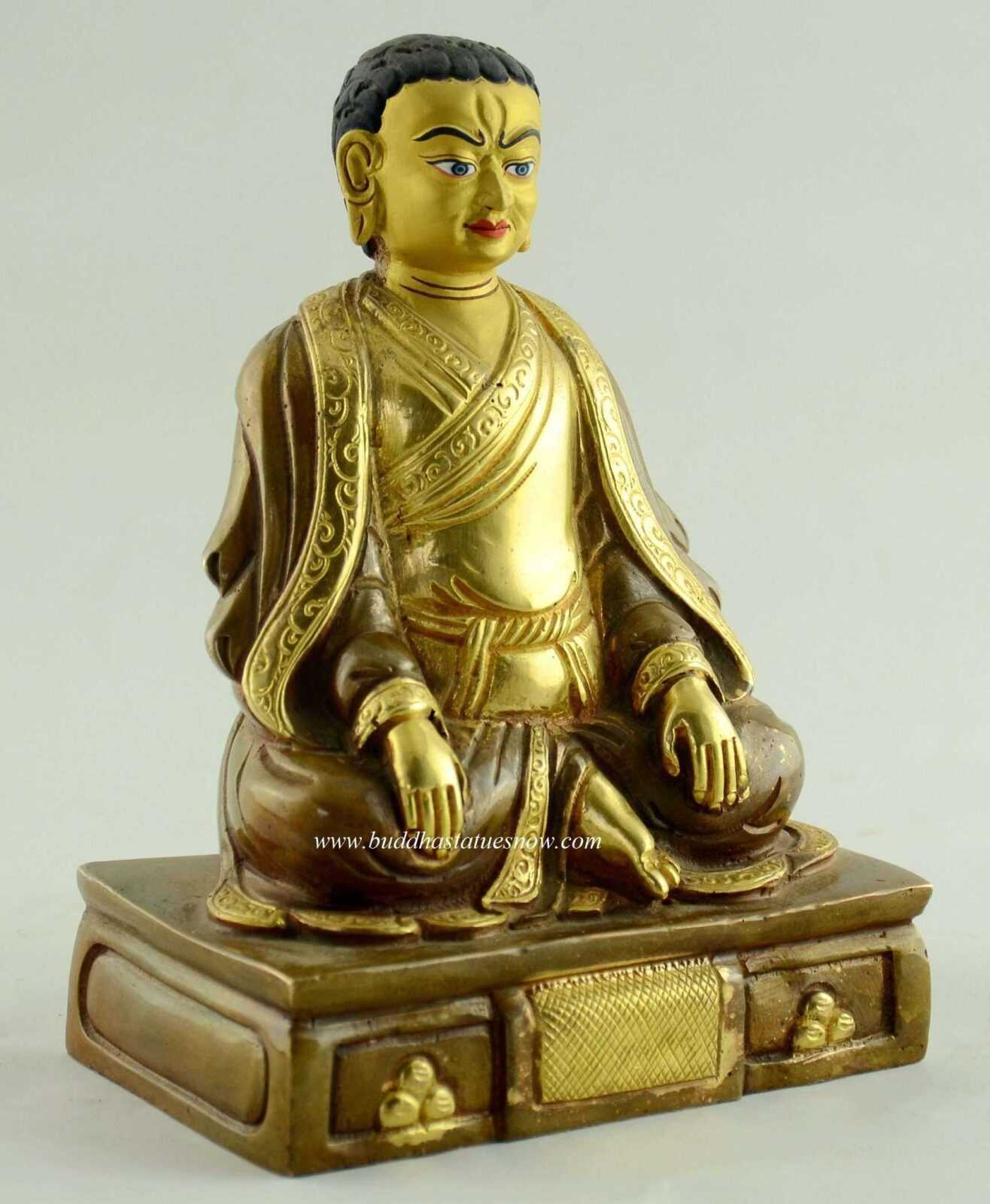
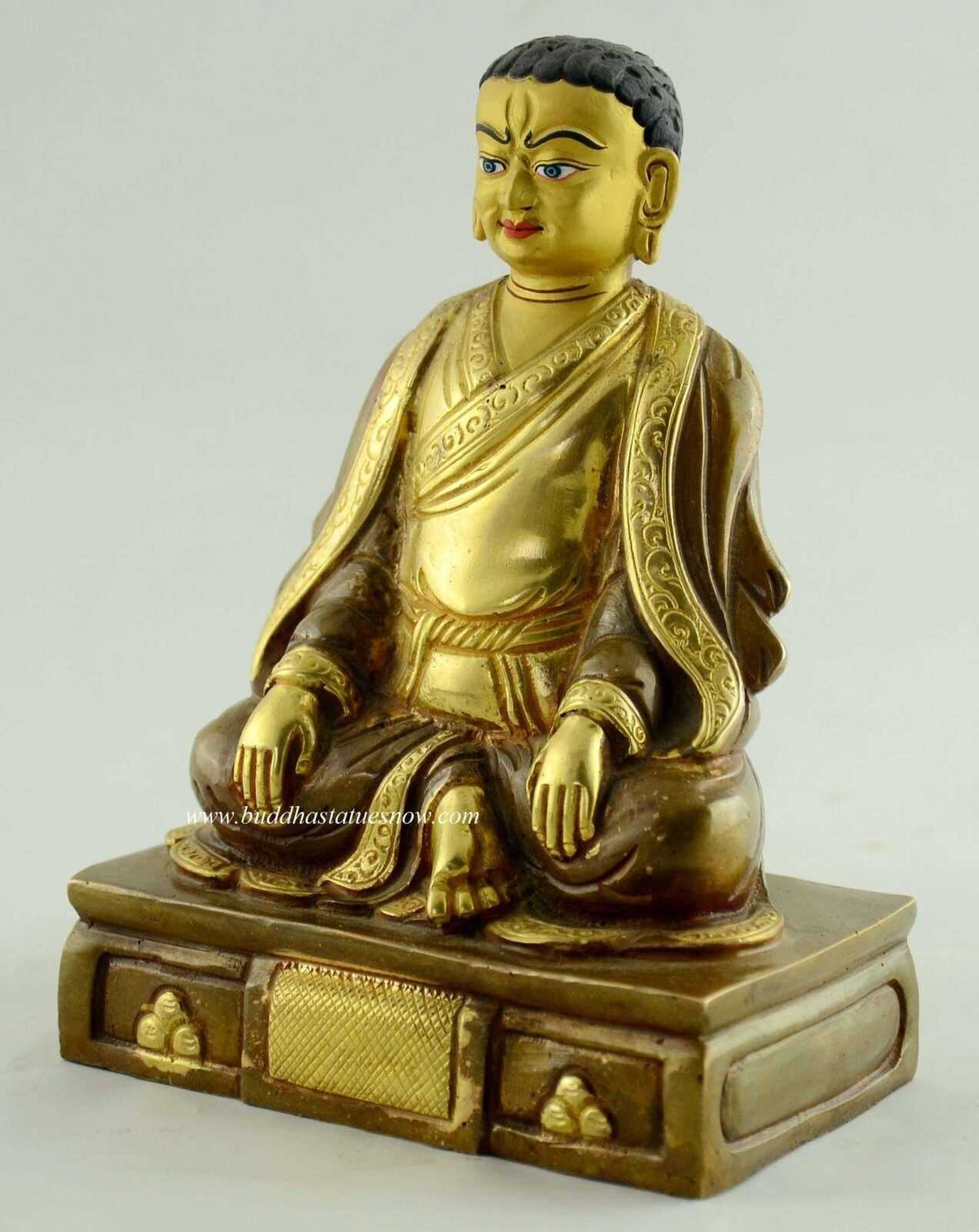
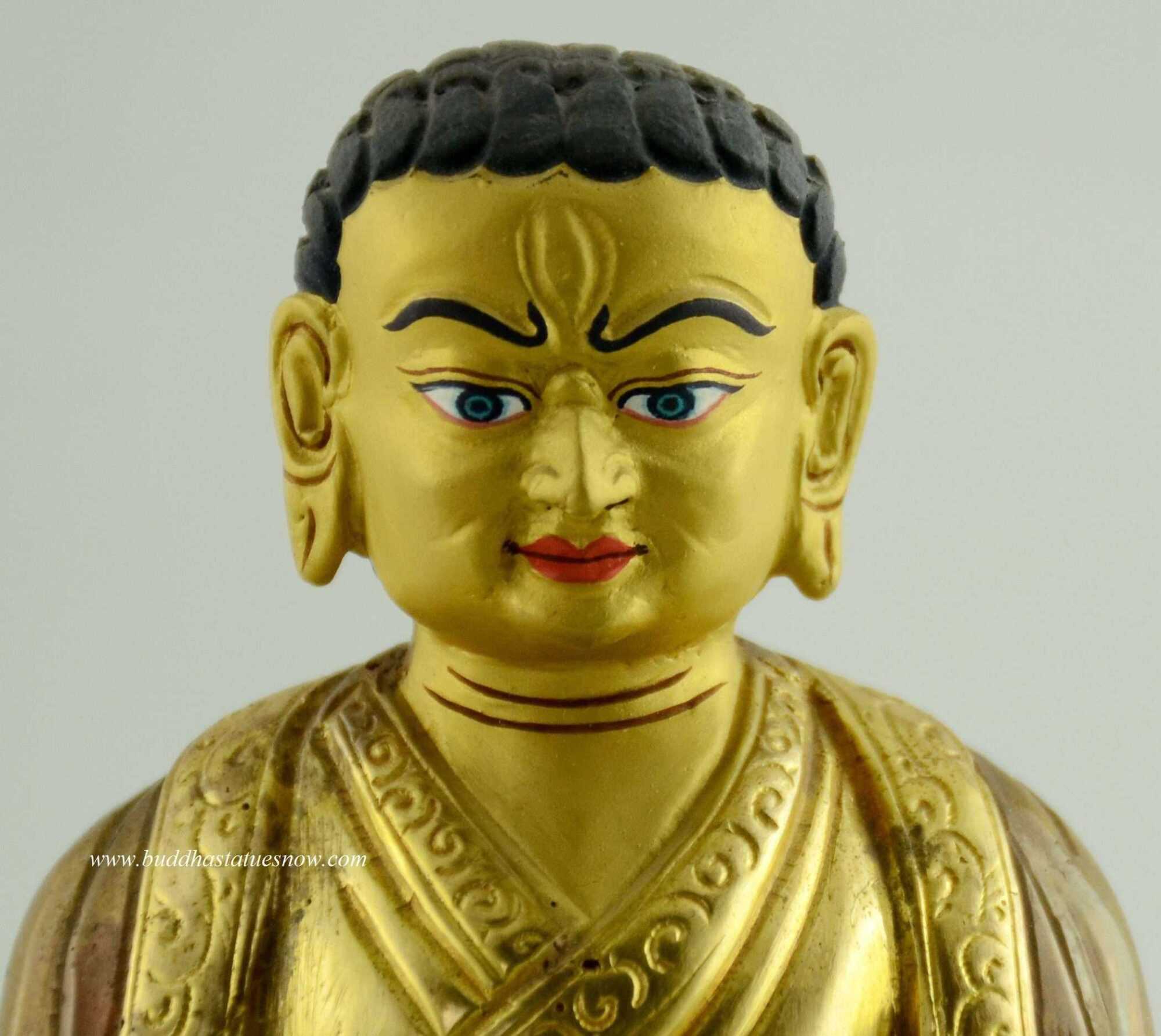
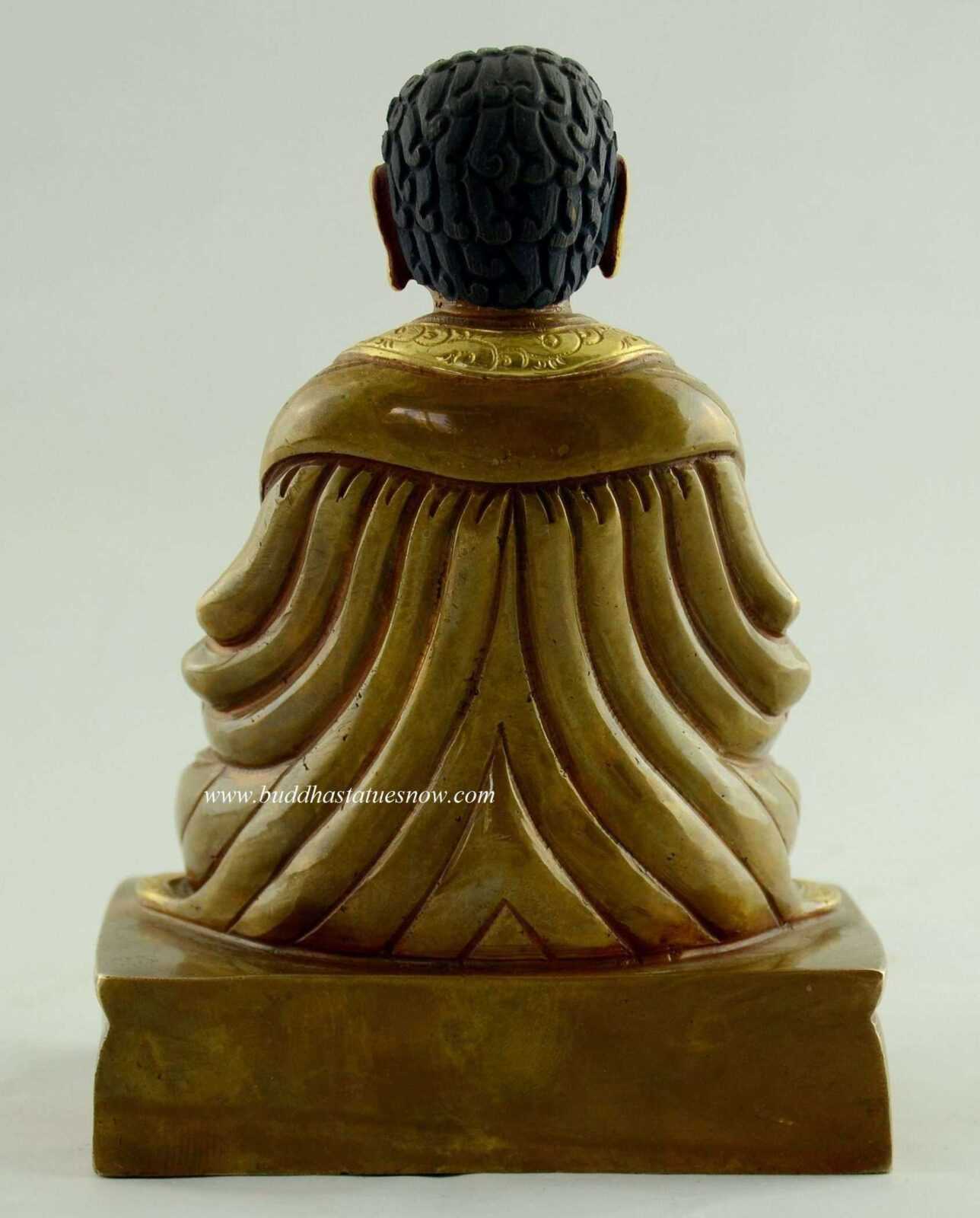
This 6″ Guru Marpa statue is finished in an antiquated treatment — gold fire gilding on the face, chest, and robe trim against dark oxidized copper outer robes and throne base — giving the figure a warm, aged quality that suits a Kagyu practice altar where continuity with the ancient tradition is the aesthetic intention. At 6″ this is a substantial personal altar piece with the scale to serve as the central teacher figure on a dedicated Kagyu shrine. The statue was handcrafted in Patan, Nepal by a master Newar artisan using the traditional lost wax sculpting method. The Shakya artisans of Patan have supplied sacred sculpture to Tibetan monasteries for centuries, and this figure reflects that tradition at the level of craftsmanship Kagyu lineage holders require.
Marpa Lotsawa (Marpa the Translator, 1012–1097 CE) founded the Kagyu school not as a monk but as a householder — married, raising children, farming his land in Lhodrak, southern Tibet. He made multiple journeys to India, funding his travels by converting his family inheritance into gold, to study under the mahasiddha Naropa and receive the Mahamudra teachings and Six Yogas that became the foundation of the Kagyu transmission. His choice to live as a householder practitioner rather than take monastic vows was deliberate and doctrinally significant: it demonstrated that the Vajrayana path to realization is available within ordinary family and working life, not only within the monastery, a principle that has shaped the Kagyu tradition’s particular character ever since. He acquired many disciples, the most celebrated being Milarepa — who became the principal lineage heir after the death of Marpa’s son Tarma Dode, through whom Marpa had originally intended to pass the transmission, and whose nine-story stone tower built in Lhodrak is said to stand to this day as a monument to their extraordinary teacher-student relationship.
Guru Marpa Statue Features
The statue depicts Marpa in the posture of a seated Tibetan master — grounded, at rest, his expression combining the authority of a great teacher with the accessibility of a householder who remained rooted in ordinary life throughout his career. The antiquated finish gives the figure the visual depth of aged copper beneath the gold, evoking the historical distance between the eleventh-century lineage holder and the practitioner who places this statue on a twenty-first-century altar — and the living continuity of the transmission that connects them. Explore the four schools of Tibetan Buddhism in our complete guide to Tibetan Guru statues.
Authentic, Handmade in Nepal
Every statue is handcrafted in Patan, Nepal, using traditional lost wax casting and comes with a certificate of authenticity issued by Nepal’s Department of Archaeology, verifying its materials, technique, and origin.