

This exceptional 10.75″ Handmade Medicine Buddha statue represents Bhaisajyaguru, the Master of Healing, in the traditional monastic form of an awakened Buddha. Handcrafted from copper alloy by a master Newar artisan in Patan, Nepal, the sculpture was created through the traditional lost-wax casting method and fire gilded in pure 24K gold. The warm gilded surface illuminates the Buddha, robes, ritual attributes, and double lotus throne, while carefully darkened recesses reveal the depth of the hand-carved details. His face is separately hand painted with 18K gold and natural pigments, giving Medicine Buddha a calm, compassionate expression framed by dark brows, gently lowered eyes, softly colored lips, and the urna of enlightened wisdom.
The most distinctive quality of this Handmade Medicine Buddha statue is the extensive sacred engraving incorporated throughout the robes and pedestal. Rather than limiting the decoration to narrow garment borders, the artisan has added Tibetan auspicious symbols, cloud forms, geometric bands, circular emblems, and finely carved ornamental panels across both the front and reverse. The decoration continues around the double lotus throne, where raised repoussé-style symbols include deer, a Dharma wheel, a vajra, and other auspicious motifs. These details make the back of the sculpture nearly as visually significant as the front and allow the statue to be appreciated from every direction upon an open shrine.
Handmade Medicine Buddha Statue Healing Symbolism
Medicine Buddha embodies the healing activity of enlightened wisdom. Buddhist teachings frequently compare the Buddha to a skilled physician, suffering to an illness, the Dharma to the medicine prescribed for that illness, and diligent practice to the treatment through which recovery becomes possible. This analogy closely parallels the Four Noble Truths: suffering is recognized, its causes are diagnosed, cessation is understood as possible, and the path provides the treatment that removes the causes of suffering.
A Medicine Buddha image therefore represents more than the wish for recovery from physical illness. Bhaisajyaguru is approached for help with bodily disease, emotional distress, harmful habits, karmic obscurations, and the ignorance that sustains recurring dissatisfaction. His twelve great vows express a broad commitment to relieve suffering, restore ethical discipline, provide necessities to those in deprivation, guide beings away from mistaken paths, and create conditions favorable for awakening. Learn more about his mantra, vows, and healing activity in our complete guide to Medicine Buddha statues and practice.
Varada Mudra and the Myrobalan Plant
Medicine Buddha extends his right hand over the knee in the Varada mudra, the gesture of generosity, blessings, and compassionate giving. The open palm faces outward toward sentient beings, expressing his readiness to provide whatever form of assistance is genuinely beneficial. A sacred emblem is engraved within the palm, adding another finely worked detail to the iconography. Between the fingers he holds the stem of the myrobalan plant, which rises beside his right knee in an elaborate cluster of leaves and fruit.
Myrobalan has long been used in traditional Himalayan and Ayurvedic medicine and is the principal botanical attribute identifying Medicine Buddha. Within Buddhist symbolism, the plant also represents perfected wisdom capable of diagnosing and treating suffering at its source. It therefore joins the meaning of a physical remedy with the spiritual medicine of the Dharma. The richly modeled plant gives the statue an organic counterpoint to the precisely engraved robe and pedestal while emphasizing that enlightened compassion responds directly to the needs of living beings.
Medicine Bowl and the Three Healing Nectars
His left hand rests in his lap in the Dhyana mudra, the gesture of meditation, concentration, and inner equilibrium. Supported within the open palm is the traditional medicine bowl, ornamented with a carefully sculpted healing emblem rising from its contents. The bowl is understood to contain medicinal nectar capable of counteracting the three poisons of ignorance, attachment, and hatred. These mental afflictions are regarded as the underlying causes from which harmful actions, emotional turmoil, and continued suffering develop.
The complementary positions of the two hands unite compassionate activity with contemplative wisdom. The right hand reaches toward the world with the medicinal plant, while the left remains centered in meditation with the healing bowl. Together they express the principle that lasting healing requires both practical care and a clear understanding of causes and conditions. This balanced iconography makes the statue especially suitable for Medicine Buddha mantra practice, healing prayers, meditation, or the dedication of merit for relatives, teachers, patients, and other beings experiencing illness.
Tibetan Auspicious Symbols Engraved Across the Robes
The monastic robes are decorated with an unusual collection of sacred Tibetan motifs. Circular medallions, cloud forms, floral emblems, geometric key patterns, and auspicious symbols are distributed across the shoulder covering, sleeves, folded legs, and rear garment. The engraving is especially impressive from behind, where the broad robe becomes a field for individually carved symbols rather than an undecorated polished surface. Raised borders separate the different panels and give the garment the appearance of a richly embroidered ceremonial textile.
The Eight Auspicious Symbols of Tibetan Buddhism, collectively known as the Tashi Tagye, represent a complete range of blessings associated with the presence and teaching of an awakened Buddha. The parasol signifies protection; the golden fish represent freedom from fear and the ocean of cyclic existence; the treasure vase expresses inexhaustible merit; the lotus symbolizes purity; the conch announces the Dharma; the endless knot reveals interdependence; the victory banner represents triumph over obstacles; and the Dharma wheel expresses the liberating teaching itself. Their inclusion is especially appropriate for Medicine Buddha because healing requires supportive conditions, protection, wisdom, merit, and the removal of obstacles.
Repoussé Symbols on the Double Lotus Throne
Medicine Buddha sits in full lotus posture upon a substantial double lotus throne formed by two complete registers of overlapping petals. The smaller upper row supports the Buddha beneath a finely beaded rim, while the larger lower petals broaden the pedestal and give the sculpture a commanding altar presence. The petals are carefully modeled with recessed details that catch the light differently from the smoother surrounding surfaces.
The reverse of the pedestal contains an especially rich program of raised repoussé-style decoration. A pair of deer appears beside a central Dharma emblem, recalling the Buddha’s first teaching at Deer Park. A vajra signifies the indestructible nature of awakened mind, while additional auspicious emblems and surrounding decorative forms reinforce the sacred character of the throne. The symbols continue around both levels of the pedestal, ensuring that the rear was treated as an important part of the artwork rather than as an unfinished surface.
The lotus itself symbolizes purity arising within samsara. Just as the flower develops through muddy water without becoming stained, wisdom and compassion can grow amid illness, uncertainty, and the difficulties of conditioned life. Combined with the engraved robes and auspicious throne symbols, the double lotus pedestal gives the sculpture a formal quality appropriate for a dedicated healing altar, shrine room, monastery, medical practice, or Dharma center.
A Matching Handmade Medicine Buddha statue and Shakyamuni Statue Set
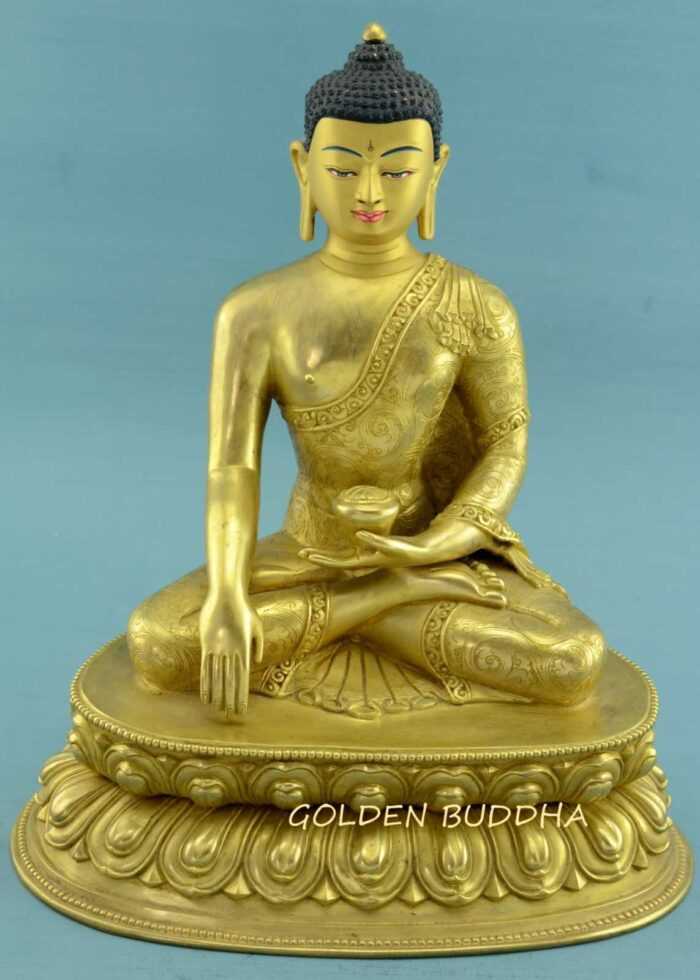
This Handmade Medicine Buddha statue forms a harmonious two-piece altar set with our Handmade Shakyamuni statue. Both sculptures were created by the same master artisan and share copper-alloy casting, rich 24K fire gilding, hand-painted faces, monastic robes, substantial double lotus thrones, and extensive hand-carved decoration across the garments and pedestals. Their closely related proportions, gilding, engraving, and sacred symbols allow the figures to be displayed together as a visually unified shrine pair.
The two Buddhas also complement one another doctrinally. Shakyamuni is the historical teacher who attained enlightenment beneath the Bodhi tree and revealed the Four Noble Truths, the Noble Eightfold Path, and the complete Dharma path beyond suffering. Medicine Buddha embodies the healing application of that awakened wisdom, addressing physical illness, mental affliction, harmful karma, and the deeper causes of suffering. Displayed together, Shakyamuni represents the physician who correctly diagnoses the human condition and teaches the treatment, while Medicine Buddha represents the compassionate healing power through which that treatment is applied. The pair therefore unites the source of the Dharma with its restorative and liberating activity.
Custom Handmade Medicine Buddha Statues
Collectors, practitioners, monasteries, healing centers, and Dharma organizations may commission a custom made Tibetan Buddhist statue inspired by this design. A custom Handmade Medicine Buddha statue may be created in a different size with a rich 24K fire-gilded finish, brighter polished gilding, selective gold details, an oxidized surface, or an antiquated patina over the copper-alloy casting. Available options may include personalized auspicious symbols, alternative robe engravings, custom pedestal ornamentation, hand-painted facial details, and refinements to the myrobalan plant or medicine bowl.
A coordinated Medicine Buddha and Shakyamuni pair may also be commissioned so that both sculptures share the same height, gilding, monastic robe style, engraved symbols, facial treatment, and double-lotus proportions. Creating the figures together allows the artisan to maintain their visual harmony while expressing their doctrinal relationship: Shakyamuni as the historical Buddha who revealed the path and Medicine Buddha as the healing manifestation of awakened wisdom that treats suffering in its physical, emotional, karmic, and spiritual dimensions. Every custom sculpture is individually cast, chased, engraved, fire gilded, painted, and finished by hand in Nepal according to traditional Himalayan iconographic proportions.
Authentic, Handmade in Nepal
Every statue and ritual item is handcrafted in Patan, Nepal, using traditional lost wax casting and comes with a certificate of authenticity issued by Nepal's Department of Archaeology, verifying its materials, technique, and origin.
LP Omaha, Nebraska (verified owner) –
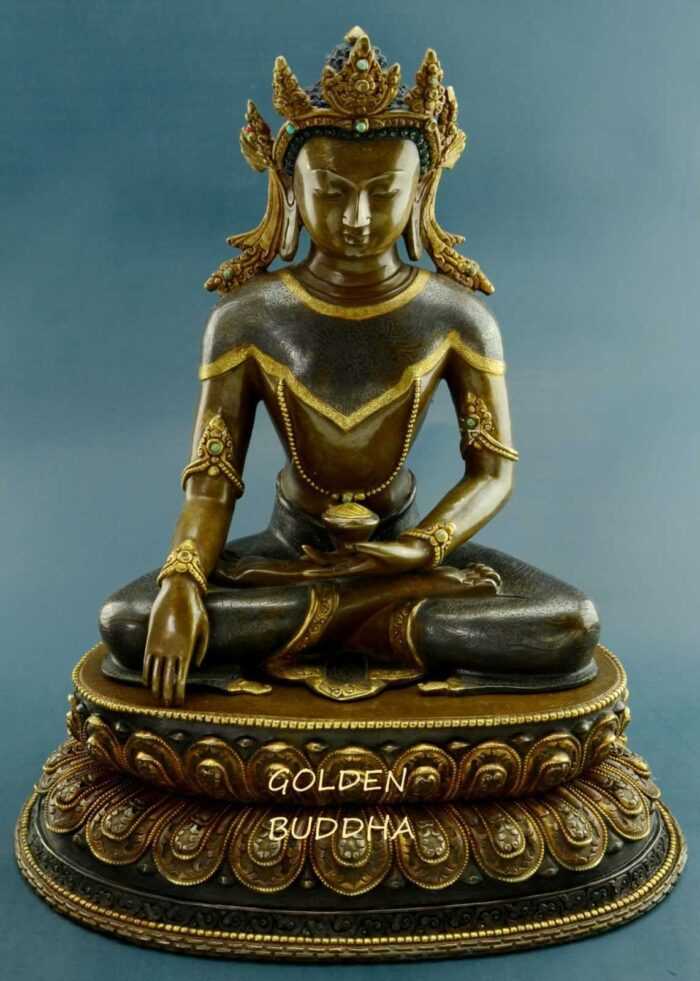
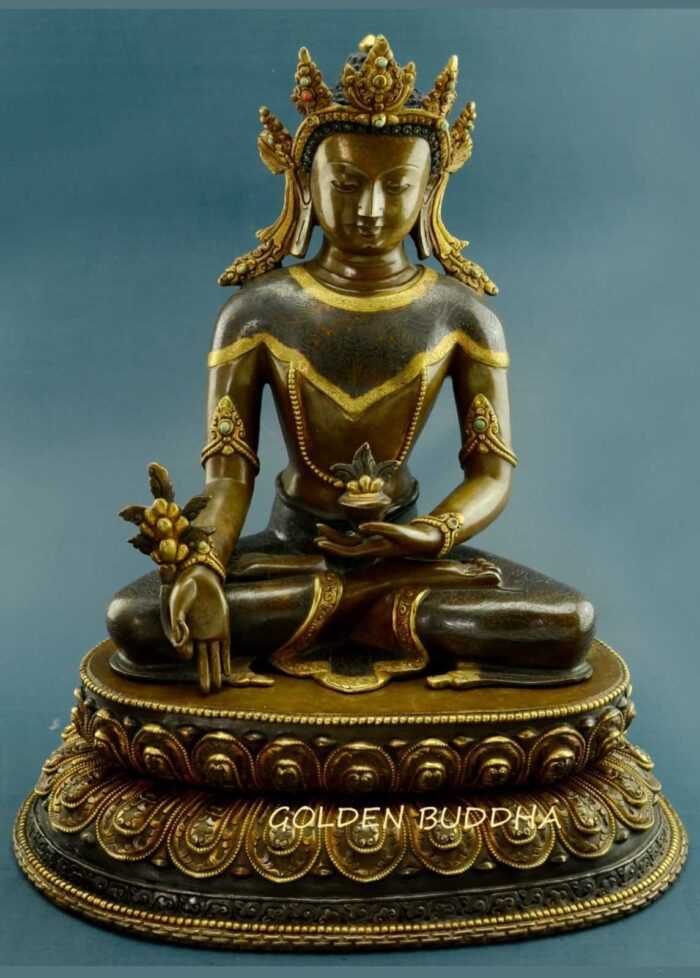
I bought a Medicine Buddha statue from Edwin about a month ago (August 2021). The statue is absolutely beautiful and the “real thing.” The main reason that I am writing this is to assure others who are thinking of buying a statue—or any other item—from Edwin’s website: Please do. You’ll be so glad you did. The statue I received is the very same one shown in the website photos. I also received excellent customer service and guidance from Edwin. I can assure others that they will receive the same. The website receives payment via credit card, but Edwin can arrange to receive payment in other ways such as an international wire transfer, which is the method I used. I had my statue consecrated and asked Edwin if the donation I was considering would be considered generous; He told me it would. I am thinking that this donation is not money; it’s goodwill and gratitude and a very real connection to others. I’m not a paid advocate for Edwin’s website. I’m just a very happy client who is grateful that I found it.
Edwin –
Hi Leslie, thank you very much for your recent purchase and generous monastery contribution. We hope to see you again very soon. -Edwin