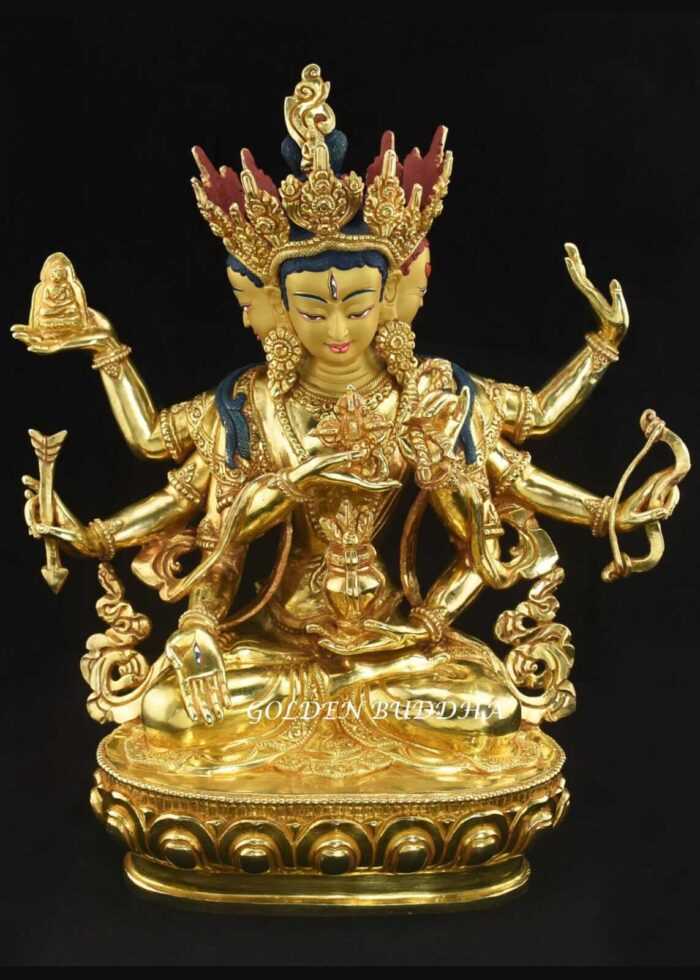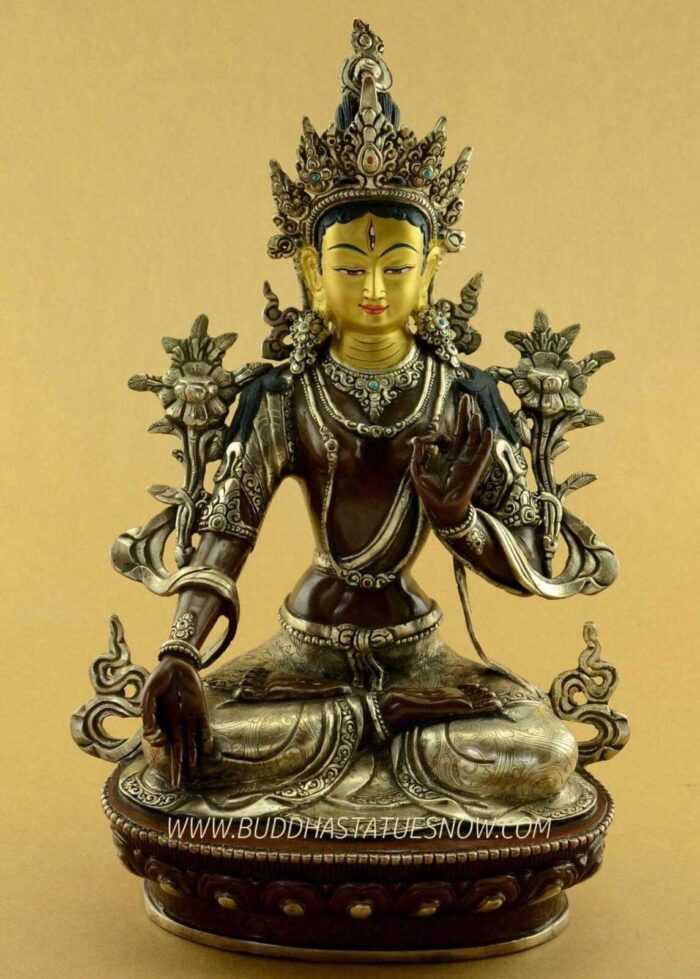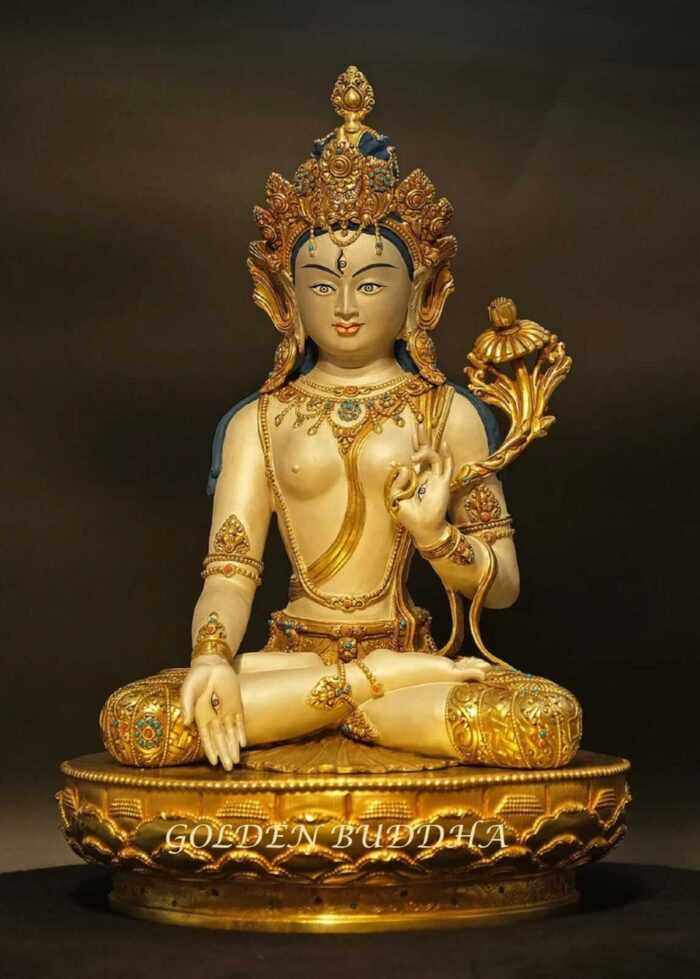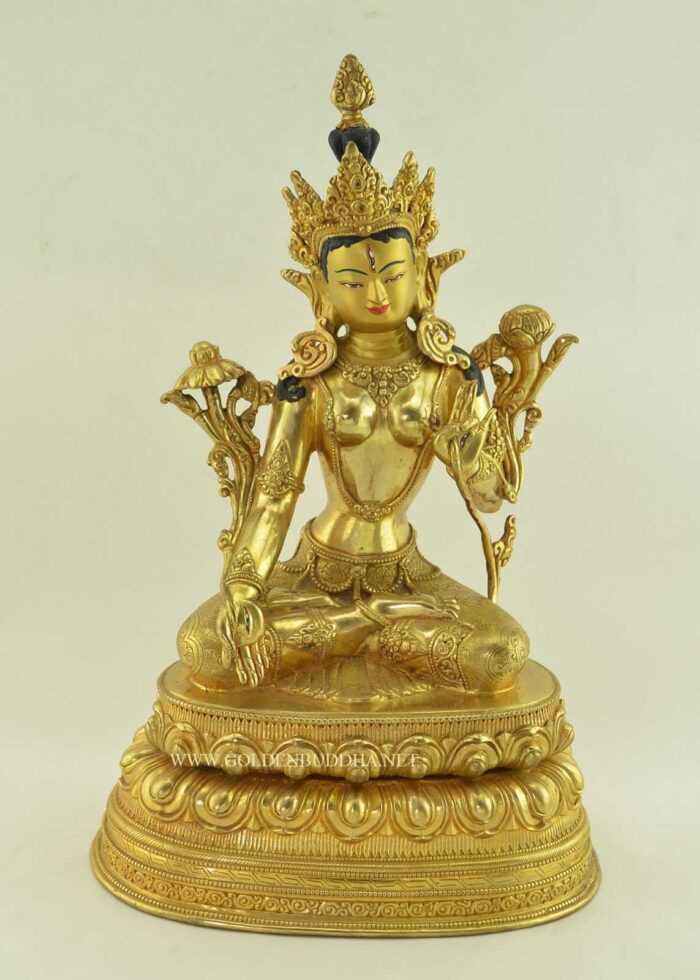
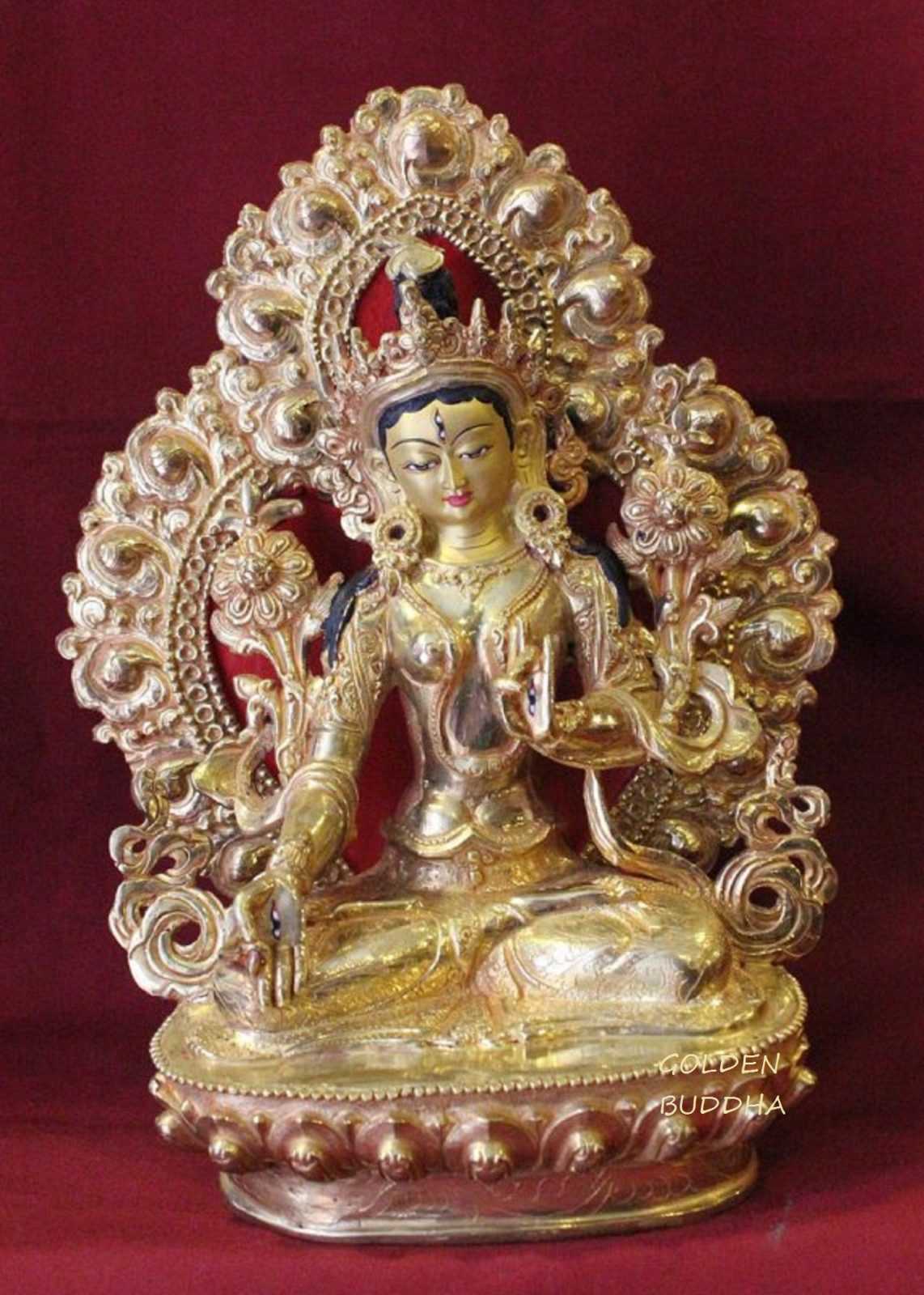
Tara is known as the “mother of liberation,” representing prosperity accumulated through work and achievement — and she appears in many forms, such as our framed White Tara statue. Also known by her Sanskrit name Sita Tara, she is associated with compassion, serenity, long life, and healing. White Tara is likewise known as Cintachakra, the “wish fulfilling wheel,” and it is believed she emanates with the glow of a thousand white moons.
Framed White Tara Statue Features
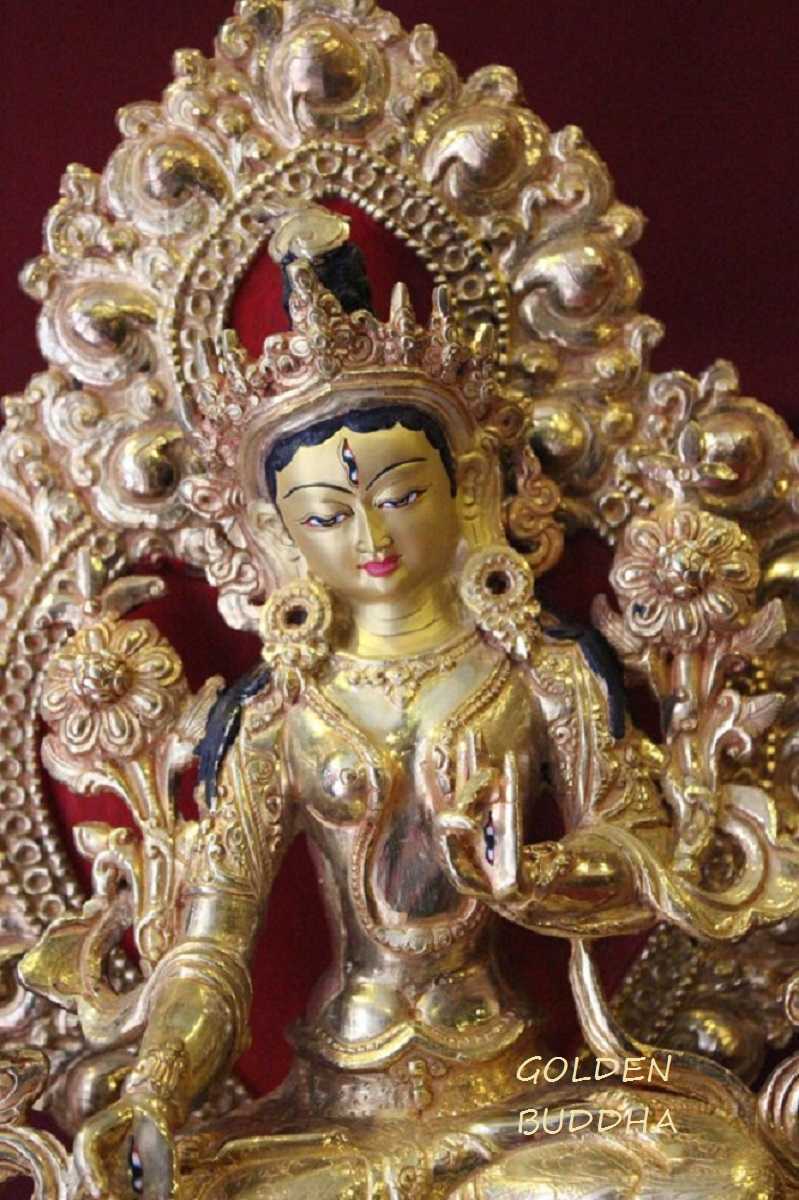
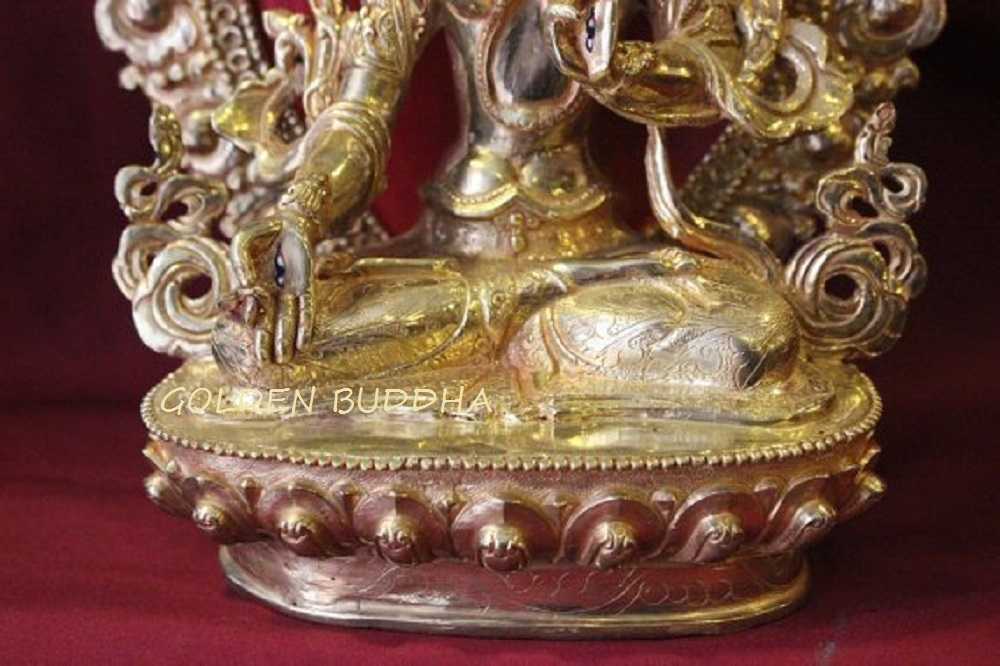
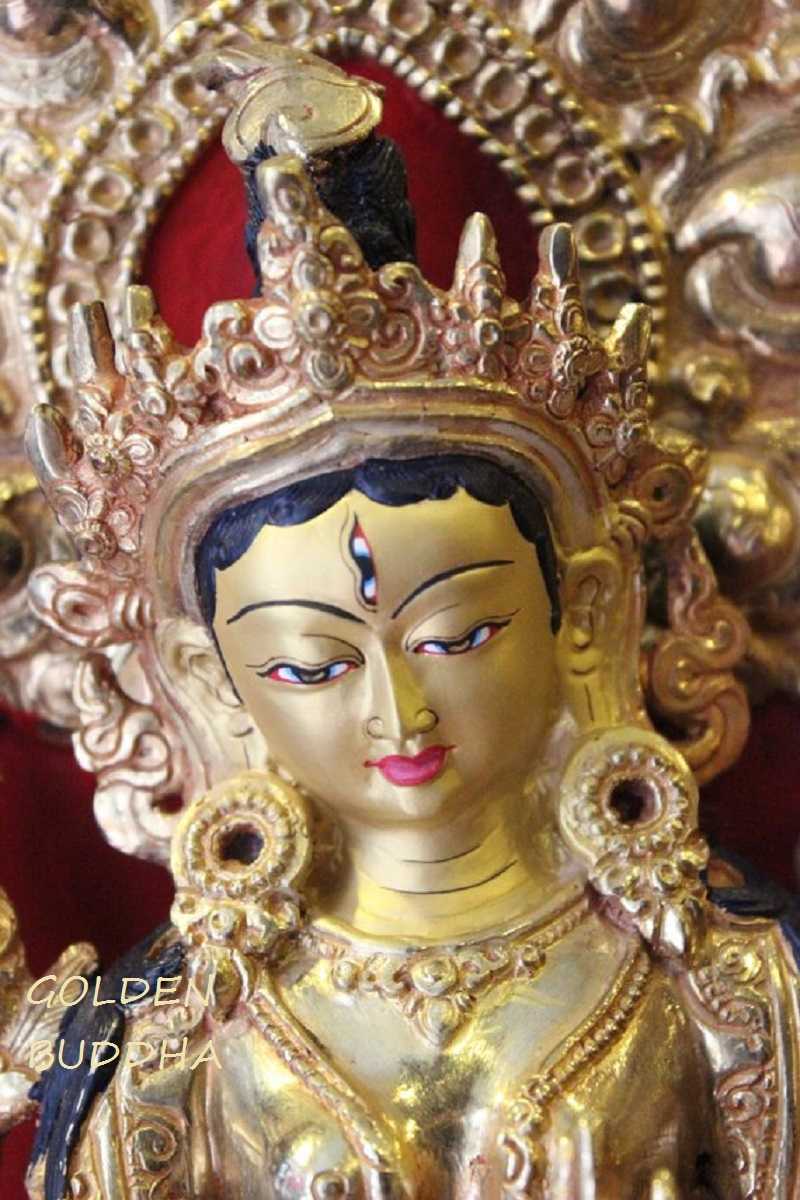
The crowning feature of this statue is its magnificent openwork aureole: a full torana frame of scrolling foliate vines studded with rounded buds, edged in beaded bands, and rising to a peak behind her crown, with lotus rosettes worked into the scrollwork at either side. The entire piece — figure, frame, and throne — is fire gilded with a soft, warm luster, and against it her hand painted face glows with radiant precision: the upright third eye on her forehead, finely lined eyes, and lips finished in red beneath blue-black painted hair. Our Nepali sculptors took great care to catch every last detail in her Bodhisattva crown, jewels, pedestal, and robe — and above all in her seven eyes, painted so that all of her actions and thoughts are insightful and wise. Her raised left hand holds the stem of the lotus in the gesture of refuge and teaching, while her right rests open over the knee in the Varada mudra, the painted eye gazing from each palm.
In Buddhism, poor health is thought to have its origins in defilements such as aversion, attachment, and greed. The attributes of White Tara enable devotees to overcome the defilements by reciting the White Tara mantra, which is recited specifically for longevity, healing, and the removal of obstacles to wellbeing — explore the White Tara mantra and its meaning. With sincere dedication, she may recognize your practice and help you overcome illness. For common questions, see the White Tara statues FAQ, or browse our full collection of White Tara statues to compare sizes and finishes.
Authentic, Handmade in Nepal
Every statue and ritual item is handcrafted in Patan, Nepal, using traditional lost wax casting and comes with a certificate of authenticity issued by Nepal's Department of Archaeology, verifying its materials, technique, and origin.