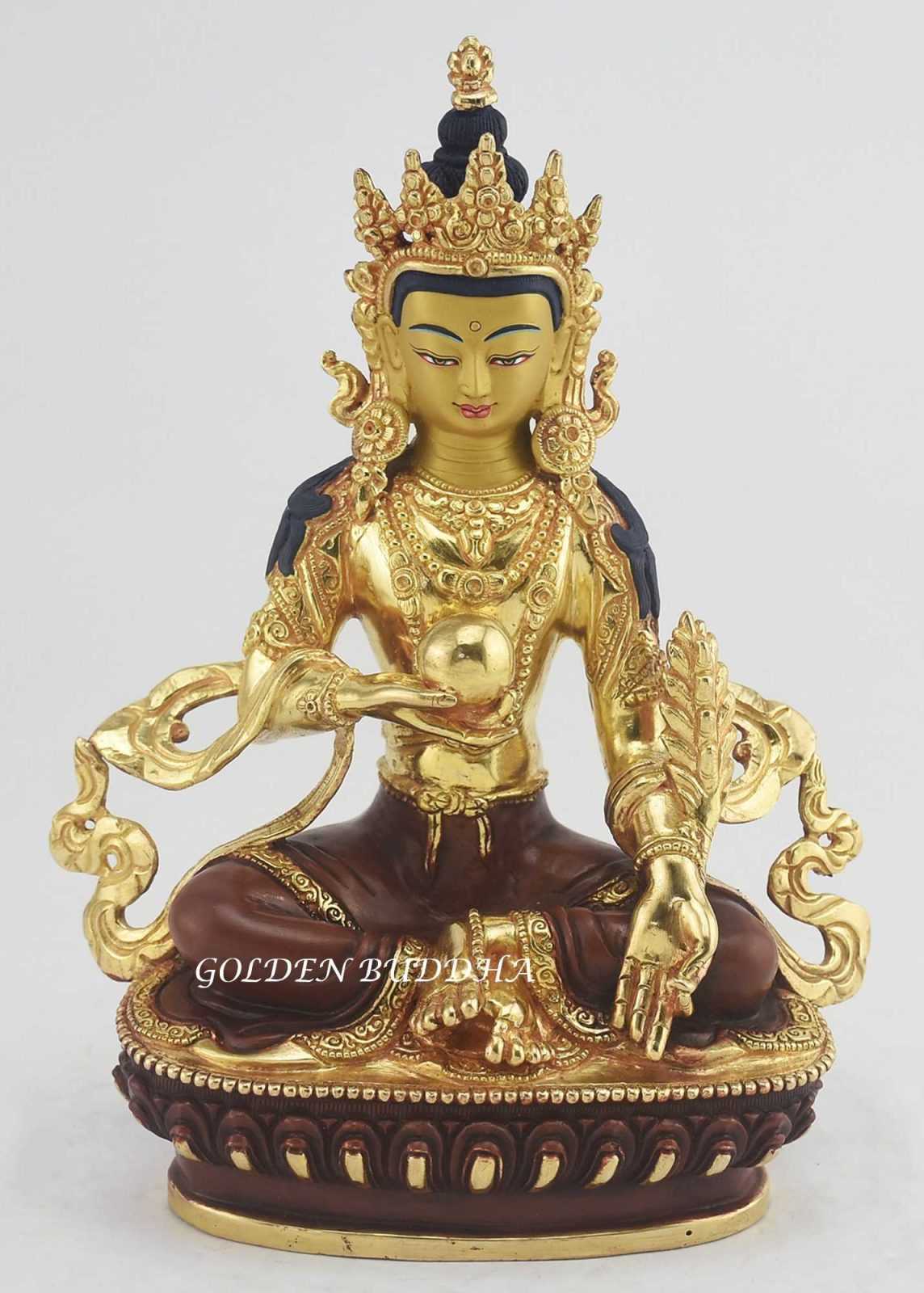
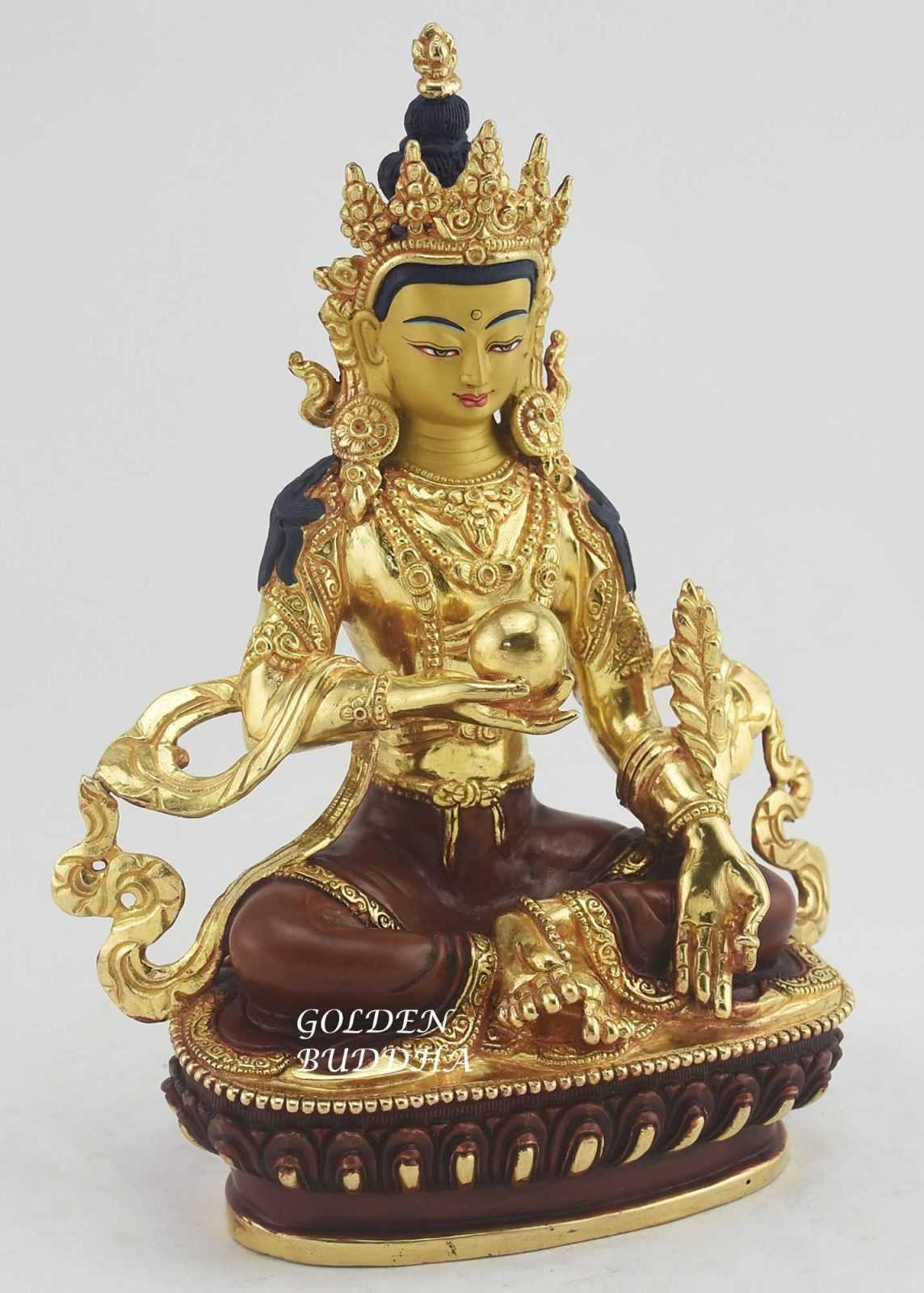


This 9″ Ksitigarbha sculpture is partly fire gilded in 24K gold — the face, crown, chest, and principal ornamental elements gilded against the dark red oxidized copper of the robes and lotus throne — with a hand painted face in fine golden detail. He holds the cintāmaṇi (wish-fulfilling jewel) in his right hand, and in his left hand, arm extended downward, he holds the stem of the myrobalan plant between thumb and index finger — the medicinal herb that in Buddhist iconography represents the healing of all suffering at its root. This combination of attributes reflects the Newar artisan tradition of Patan in which the compassionate healing functions of related deities may be expressed within a single figure: Ksitigarbha’s wish-fulfilling jewel illuminates the darkness of the hell realms, while the myrobalan speaks to the same aspiration from the perspective of the healing tradition — both pointing toward the elimination of suffering in its most fundamental form. The Bodhisattva crown and jewels can be additionally embellished with turquoise and red coral stones at no extra charge before shipping. The sculpture was handcrafted in Patan, Nepal by master Newar artisans using the traditional lost wax sculpting method with fine hand-carved detail throughout the crown, robes, and lotus throne.
Ksitigarbha is one of the four great Bodhisattvas of Mahayana Buddhism, each associated with a sacred pilgrimage mountain in China: Avalokiteshvara at Putuo Mountain, Manjushri at Wutai Mountain, Samantabhadra at Emei Mountain, and Ksitigarbha at Jiuhua Mountain (九華山) in Anhui Province — one of the four most sacred sites in Chinese Buddhism, where pilgrims travel specifically to invoke his vow and generate merit for deceased relatives. His vow — to forgo his own Buddhahood until all beings have been freed from the hell realms, specifically in the period spanning from Shakyamuni Buddha’s teachings to the coming of Maitreya Buddha — is the most extreme compassionate commitment in the Buddhist tradition. In East Asia he is the specific protector of expectant mothers, travelers, firemen, pilgrims, and all beings in transition between states of existence, venerated across China, Japan, Korea, and Vietnam as the Bodhisattva who leaves no being behind.
Ksitigarbha Sculpture Features
This sculpture depicts Ksitigarbha in the full Bodhisattva crowned form — wearing the elaborate crown and jewelled ornaments of an enlightened princely being — seated on a single lotus throne. The cintāmaṇi in the right hand and the myrobalan in the left together express the dual healing aspiration of his compassionate function: the wish-fulfilling jewel that grants what beings most deeply need, and the medicinal plant that addresses the suffering they carry. The partly gilded finish — gold on the face, crown, and key ornamental surfaces against the darker copper of the robes — gives this 9″ presentation a warm, layered contrast suited to a personal practice altar.
Authentic, Handmade in Nepal
Every statue and ritual item is handcrafted in Patan, Nepal, using traditional lost wax casting and comes with a certificate of authenticity issued by Nepal's Department of Archaeology, verifying its materials, technique, and origin.