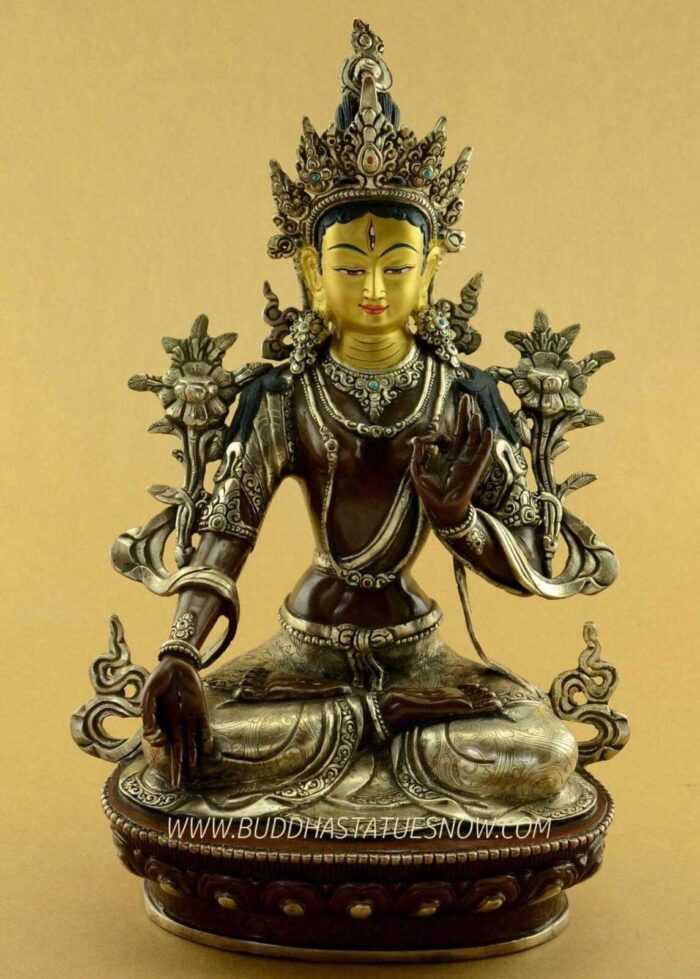
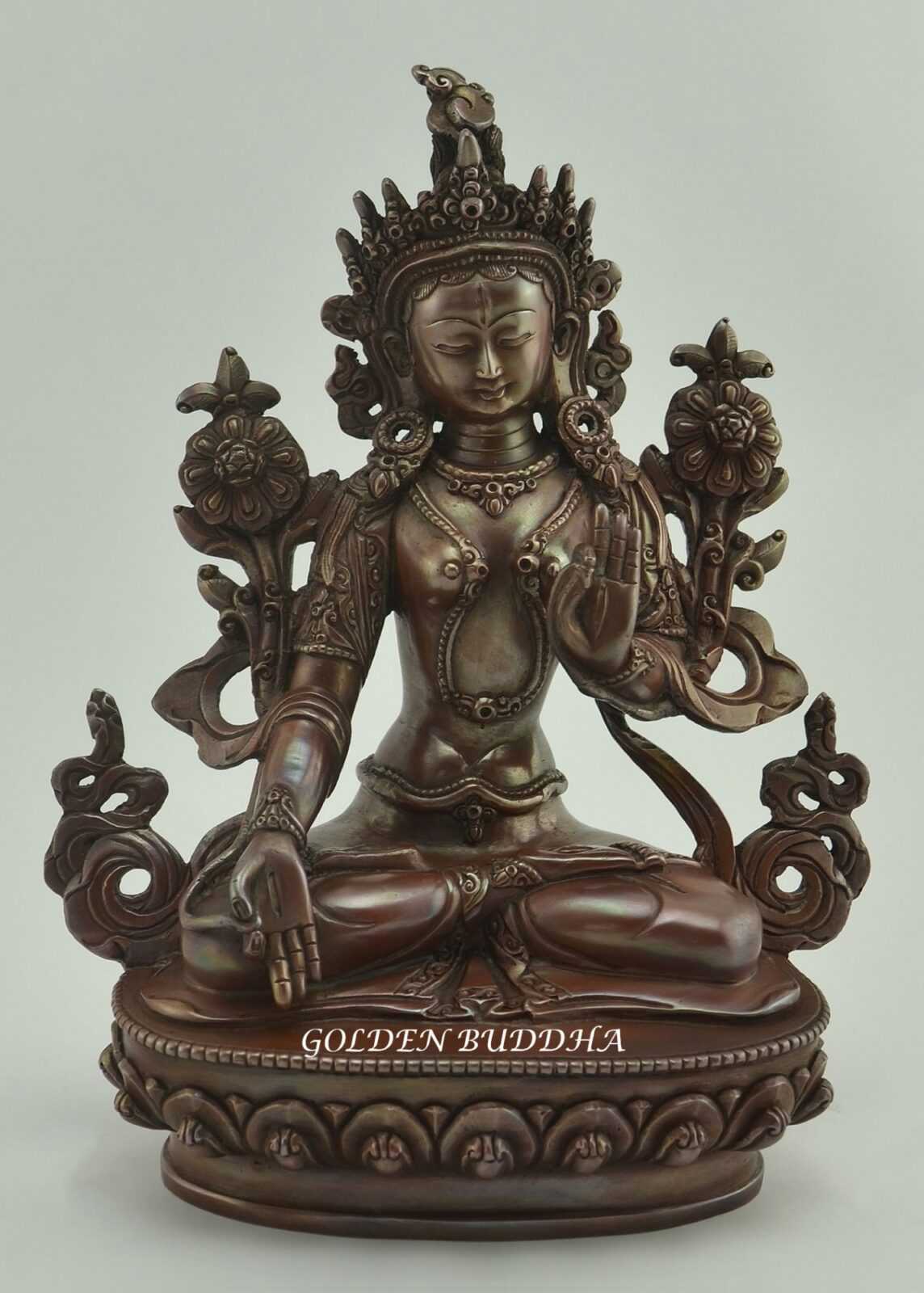
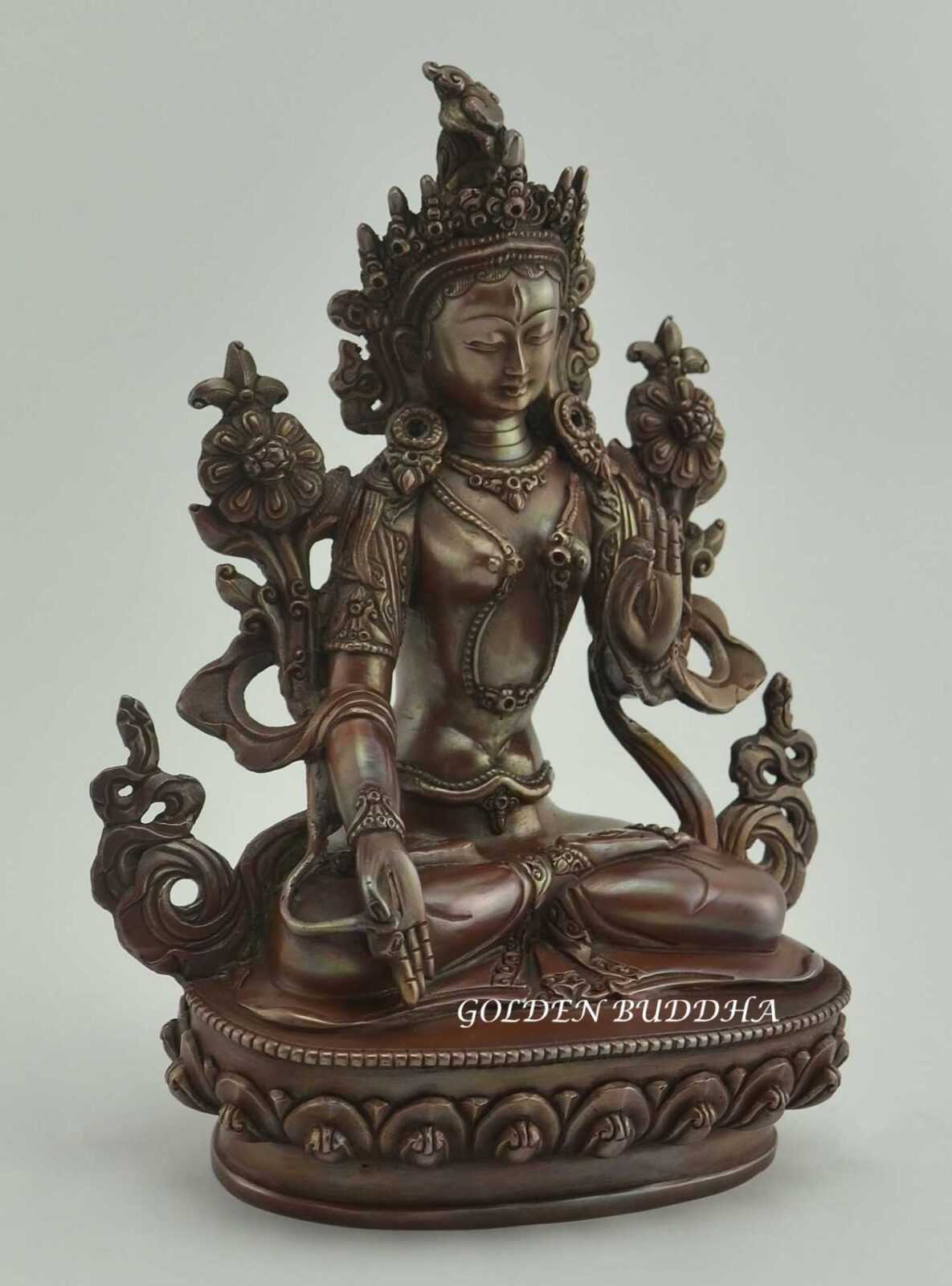
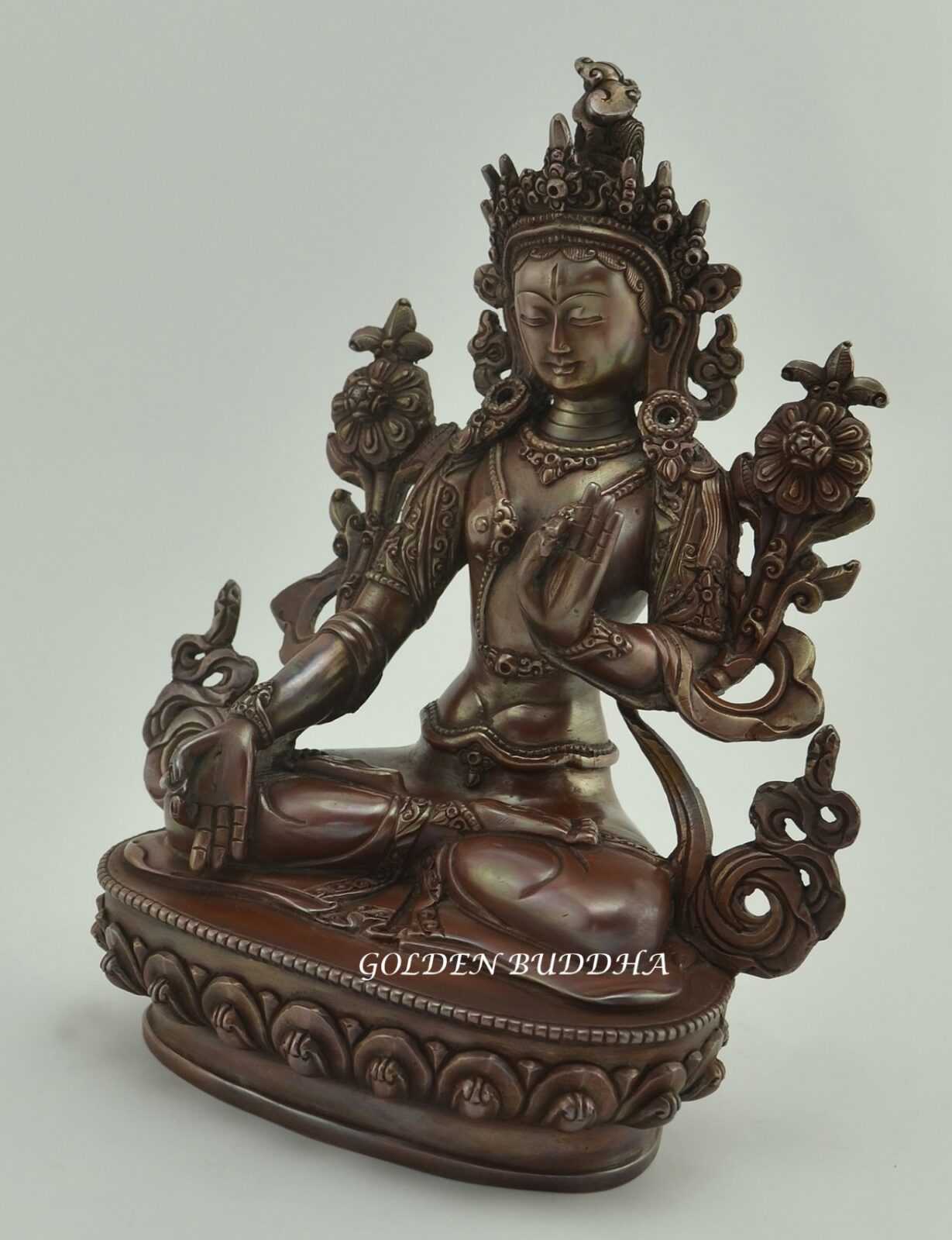
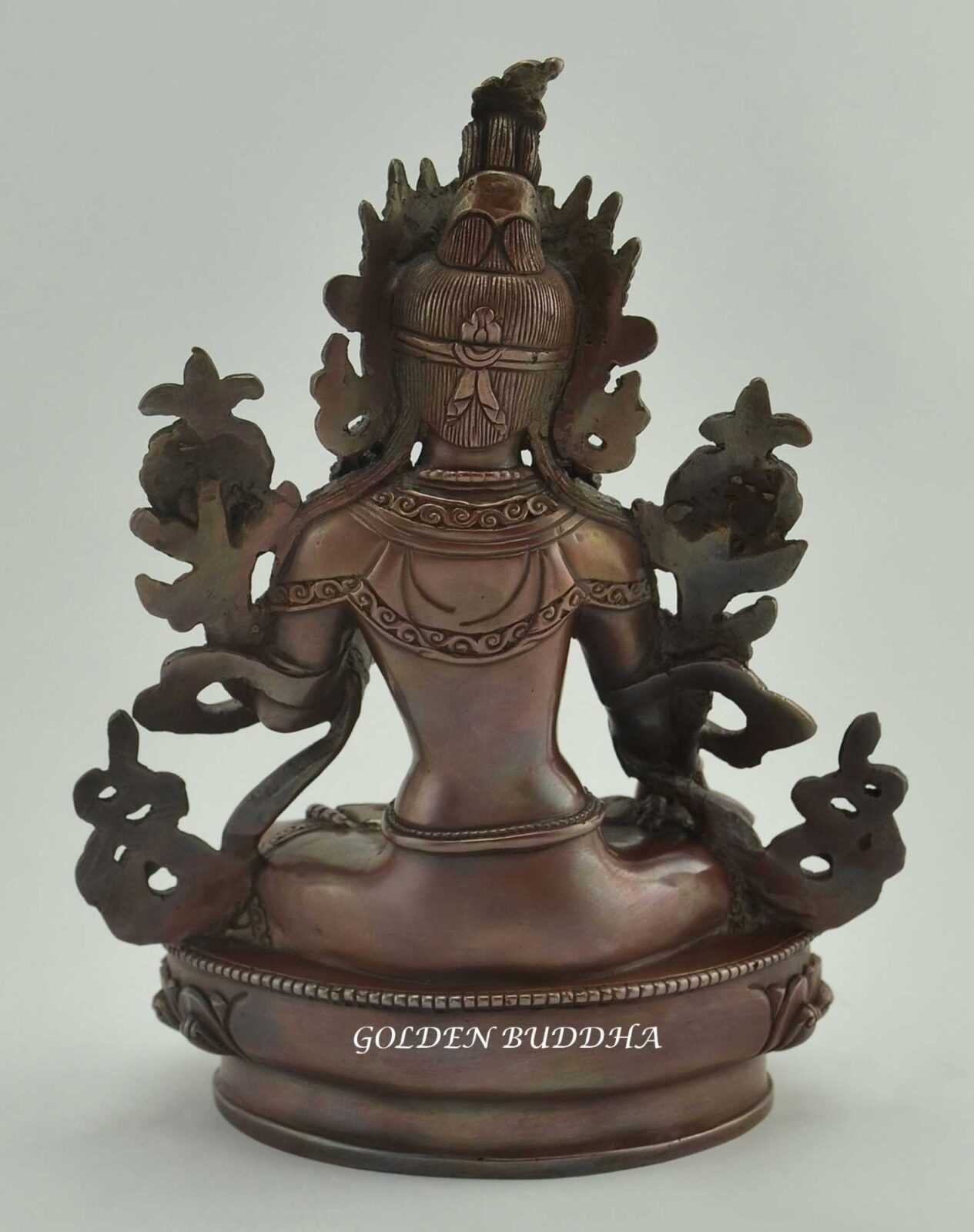
The Shakya artisans in Patan, Nepal, gave this 8.5″ Tibetan Dolkar statue an antiquated finish with the crown and jewels of a Bodhisattva — the entire figure rendered in a warm, oxidized copper-brown with a subtle iridescent sheen, her serene features carved directly into the metal rather than painted, in the manner of a classical monastery statue. The crown and jewels can be embellished with turquoise and red stones upon request, at no extra cost — the colored stones stand out beautifully against the dark finish, and your Nepali Dolkar statue will be the center of attention in your home or meditation center.
The statue was created using the traditional lost wax sculpting method, resulting in a finely detailed sculpture that will last for many lifetimes — from the bold rosette-faced lotus blossoms rising on carved stems at each shoulder to the scarf-ends curling in swirls at her sides. For many centuries the Nepali artisans have perfected their craft, passing the knowledge down through the family castes; they are among the best sculptors in the world, and the Tibetan monasteries have long preferred them as their source of Buddhist sculptures and ritual items.
Special Features Nepali Dolkar Statue
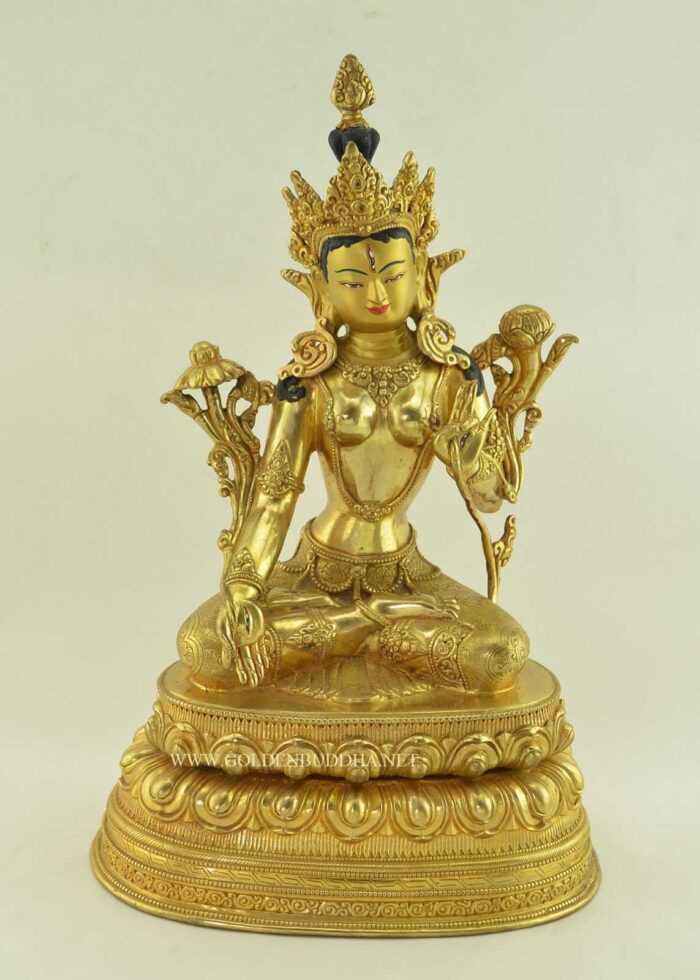
The Abhaya, or “protection,” mudra is a classic Buddhist gesture recognized by practitioners of every school. This hand symbol of fearlessness is deeply important in Buddhist belief — when devotees see it, it inspires fortitude and confidence. The deity depicts it with her left hand held chest-high, palm facing forward, while the upright third eye of the Seven Eyed Tara is carved at the center of her forehead.
Her right hand rests open over the knee in the Varada, or “gift giving,” mudra — for Dolkar (White Tara) is deeply affiliated with generosity. Known as Cintachakra, the “wish-fulfilling wheel,” White Tara is one of the three long life deities in Tibetan Buddhism — read more about White Tara’s meaning and symbolism. She is also empowered with the attributes of healing, compassion, and serenity, which devotees invoke by reciting her mantra — learn it in our guide to the White Tara mantra, or browse our full collection of White Tara statues to compare sizes and finishes.
Authentic, Handmade in Nepal
Every statue and ritual item is handcrafted in Patan, Nepal, using traditional lost wax casting and comes with a certificate of authenticity issued by Nepal's Department of Archaeology, verifying its materials, technique, and origin.