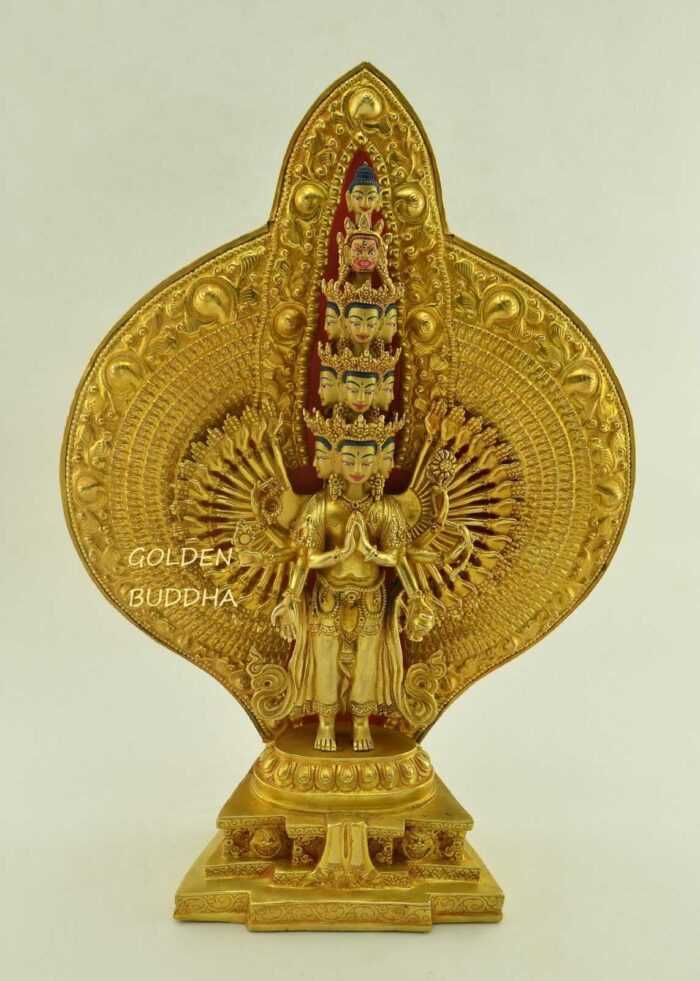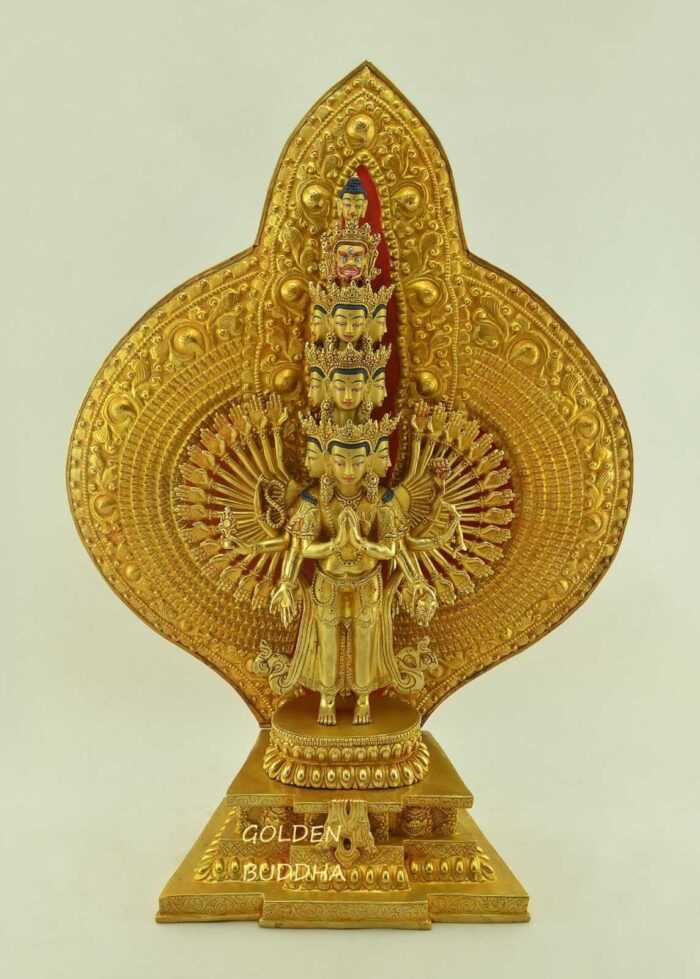
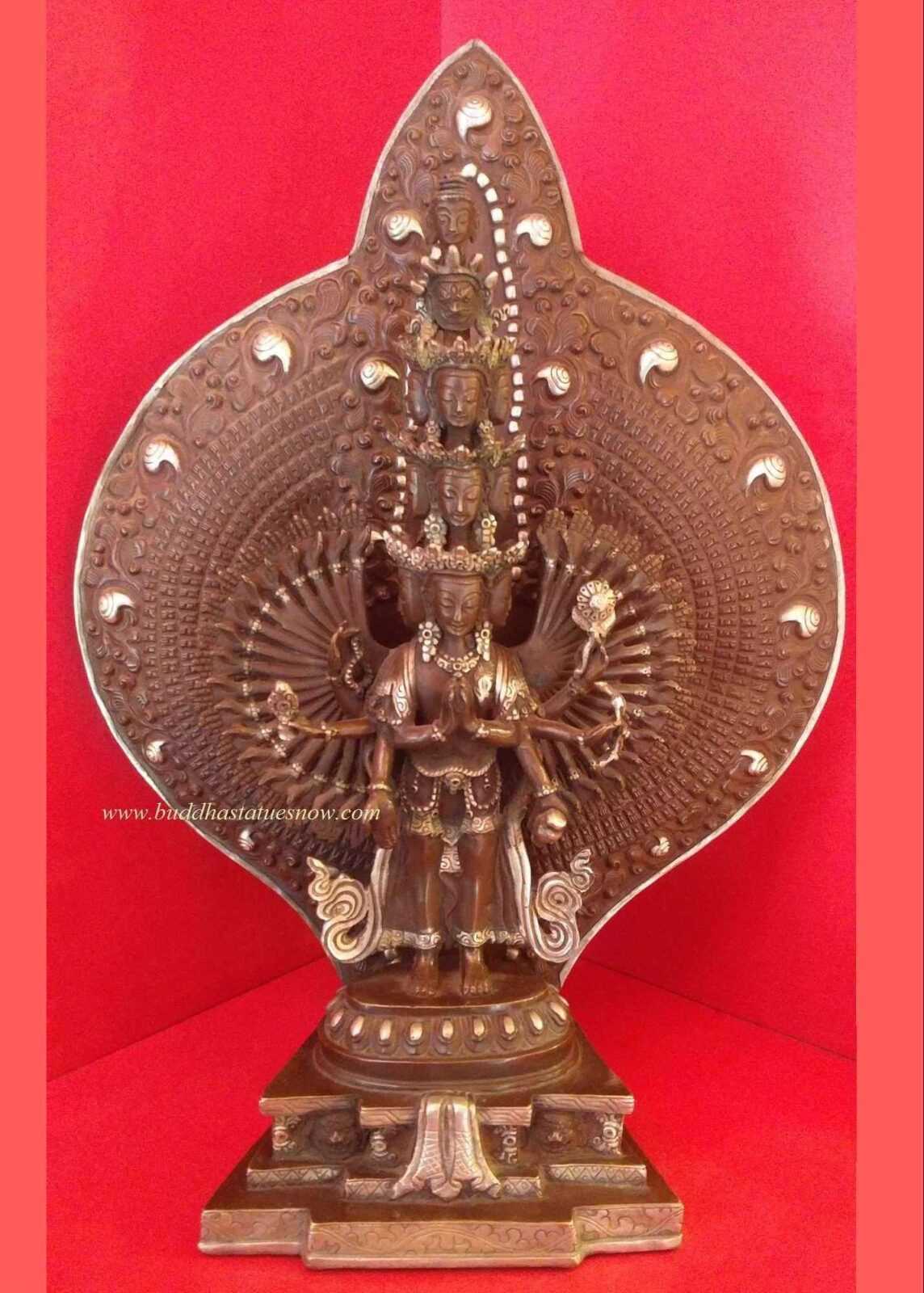
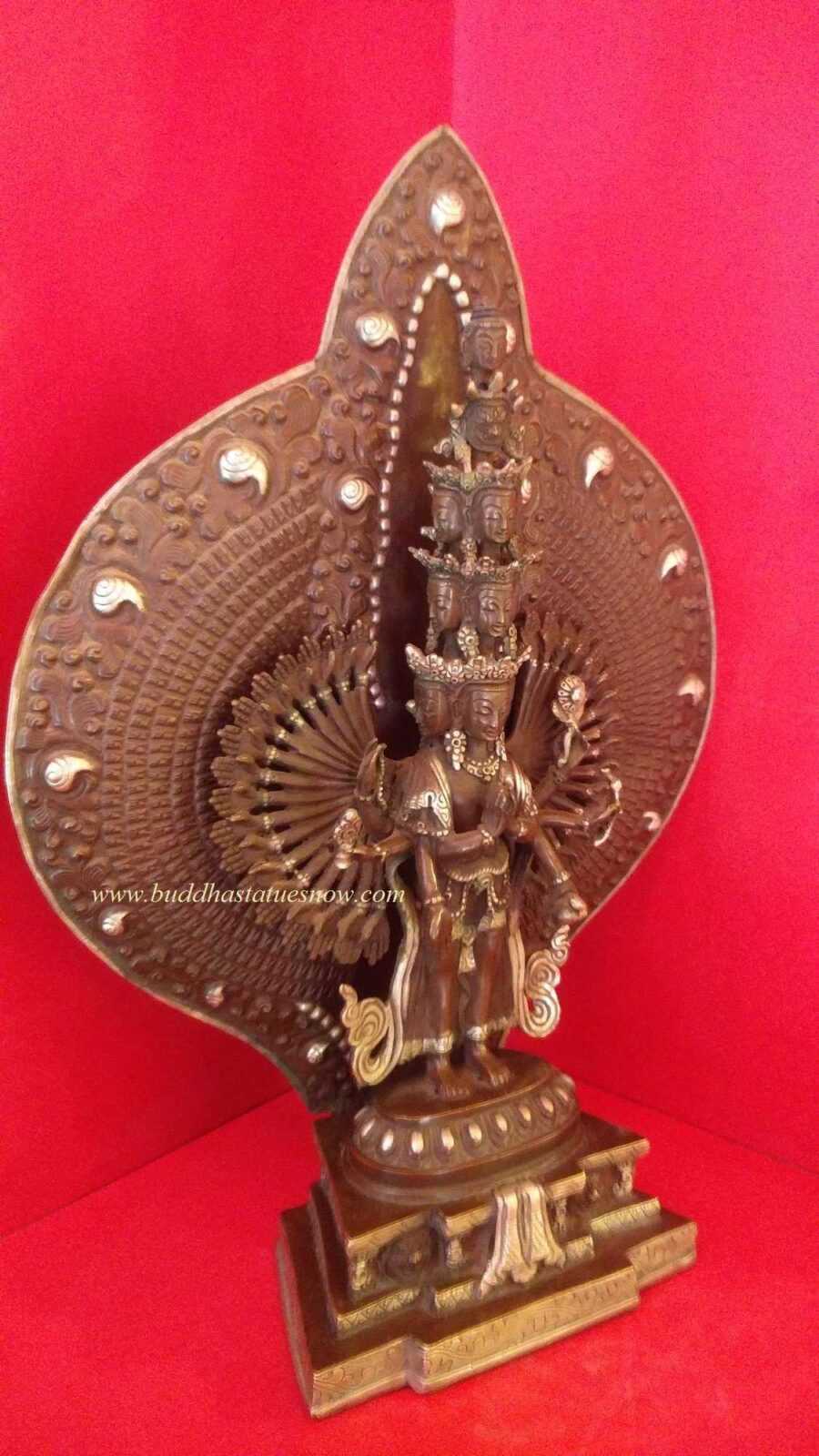
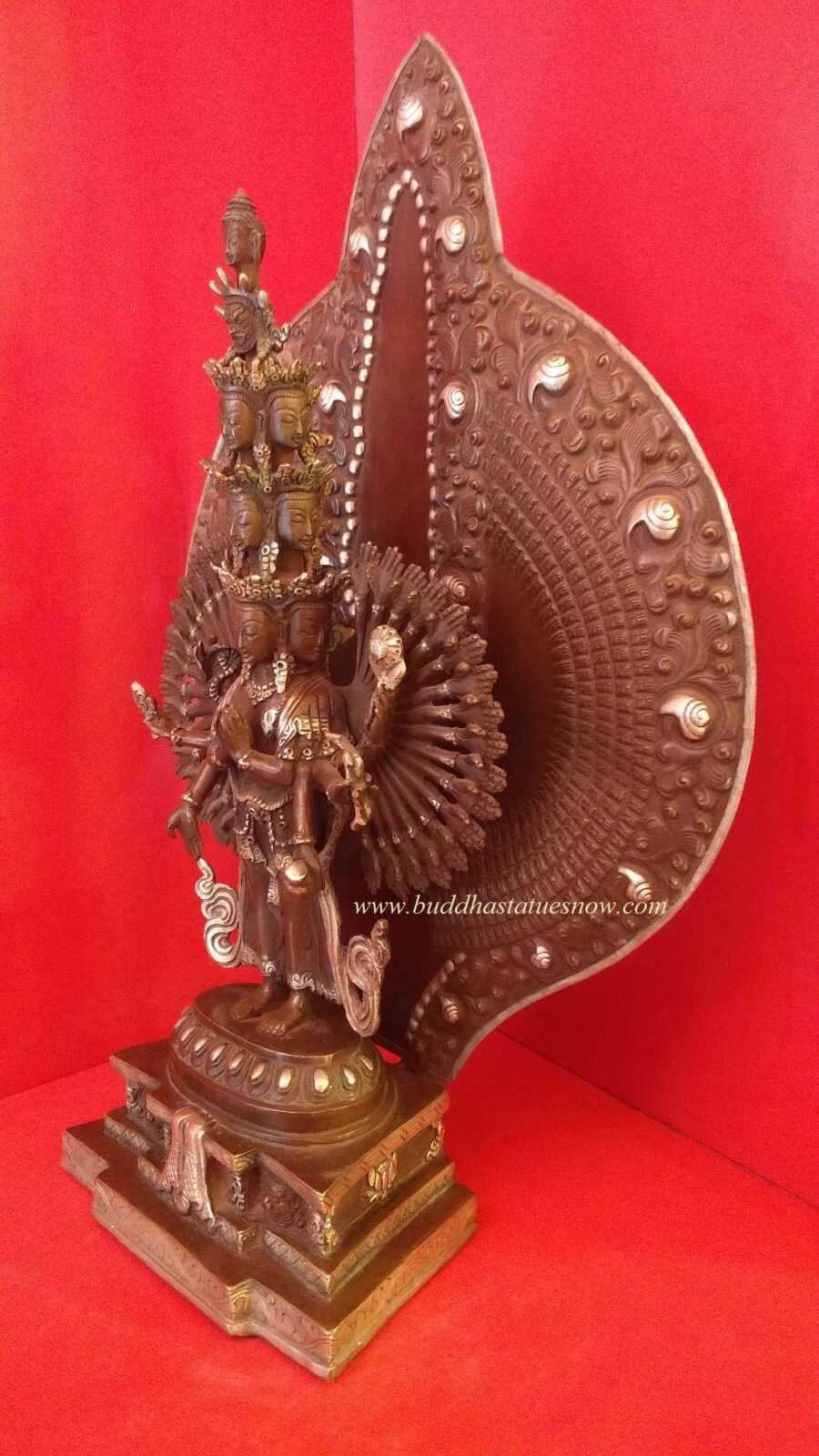
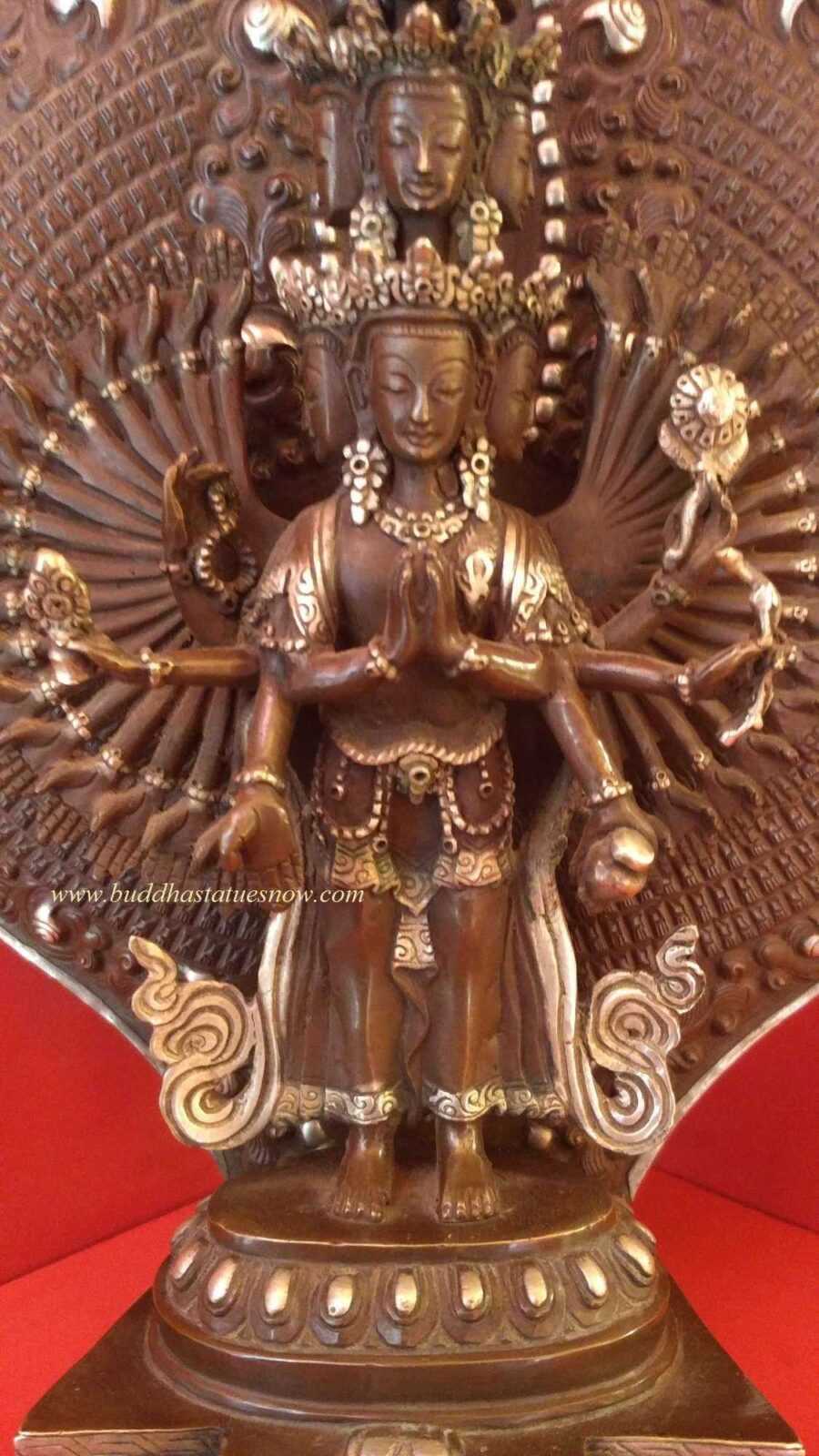
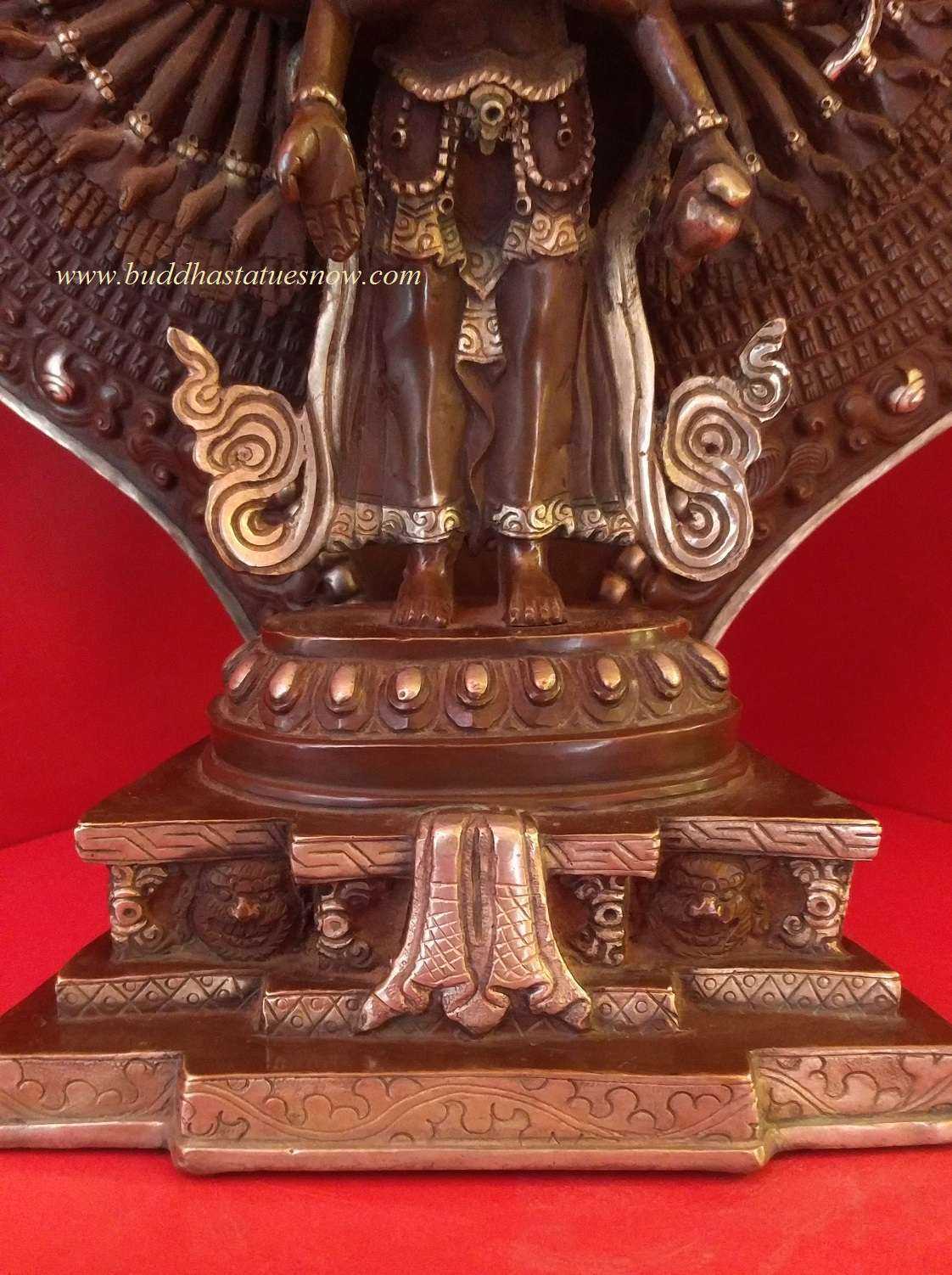
This extraordinary silver 1000 Armed Avalokiteshvara Statue has been entirely handcrafted in Patan, Nepal by master Newar Shakya artisans using the traditional lost wax casting method. Cast from copper alloy and finished in a rich antiqued bronze patina with carefully applied silver highlights, the sculpture represents one of the most intricate forms of Chenrezig found in Tibetan Buddhism. Behind the Bodhisattva rises a magnificent hand carved aureole composed of hundreds of radiating arms, each individually sculpted to symbolize Avalokiteshvara’s limitless compassionate activity throughout the universe. The monumental throne, decorative cloud motifs, and finely engraved architectural base demonstrate the exceptional skill required to create a sculpture of this complexity. Learn more about our traditional Shakya artisans and lost wax casting process.
According to Buddhist tradition, Avalokiteshvara vowed never to enter complete Buddhahood until every sentient being had been liberated from suffering. Witnessing the immeasurable suffering of the world, his body shattered beneath the weight of his compassion. Amitabha Buddha, his spiritual teacher, restored him by granting him eleven heads to hear the cries of suffering beings in every direction and one thousand arms so he could extend compassionate assistance wherever it was needed. Today the 1000 Armed Avalokiteshvara Statue remains one of the most revered symbols of limitless compassion throughout Tibetan Buddhism.
Symbolism of the Silver 1000 Armed Avalokiteshvara Statue
The two principal hands are joined before the heart, gently holding the sacred cintamani wish-fulfilling jewel, representing the awakened mind of perfect compassion. Among the remaining principal arms, Avalokiteshvara carries traditional implements including the 108 mala beads, lotus blossom, bow, and other sacred objects that symbolize the many skillful means used to relieve suffering. The mala beads remind practitioners that Chenrezig continually recites the famous mantra Om Mani Padme Hum for the benefit of all beings.
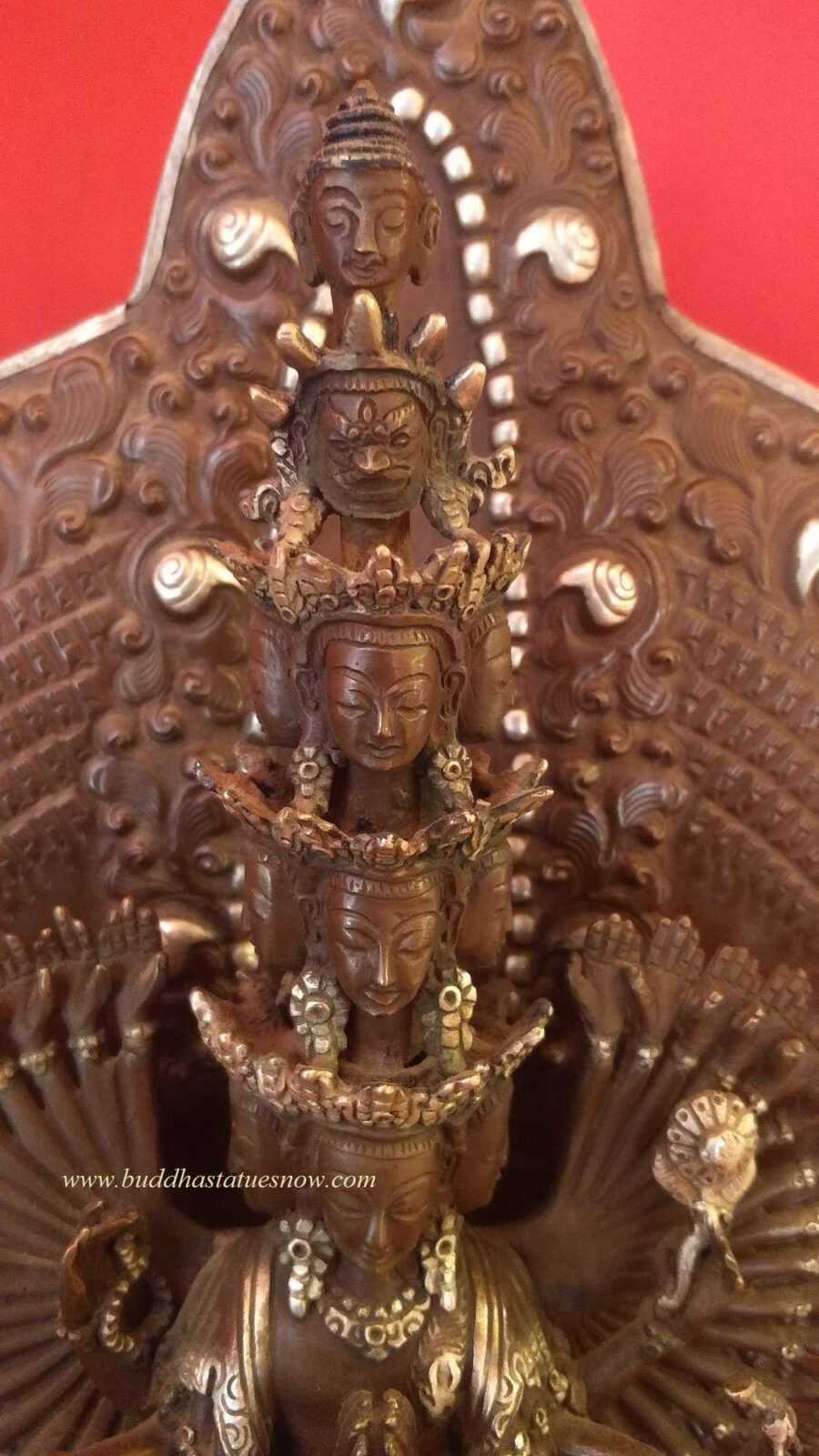
Rising above the Bodhisattva are the famous eleven heads. Nine peaceful manifestations of Avalokiteshvara ascend through the crown, above which appears the wrathful face of Vajrapani, representing the indestructible power required to overcome ignorance. At the very summit sits Amitabha Buddha, signifying Avalokiteshvara’s spiritual lineage and his connection to the Pure Land tradition. Together these eleven heads symbolize perfect awareness extending throughout every direction while the thousand arms express compassion translated into enlightened action. Learn more in our guide to Avalokiteshvara symbolism and iconography.
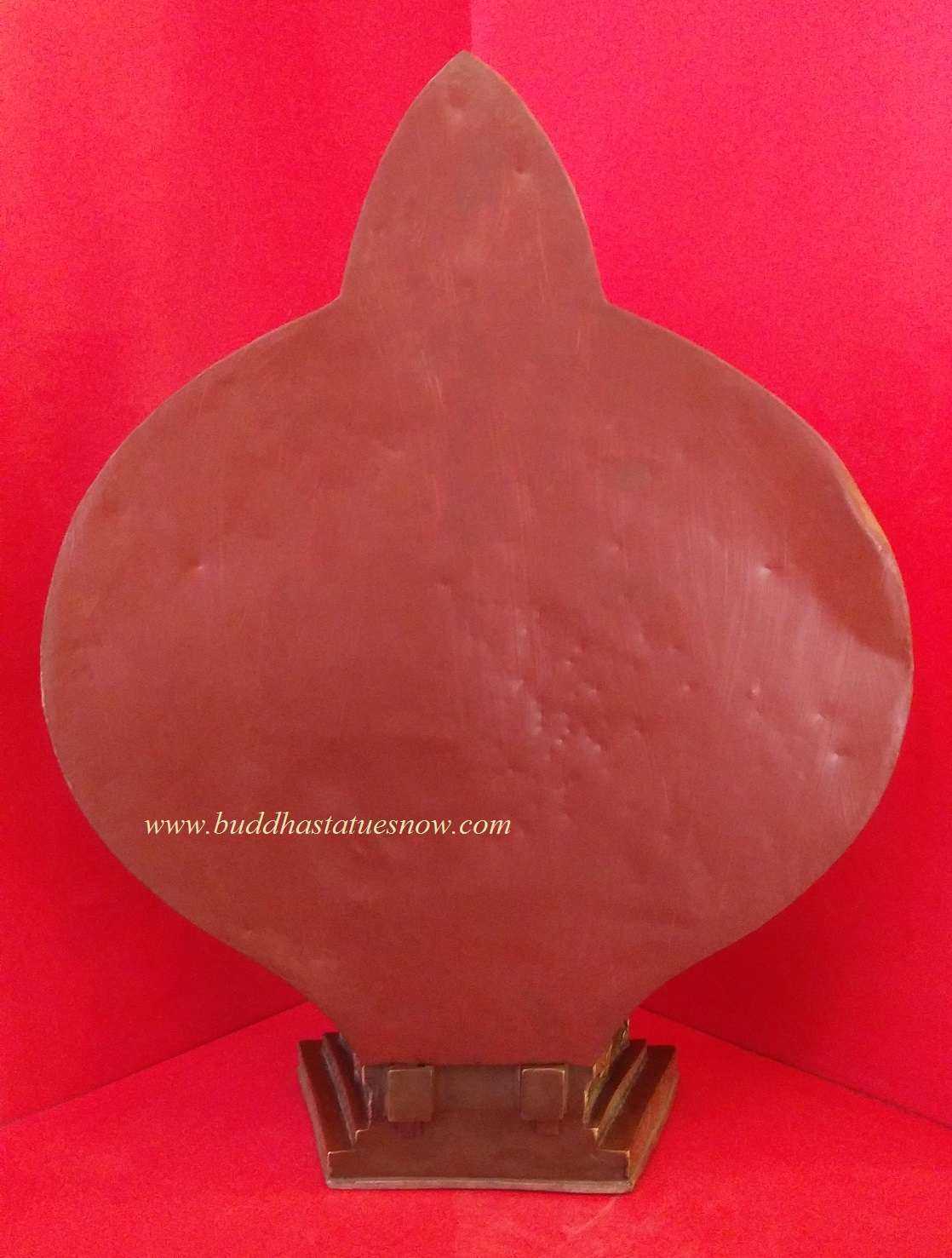
The elaborate rectangular throne beneath the figure has been carved with exceptional architectural detail and is supported by finely sculpted snow lions beneath the platform. Decorative cloud scrolls rise beside the standing figure while the enormous aureole behind Avalokiteshvara has been painstakingly hand carved with hundreds of individual arms radiating outward in perfect symmetry. The removable rear panel also allows the statue to be traditionally filled, blessed, and consecrated according to Tibetan Buddhist practice before being permanently installed upon a shrine.
Custom Made Amitabha Buddha Statues
Because Amitabha Buddha occupies the highest position within this magnificent sculpture, many collectors choose to commission a matching custom made Amitabha Buddha statue for their shrine. Our master Shakya artisans in Patan, Nepal can create Amitabha statues in virtually any size using traditional lost wax casting, copper alloy construction, hand engraving, antique patinas, or brilliant 24K fire gilding. Every custom commission is individually sculpted to complement existing shrine collections while preserving the authentic iconography and artistic traditions of Tibetan Buddhism.
Authentic, Handmade in Nepal
Every statue is handcrafted in Patan, Nepal, using traditional lost wax casting and comes with a certificate of authenticity issued by Nepal’s Department of Archaeology, verifying its materials, technique, and origin.