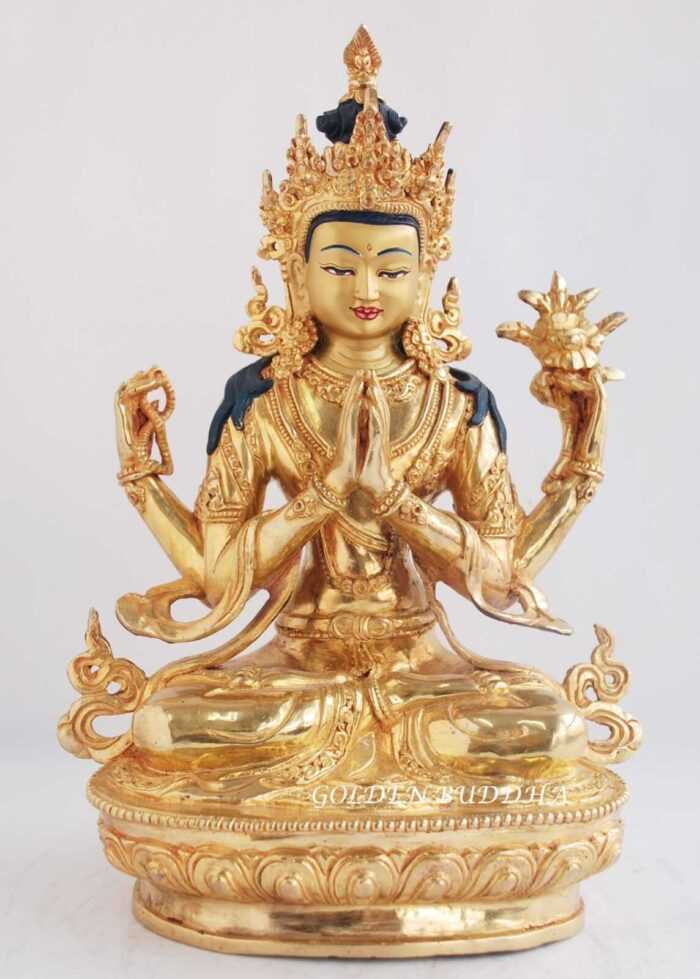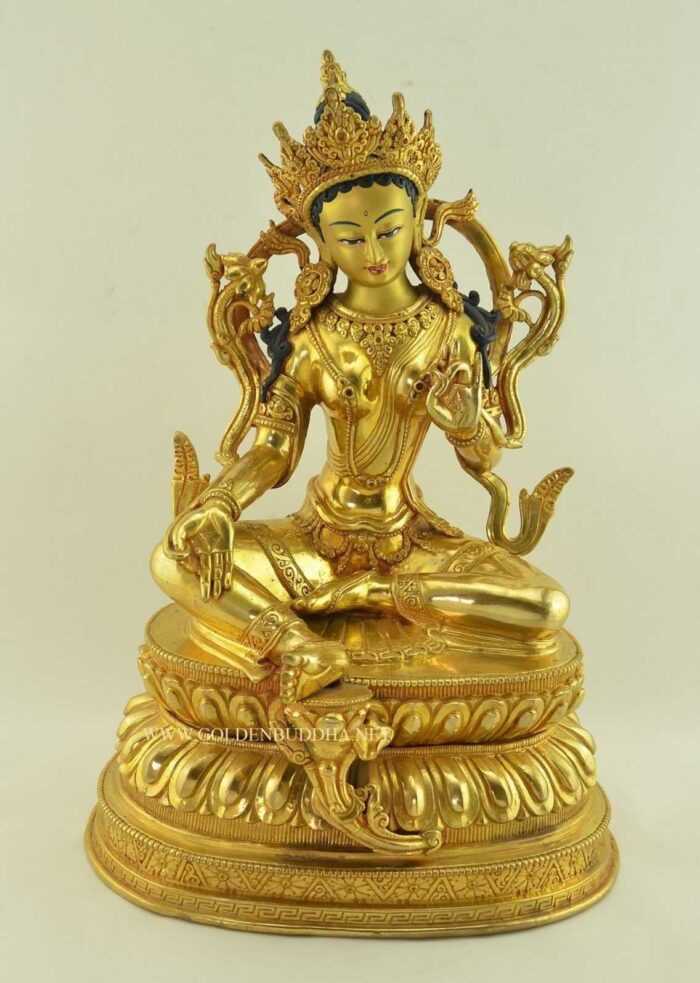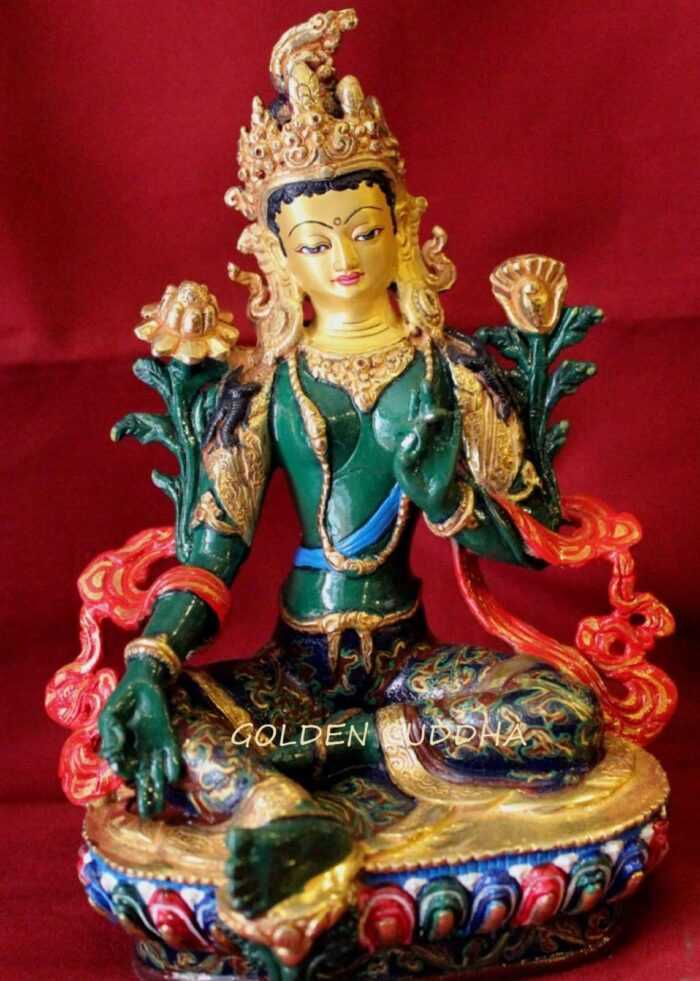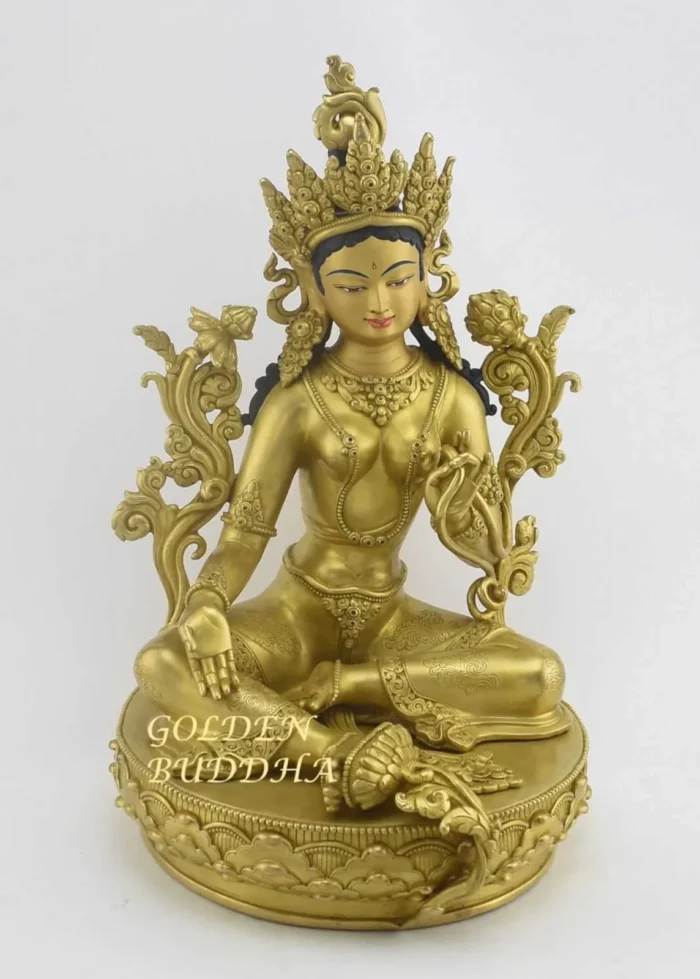

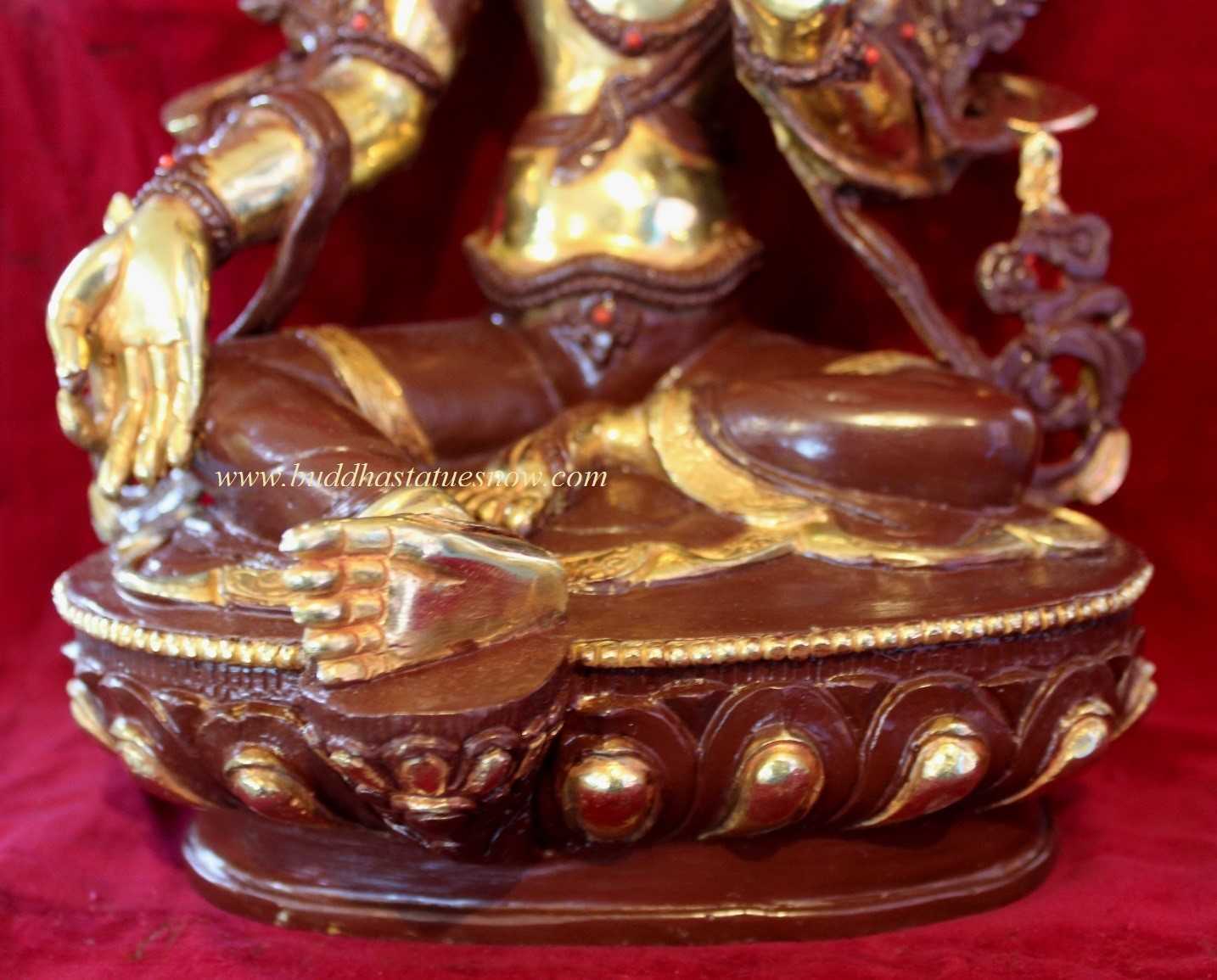
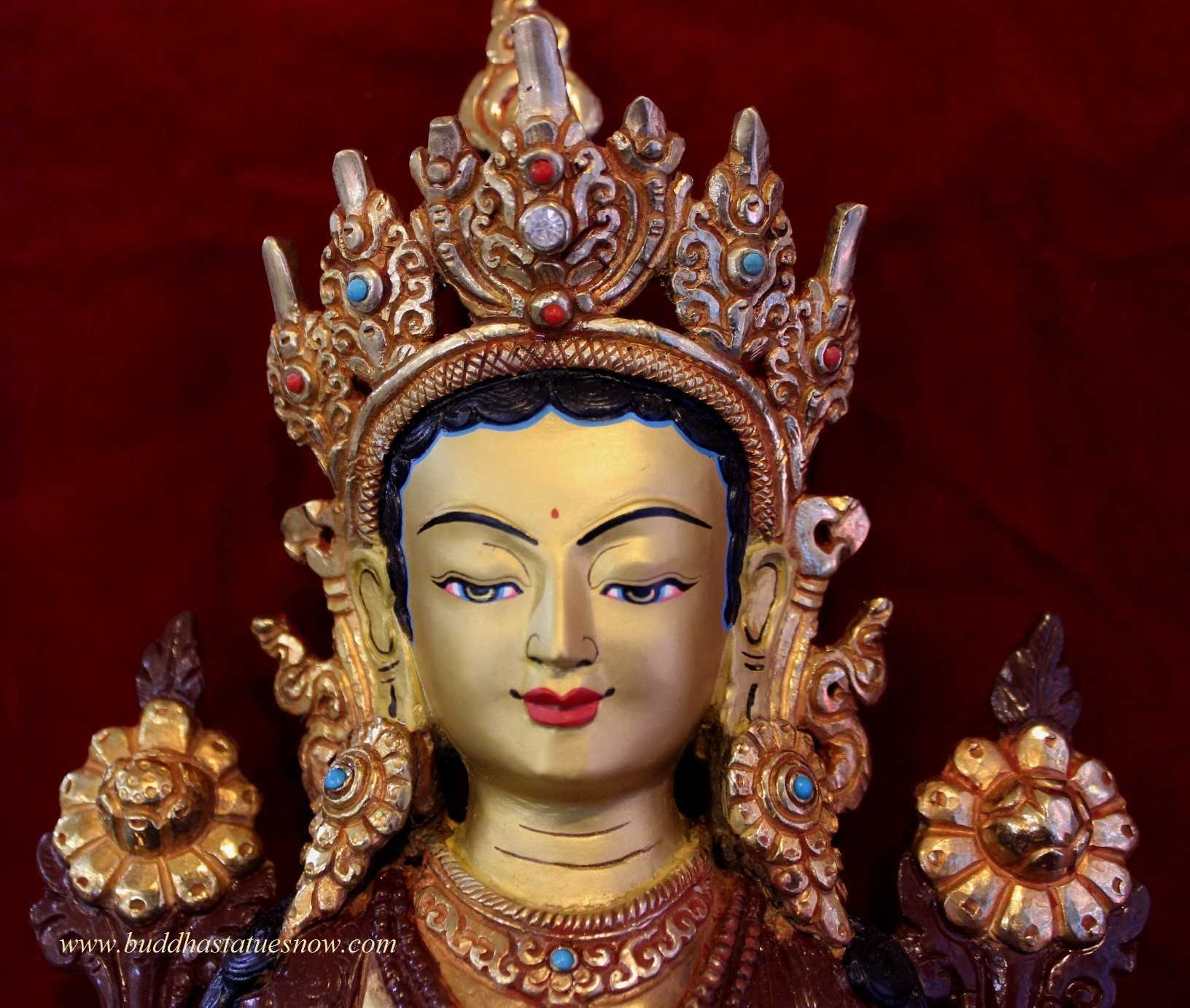
This elegant Green Tara Sculpture is handcrafted in Patan, Nepal by master Newar artisans using the traditional lost wax casting method in copper alloy before being partially fire gilded in 24K gold. Her serene face is beautifully hand painted with genuine gold, creating a warm expression that complements the rich contrast between the gilded surfaces and the darker antiquated finish. The elaborately engraved Bodhisattva crown is already adorned with turquoise, red coral and clear semi-precious stones, while matching stones accent her earrings and necklace, enhancing the refined appearance of this devotional image.
In Tibetan Buddhism, Green Tara is known as Jetsun Dolma, the “Noble Tara,” and is revered as the swift protector who responds immediately to the prayers of those seeking compassion, wisdom and protection. According to Tibetan Buddhist tradition, Tara vowed to attain enlightenment in female form and to continue working for the benefit of sentient beings without ever abandoning that form. Today she remains one of the most beloved deities in Tibetan Buddhism, embodying fearless compassion and the readiness to relieve suffering. Learn more about Green Tara in our Buddhist Gods Guide.
Green Tara Sculpture Features
Green Tara is depicted seated in Lalitasana, the “Posture of Royal Ease,” with her left leg folded in meditation and her right leg extended upon a lotus support, symbolizing her constant readiness to arise and aid those who call upon her. Her lowered right hand displays the Varada Mudra, the gesture of generosity and compassionate blessing, while her raised left hand gently holds the stem of an utpala lotus. The lotus over her right shoulder is shown in full blossom, symbolizing the complete realization of enlightenment, while the lotus over her left shoulder remains in bud, representing the awakening that awaits all beings who follow the Buddhist path. Discover more about Green Tara’s posture, lotus symbolism and iconography, or learn about the significance of the Varada Mudra in our complete Buddhist symbolism guide.
The artistry of this sculpture is further highlighted by the finely engraved floral patterns decorating the flowing dhoti and the decorative border surrounding the lotus pedestal. The richly detailed crown, together with the permanently set turquoise, red coral and clear semi-precious stones, frames the luminous gold-painted face and creates a harmonious balance of color and craftsmanship. Handmade according to centuries-old Newar sculptural traditions, this Green Tara sculpture is an exceptional devotional image for a home shrine, meditation room or collection of authentic Himalayan Buddhist art.
Authentic, Handmade in Nepal
Every statue and ritual item is handcrafted in Patan, Nepal, using traditional lost wax casting and comes with a certificate of authenticity issued by Nepal's Department of Archaeology, verifying its materials, technique, and origin.