

Buddha statues enhance qi energy — and the ancient philosophy of feng shui explains precisely why. Feng shui is based on living in harmony with the natural flow of energy through your environment. Its principles hold that the objects you surround yourself with directly influence the quality of qi (also spelled chi) — the vital life force that permeates all living spaces and determines the quality of human experience within them. Feng shui Buddha statues and Tibetan ritual items are among the most powerful tools available for enhancing this flow of positive energy.
Common sense feng shui implementation includes enhancing natural lighting, creating open spaces, and removing clutter. But the most profound and lasting benefits of feng shui come from within — from the quality of the mind and heart that inhabits the space. This is where Buddha statues for feng shui become uniquely powerful: they provide constant visual stimulation for virtue, compassion, and wisdom, subtly transforming the consciousness of everyone who encounters them and thereby transforming the energy of the entire space.
Contents
- Include Buddha Statues in Feng Shui Design
- Will Buddhist Virtue Increase Qi Energy?
- Feng Shui Buddha Statue Placement Rules
- Best Room Placement for Feng Shui Buddha Statues
- How Feng Shui Buddha Statues Create Qi Energy
- Proven Effectiveness — The Leshan Giant Buddha
- Which Buddha Statue is Best for Feng Shui?
- Tibetan Auspicious Symbols for Feng Shui
- Frequently Asked Questions About Feng Shui Buddha Statues
Include Buddha Statues in Feng Shui Design
Feng shui design creates both tangible and intangible benefits. Feng shui Buddha statues are aesthetically pleasing objects that bring an immediate sense of serenity to any space — but their intangible benefits are far more significant and often underappreciated. This elusive element is positive energy, also known as qi energy or chi energy — the invisible life force that flows through all living environments and directly affects the wellbeing of their inhabitants.
To encourage the flow of positive qi energy, one must create a fertile ground in mind, body, and speech. Although enhancing living space through natural light and open space is beneficial, the most important benefits come from within. To induce these intangible benefits, your home needs proper visual stimulation that will enhance virtue. Therefore, Buddha statues and auspicious Tibetan symbols should be integral to any home design that encourages virtuous living and the free flow of positive chi.
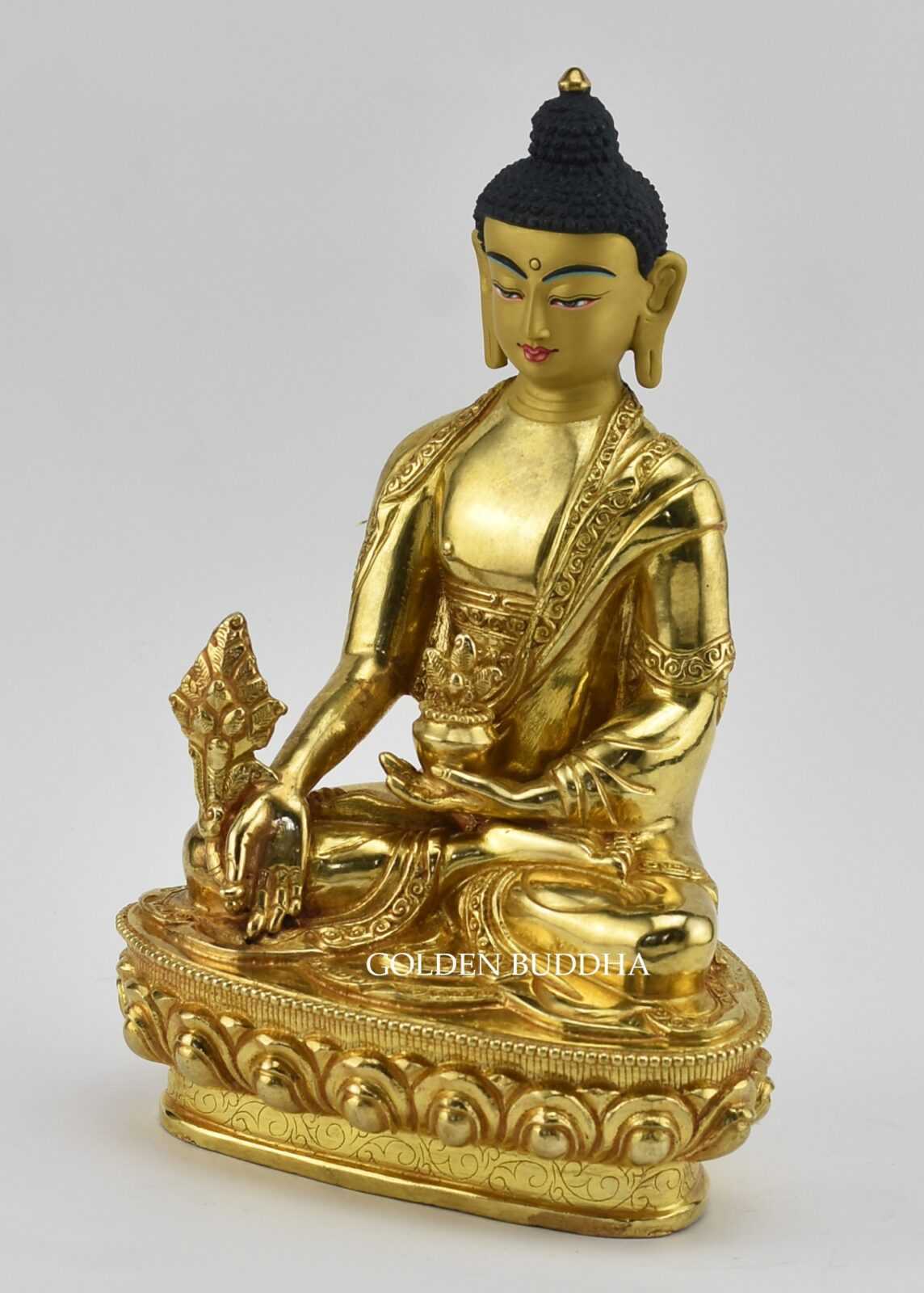
Feng Shui Medicine Buddha Statue
Will Buddhist Virtue Increase Qi Energy?
This is an excellent question — and the answer is an unqualified yes. The compassionate attributes associated with Buddhism alter human behavior in a profoundly positive manner. Your virtuous thoughts, speech, and actions will certainly create a positive ambience in the surrounding environment — an effect that is at least as powerful as increasing natural light and open space in your home.
Properly placed feng shui Buddha statues enhance the flow of qi energy throughout the home. This unimpeded flow of the qi “life force” is what brings peace and tranquility into the human environment. However, Buddha statues have unique identities and project special meanings through their symbolism. This is why choosing the right statue for its specific function and placement location is so important — each deity embodies different enlightened qualities that generate different qualities of energy.
Feng Shui Buddha Statue Placement Rules
The following feng shui Buddha statue placement rules apply across all traditions and are consistently recommended by feng shui practitioners worldwide:
- Elevate the statue — Place the statue on a cabinet or table at least 2½ feet (approximately 80cm) above the ground. Looking down at a deity is considered disrespectful in both Buddhist tradition and feng shui practice.
- Face the front door — Position the Buddha statue so it faces the front door from inside the home. This placement attracts positive energy and protective chi as it enters, while symbolically repelling negative energy outward.
- Avoid inauspicious rooms — Never place a Buddha statue on the floor, or in the kitchen, bedroom, or bathroom. These spaces are associated with bodily functions and sleep — inappropriate environments for a sacred object.
- Good lighting is essential — Statues placed in a home office or library should be positioned in a well-lit area. Good lighting activates the flow of positive energy around the statue and enhances intellectual pursuits.
- Use complete-form statues — Use feng shui Buddha statues that include the entire body of the deity, not only the head or hands. A complete form projects the full energetic field of the deity’s enlightened qualities.
- Acquire with positive intention — Acquire your Buddha statue in a positive spirit and with confidence. The sincerity of your intention is itself considered a feng shui force that activates the statue’s positive energy field.
- Quality embellishments matter — Statue embellishments such as 24K gold gilding and precious stones attract positive energy — both because of the inherent value and purity of the materials, and because of the self-sacrifice made in procuring the statue.
- Meditation placement — For dedicated meditation practice, place the Buddha statue at eye level so you can maintain natural, respectful contact with the image during your session.
- Keep the area clean — The space surrounding the statue should always be clean and clutter-free. Clutter disrupts the flow of qi and creates energetic stagnation. Regular cleaning of the altar space is itself a beneficial feng shui practice.
- Avoid electrical equipment nearby — Do not place the statue too close to electrical equipment with motors or moving parts. The electromagnetic activity of such equipment disturbs the surrounding energy field.
Best Room Placement for Feng Shui Buddha Statues
Different rooms in your home generate different types of energy — and different Buddha statues are particularly suited to each:
Main entrance / hallway: The most important feng shui placement — facing the front door from the inside. Any peaceful Buddha statue works well here. Shakyamuni Buddha in the Abhaya mudra (protection gesture, right hand raised) is particularly auspicious for an entrance, as his gesture of fearlessness immediately transmits a sense of safety and welcome.
Living room: The heart of social and family life — ideal for a prominent, larger Buddha statue that radiates calming energy throughout the space. Avalokiteshvara (Chenrezig or Guanyin) — the Bodhisattva of Compassion — is an excellent choice for the living room, as his energy fosters understanding and goodwill among family members and guests.
Home office or study: A well-lit desk or bookshelf in the home office is an excellent placement for Manjushri — the Bodhisattva of Wisdom — whose energy sharpens intellect, improves memory, and supports all intellectual and creative pursuits. Place him at eye level facing you as you work.
Meditation room or yoga space: Any Buddha or Bodhisattva statue appropriate to your personal practice is ideal here — placed at eye level on a dedicated altar. Medicine Buddha is particularly powerful in a healing or yoga space, radiating his lapis lazuli blue healing light into the environment.
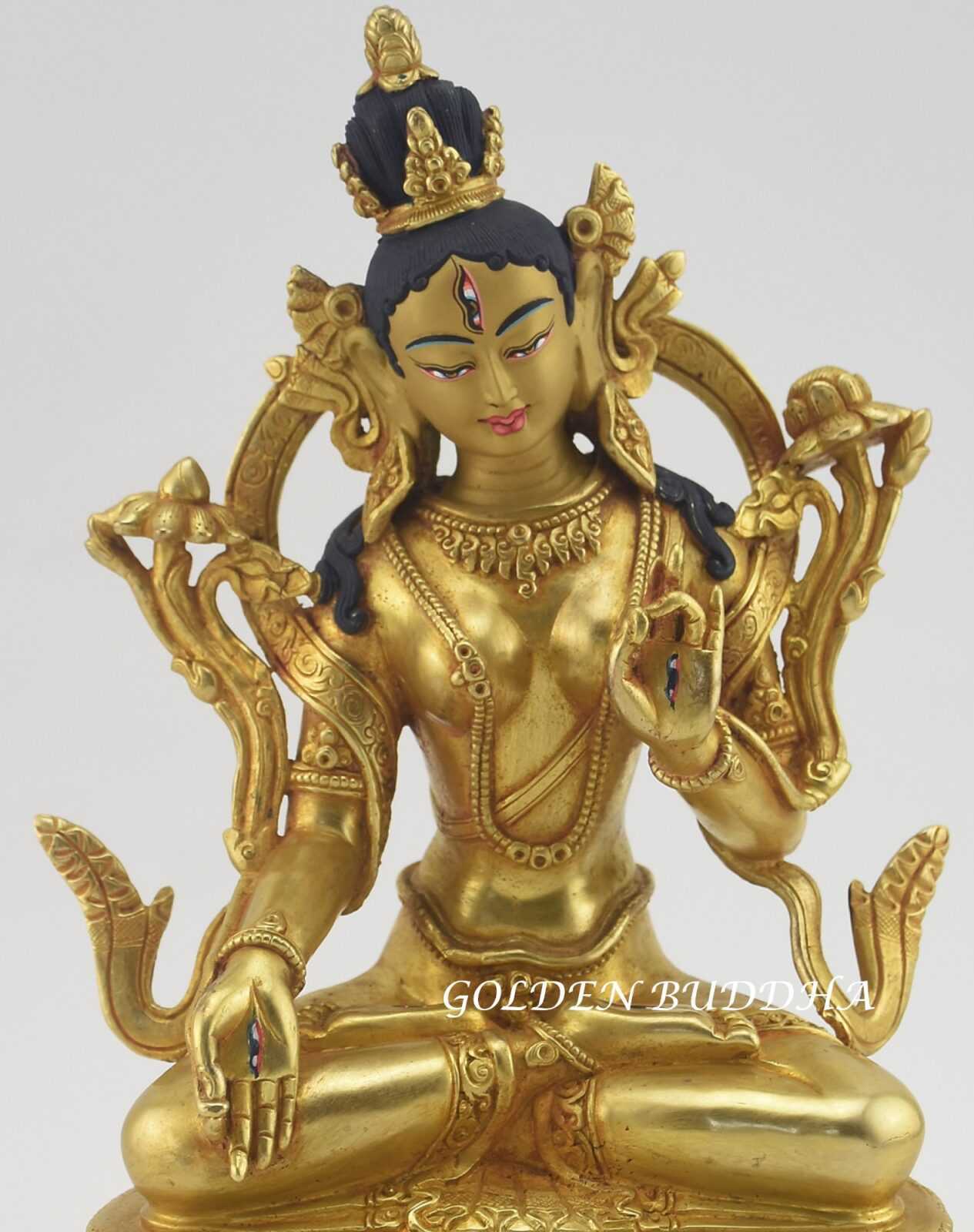
White Tara Feng Shui Statue
How Feng Shui Buddha Statues Create Qi Energy
How do feng shui Buddha statues create and enhance qi energy? The answer is elegantly simple — a positive attitude enhances positive energy. When a person enters their home after a long, stressful day and the first thing they see is a beautiful Buddha statue representing wisdom, compassion, or healing — that visual impression immediately begins to shift their inner state. The statue acts as a visual anchor for virtue: a constant, silent reminder of the highest human qualities.
During the long work day, inner virtues can become stressed and weakened. The appearance of the Buddha statue as you enter your home reinforces those inner virtues — strengthening your thoughts, speech, and actions, which in turn positively influence your surroundings. Positive energy is enhanced, negative thoughts are repelled, and the home becomes a genuine sanctuary of peace rather than merely a physical shelter.
This mechanism operates on the same principle as the Buddhist concept of merit (punya): every virtuous thought, word, and action generates positive karmic energy that radiates outward into the environment. A home whose inhabitants regularly generate merit through virtuous living naturally accumulates a powerful and stable field of positive qi energy — one that benefits everyone who enters.
Proven Effectiveness — The Leshan Giant Buddha
Advocates of feng shui encourage the use of larger Buddha statues — because the flow of qi energy is amplified proportionally. The most extraordinary example of this principle in world history is the Leshan Giant Buddha in Sichuan Province, China — the largest stone Buddha statue in the world at 71 meters (233 feet) tall, carved directly into a red sandstone cliff face overlooking the confluence of three rivers.
A Buddhist monk named Hai Tong was the mastermind behind the construction, which began in 713 CE during the Tang Dynasty. Hai Tong’s primary motive was compassion for the sailors navigating China’s treacherous inland waterways — the junction of the Minjiang, Dadu, and Qingyi rivers in southern Sichuan Province had caused the deaths of countless sailors for centuries. He set out to build the biggest Buddha sculpture in the known world to calm the dangerous waters through the power of the Buddha’s presence.
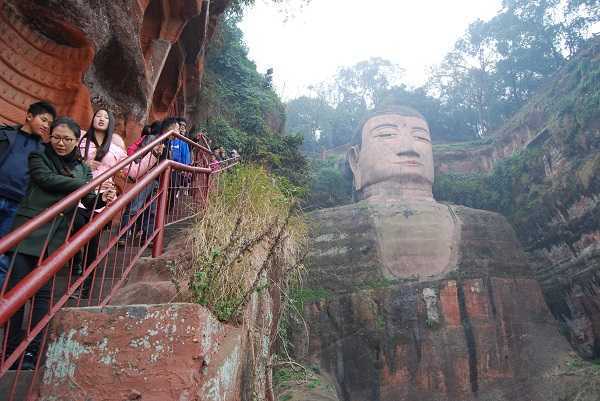
The remarkable outcome: during construction, tons of stone rubble were deposited into the river, which altered the river bottom and calmed the waters below the statue. The calm waters have persisted for over 1,200 years since construction was completed. Whether one attributes this to feng shui, to engineering, or to the merit generated by Hai Tong’s compassionate intention — the result is the same: a Buddha statue, placed with the sincere motivation to benefit others, produced a measurable, lasting improvement in the surrounding environment. It remains the world’s most compelling large-scale evidence of the feng shui principle that Buddha statues enhance positive energy.
Which Buddha Statue is Best for Feng Shui?
The best feng shui Buddha statue for your home depends on your specific intention and the energy you most want to cultivate. Here is a quick reference guide to the most popular choices:
- Shakyamuni Buddha — The historical Buddha; ideal for the main entrance or living room. His presence establishes the authentic Dharma energy that underlies all other Buddha energies.
- Medicine Buddha — Place in the eastern sector of the home or in a healing/yoga space. Radiates blue healing light and is the recommended feng shui cure for the #2 Illness Star in 2026 feng shui.
- Amitabha Buddha — Place facing west or in the western sector. His infinite light and compassion create a deeply peaceful, harmonious atmosphere ideal for family spaces.
- Manjushri — Best for home offices, libraries, and study spaces. Enhances wisdom, memory, and intellectual clarity.
- Green Tara — Swift protective energy; excellent for the main entrance or any area where protection from obstacles is desired. Her green color resonates with growth and renewal.
- Laughing Buddha (Budai) — The classic feng shui wealth and happiness statue, particularly popular in business entrances and home offices. His large belly symbolizes abundance and contentment.
Shakyamuni Buddha Feng Shui Statue

Tibetan Auspicious Symbols for Feng Shui
Using Buddhist virtue to enhance feng shui is not exclusive to Buddha statues. The eight Tibetan auspicious symbols (Ashtamangala) are highly complementary feng shui accessories that can be placed throughout the home to propel the flow of qi energy in each direction and sector. Each symbol represents a specific Buddhist virtue and protective quality:
- White Parasol (Chattra) — protection from harm and negative forces; sovereignty of the enlightened mind
- Right-Turning Conch Shell (Shankha) — the sound of the Dharma awakening beings from ignorance; protection and good fortune
- Golden Fish (Matsya) — abundance, fertility, good fortune, and freedom from the ocean of samsara
- Endless Knot (Shrivatsa) — the interdependence of all phenomena; infinite compassion and wisdom
- Victory Banner (Dhvaja) — victory over negativity and obstacles; triumph of the Dharma
- Treasure Vase (Bumpa) — inexhaustible abundance of wealth, longevity, prosperity, and all good things
- Lotus Flower (Padma) — purity of body, speech, and mind; the capacity for enlightenment arising from the muddy waters of samsara
- Golden Wheel (Dharmachakra) — the Wheel of Dharma set in motion by the Buddha; the complete path to liberation
Properly placing each symbol in its corresponding feng shui sector throughout the home creates a complete energetic grid that supports the strong and unimpeded flow of positive qi energy in every direction simultaneously.
Frequently Asked Questions About Feng Shui Buddha Statues
Where should I place a Buddha statue for good feng shui?
The most auspicious feng shui placement for a Buddha statue is facing the front door of your home from the inside — positioned on a table or shelf at least 2½ feet (80cm) above the floor. This placement attracts positive chi as it enters the home while repelling negative energy outward. Secondary ideal placements include the living room (for family harmony), the home office (for intellectual and career energy), and a dedicated meditation or yoga space. Avoid the bedroom, bathroom, kitchen, and floor-level placements in all rooms.
What does qi energy (chi) mean in feng shui?
Qi (also spelled chi or ch’i) is the vital life force energy that flows through all living environments in Chinese philosophy and feng shui tradition. It is comparable to prana in Indian and Buddhist teaching — the fundamental animating energy that sustains all life. In feng shui, the goal is to arrange your living space so that qi flows freely and harmoniously through it, bringing health, prosperity, peace, and good fortune to the inhabitants. Stagnant or blocked qi creates disharmony, illness, and misfortune. Buddha statues and auspicious symbols support the free flow of positive qi by generating an atmosphere of virtue, serenity, and enlightened awareness.
Is it OK to have a Buddha statue in the home if you are not Buddhist?
Yes — absolutely. There is nothing offensive about placing a Buddha statue in your home regardless of your religious or spiritual background. The key is respectful treatment: placing the statue at an appropriate height, in a clean and dignified location, and acquiring it with positive intention. The positive energy generated by a Buddha statue operates independently of the religious beliefs of the person who placed it — just as the Leshan Giant Buddha calmed the rivers of Sichuan for over 1,200 years regardless of the religious affiliation of the sailors who passed by. Sincerity and respect are the only prerequisites.
Which direction should a Buddha statue face?
In general feng shui practice, the most beneficial direction for a Buddha statue to face is toward the main entrance of your home — so it greets and blesses everyone who enters. For direction-specific placements based on the deity’s pure land orientation: Amitabha Buddha faces or is placed in the west (his Western Pure Land of Sukhavati); Medicine Buddha is associated with the east (his Eastern Lapis Lazuli Pure Land); and Shakyamuni Buddha faces east toward the rising sun, representing the dawn of enlightenment. Most Buddhist temples and stupas traditionally face east for this same reason.
What is the best Buddha statue for wealth and prosperity?
In the feng shui tradition, the Laughing Buddha (Budai/Hotei) is the most popular symbol of wealth, happiness, and good fortune — traditionally placed in business entrances and home offices with his belly facing the door. In the Tibetan Buddhist tradition, the wealth deity is Jambhala (Dzambhala) — the Buddhist God of Wealth — whose statue is specifically invoked to remove the poverty that prevents practitioners from pursuing spiritual development. For general abundance and prosperity, Ratnasambhava Buddha (yellow body, Varada mudra) is the Dhyani Buddha specifically associated with the enriching activities of generosity, equality, and the removal of poverty.
How do I choose an authentic feng shui Buddha statue?
An authentic handcrafted Nepali Buddha statue from Patan (Lalitpur) in the Kathmandu Valley is the gold standard for feng shui Buddha statues worldwide. Created using the traditional lost-wax casting method and finished with genuine 24K fire gilding, these statues carry the accumulated tradition of over a thousand years of Buddhist artisanship. Key indicators of authenticity: the 24K gold gilding will never tarnish; the fine detail of the carving will be extraordinary; the face painting will be applied by hand using real gold pigment. All authentic statues from Golden Buddha are certified by the Department of Archaeology in Kathmandu and can be consecrated at Sangye Choeling Monastery before shipping. Browse our complete collection of authentic Buddha statues from Nepal.