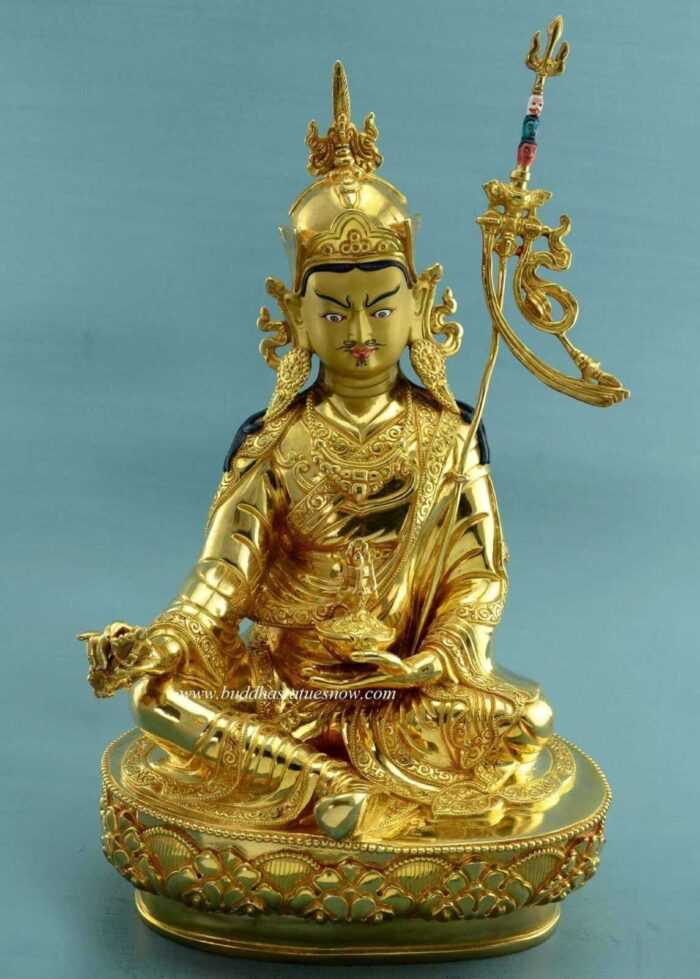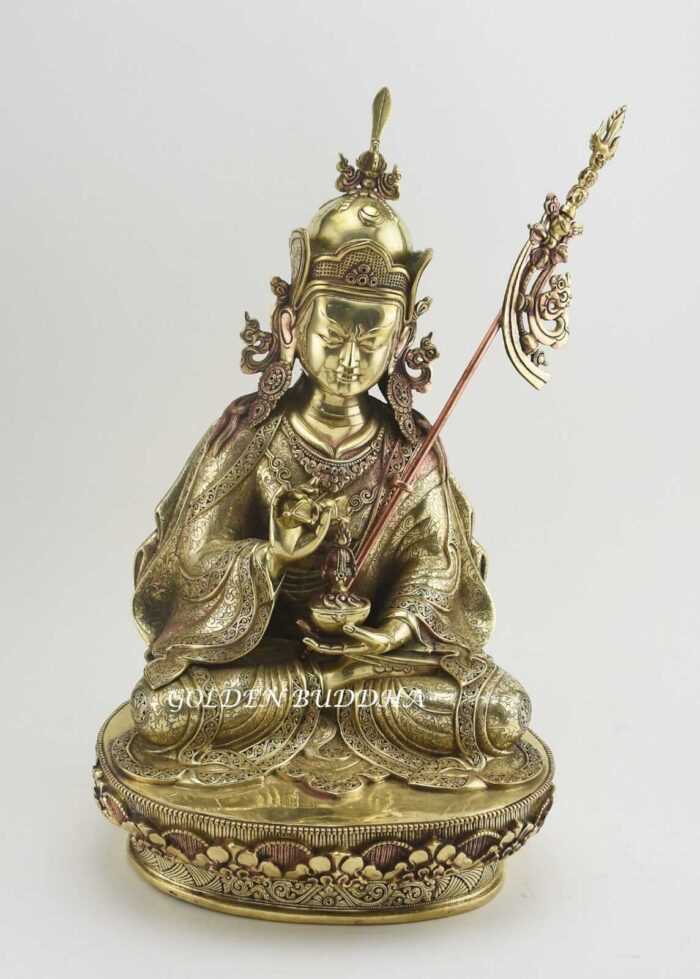
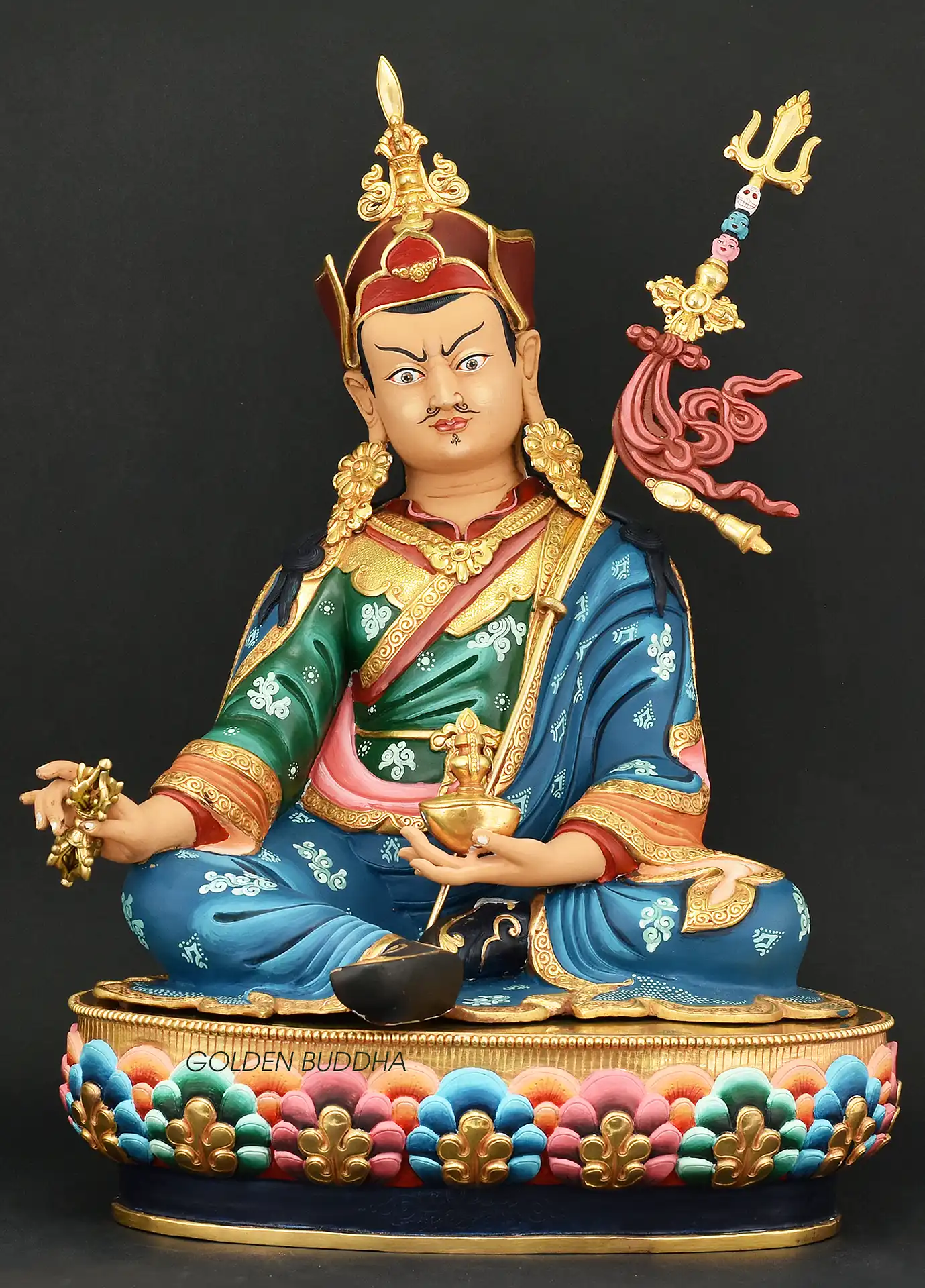
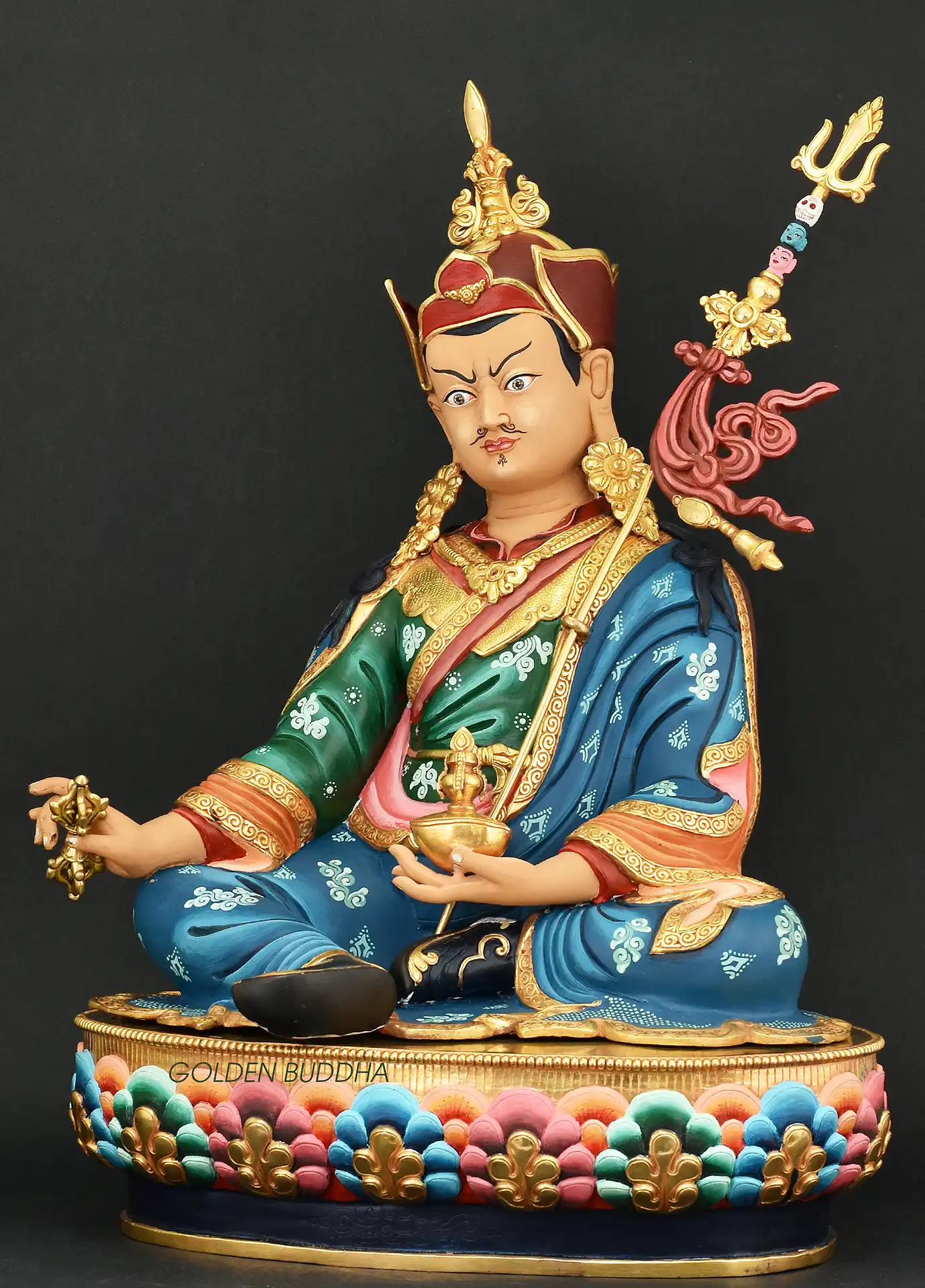
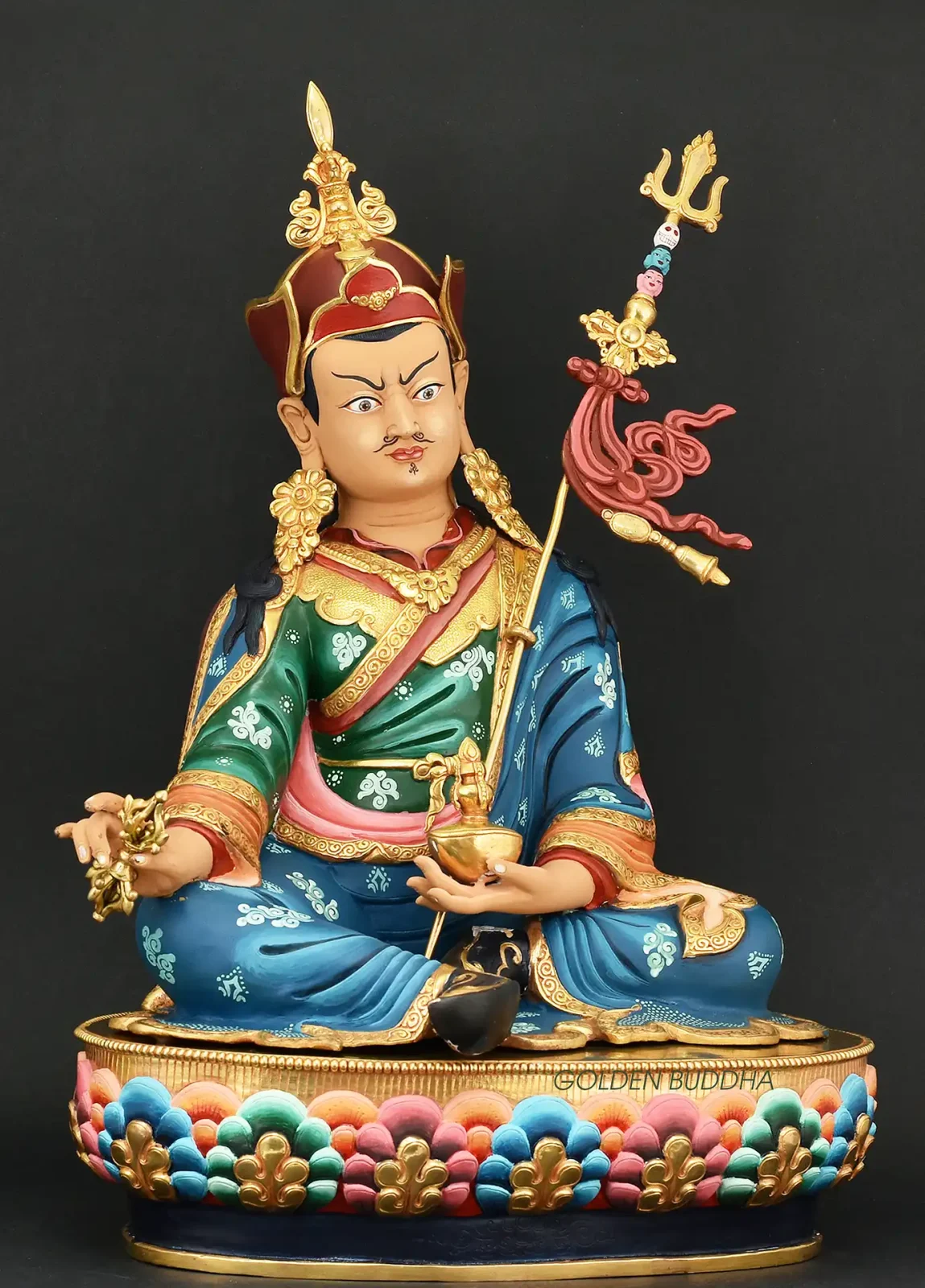
This magnificent Padmasambhava Buddha Statue presents Guru Rinpoche, “The Lotus Born,” in an exceptionally colorful interpretation of his traditional Vajrayana form. Measuring 19.25 inches high with the khatvanga and 18.75 inches without it, this substantial copper alloy sculpture was handmade by master artisans in Patan, Nepal using the traditional lost wax method. Its vivid hand-painted robes, 24K gold detailing, multicolored double lotus throne and antiquated copper-finished rear robe create an extraordinary combination of sacred iconography and Himalayan decorative artistry.
Multicolored Padmasambhava Buddha Statue Craftsmanship
The extraordinary color work immediately distinguishes this Padmasambhava Buddha Statue. Guru Rinpoche wears richly painted blue and green robes decorated with repeating white textile motifs, while coral, pink and gold accents define the overlapping garments. Raised gold borders and scrolling hemlines frame the sleeves and robe edges, complemented by elaborate gold jewelry across his chest and shoulders. The sculpted folds give the garments considerable depth while allowing the painted patterns to follow their contours naturally.
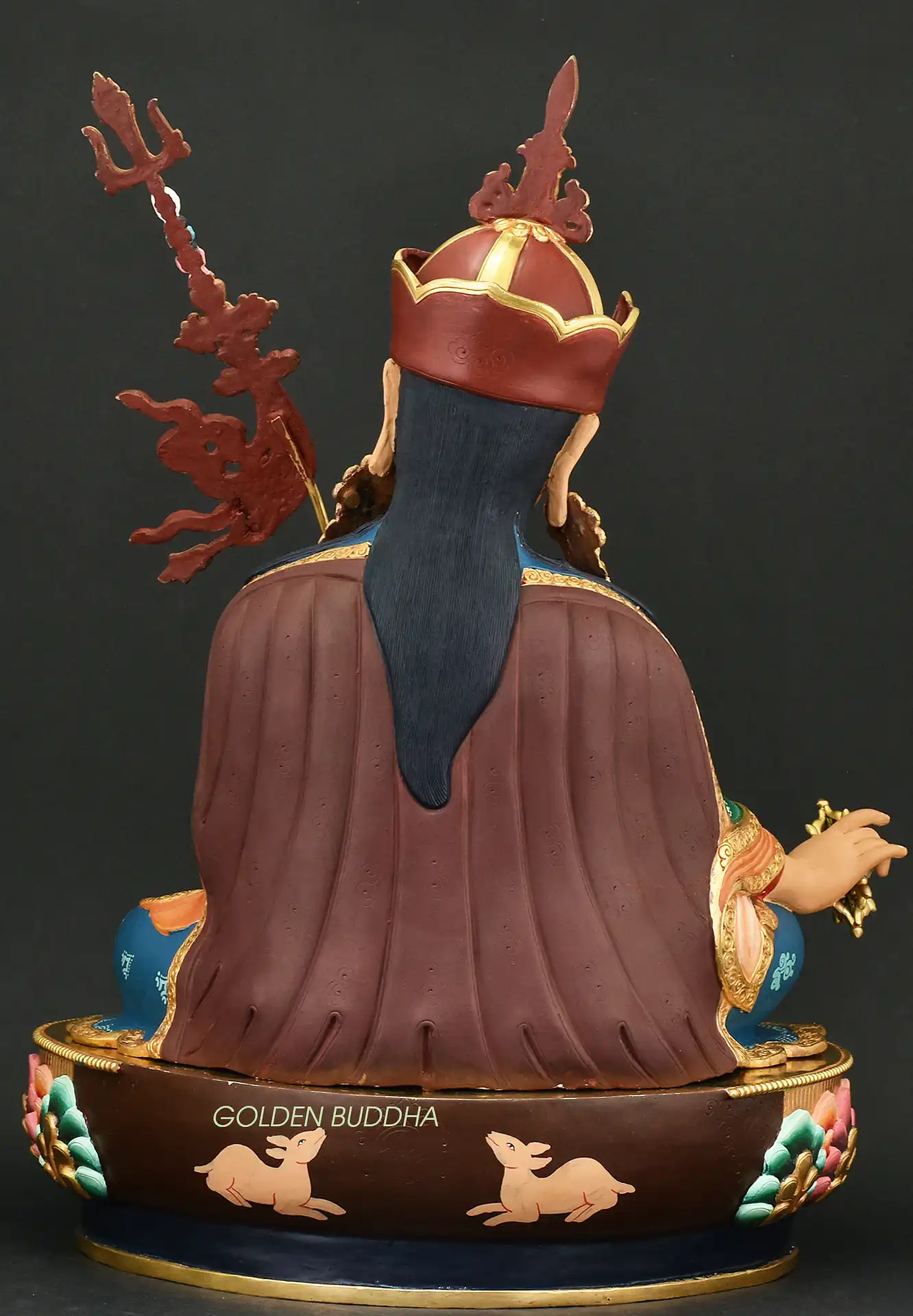
The treatment changes dramatically when the statue is viewed from behind. Instead of continuing the brilliant colors across every surface, the artisan finished the broad outer robe in an antiquated reddish-brown copper tone. Long vertical folds descend naturally across the back, contrasting beautifully with the brilliant blue garments visible around the sides. The throne is equally distinctive. Its front is surrounded by raised multicolored lotus petals in turquoise-blue, green, pink, coral and orange, interspersed with prominent gold ornaments. Two delicately painted deer appear on the rear of the throne, providing another detail intended to be appreciated when the sculpture is viewed in the round.
Sacred Attributes of Padmasambhava
Guru Rinpoche holds a gold gilded vajra in his right hand, symbolizing the indestructible nature of awakened realization. His left hand supports the kapala skull cup containing the longevity vase. Rising beside his left shoulder is the elaborate khatvanga, crowned by three differently colored impaled heads beneath the trident. These symbolize liberation from the three realms of desire, form and formlessness. His distinctive red lotus hat is crowned by the vulture feather associated with realization of the highest view. Learn more about these attributes in our guide to Guru Rinpoche statue meaning and symbolism.
Padmasambhava means “Lotus Born,” recalling the tradition that he miraculously appeared upon a lotus in the sacred land of Oddiyana. Invited to Tibet during the eighth century, Guru Rinpoche became instrumental in establishing Vajrayana Buddhism and is revered especially within the Nyingma tradition. Discover more about Guru Rinpoche, the Lotus Born Master and the history surrounding his transmission of Vajrayana Buddhism to Tibet.
Padmasambhava Buddha Statue and Vajrakilaya — A Powerful Doctrinal Pairing
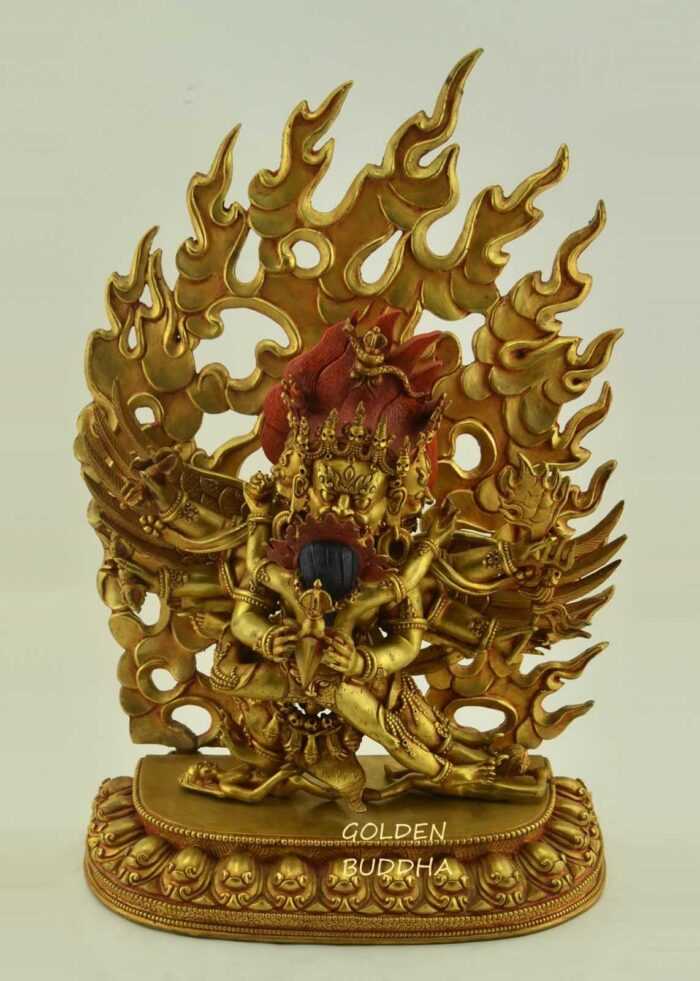
This statue forms an especially meaningful altar pairing with our 24K gold gilded Vajrakilaya statue. Their relationship extends beyond complementary craftsmanship. Padmasambhava is intimately associated with Vajrakilaya practice and the removal of obstacles during the establishment of Buddhism in Tibet. According to the traditional account surrounding Samye Monastery, repeated obstructions prevented construction until Guru Rinpoche employed powerful tantric methods associated with Vajrakilaya to subdue the obstructing forces. Vajrakilaya therefore represents the fierce enlightened activity that cuts through impediments, while Guru Rinpoche embodies the tantric mastery capable of directing that activity toward awakening.
Custom Made Multicolored Padmasambhava and Vajrakilaya Statues
Collectors, practitioners, monasteries and Dharma centers seeking a coordinated pair may commission custom Tibetan Buddhist statues handmade by our master artisans in Patan. Dimensions, finishes and decorative treatments can be coordinated while preserving the proper iconography of each deity. Guru Rinpoche and Vajrakilaya make an exceptionally powerful doctrinal combination: the Lotus Born Master embodies tantric realization, transmission and the transformation of obstacles, while Vajrakilaya personifies fierce enlightened activity directed against the forces of ignorance and obstruction. Together they evoke the historical and spiritual tradition surrounding Samye and the establishment of Vajrayana Buddhism in Tibet, making the pairing particularly appropriate for a Nyingma-inspired altar or serious collection of Himalayan sacred art.
Authentic, Handmade in Nepal
Every statue is handcrafted in Patan, Nepal, using traditional lost wax casting and comes with a certificate of authenticity issued by Nepal’s Department of Archaeology, verifying its materials, technique, and origin.