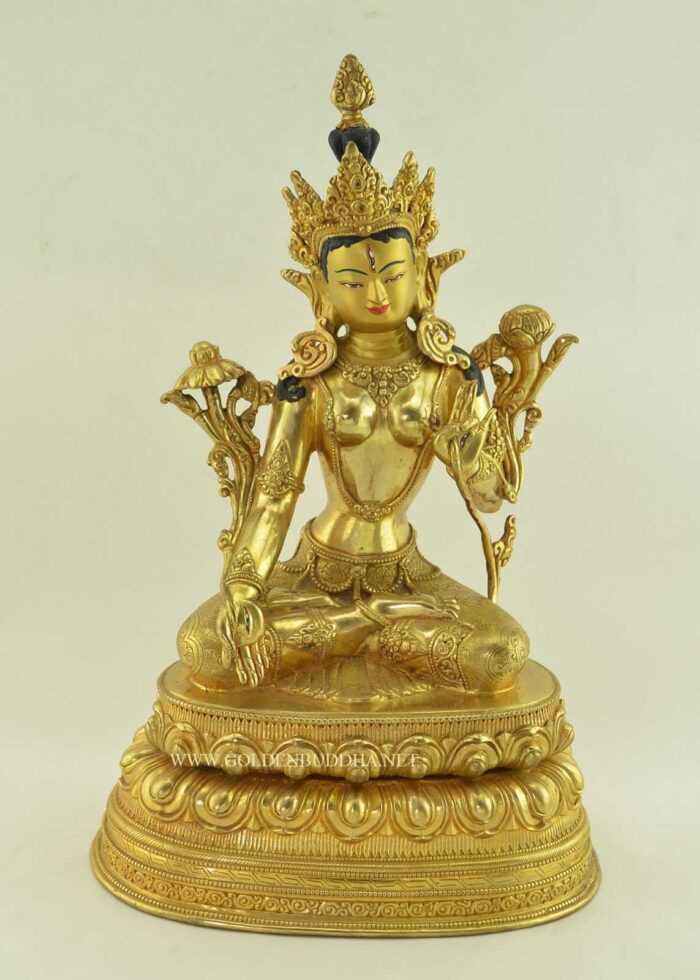
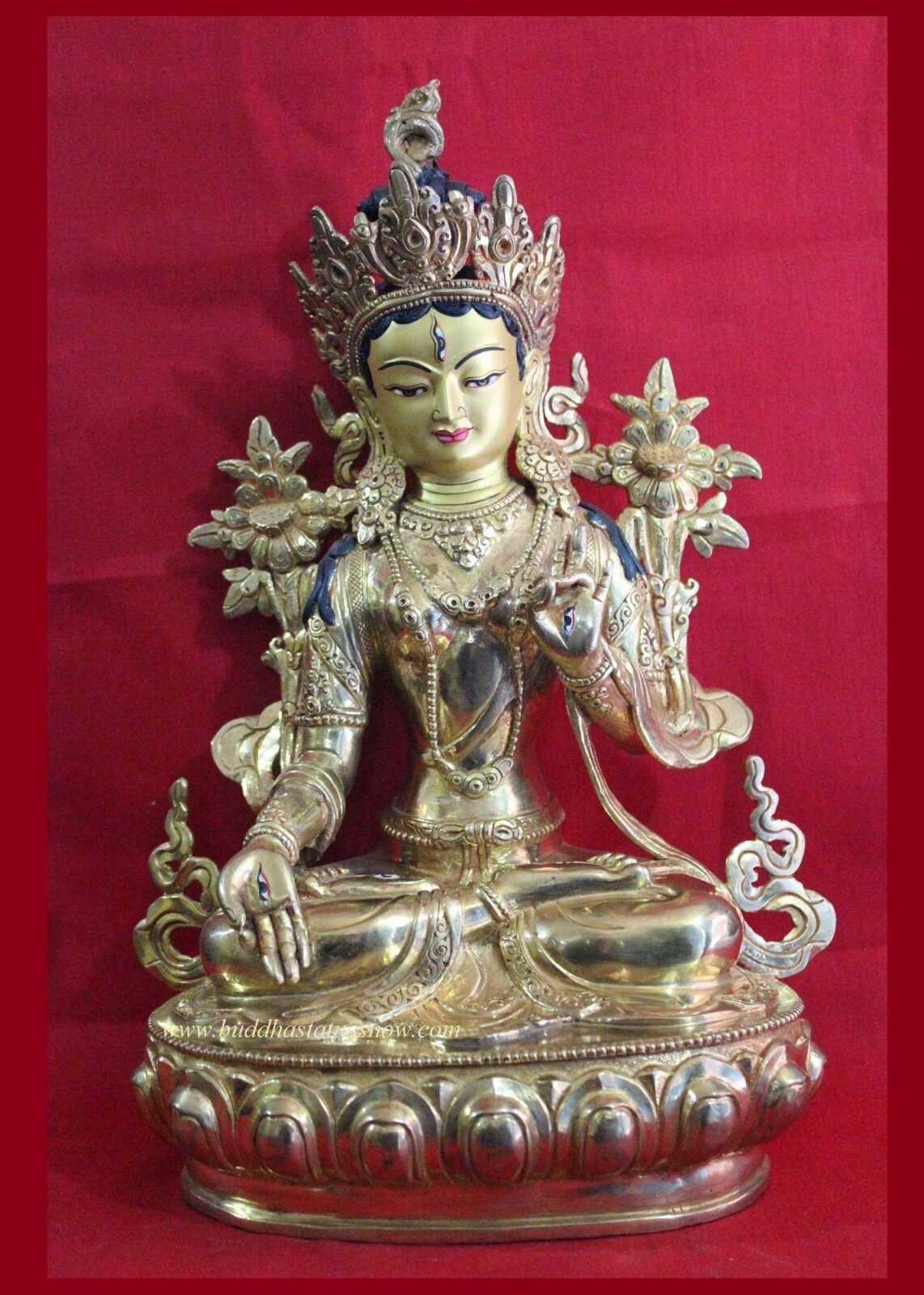

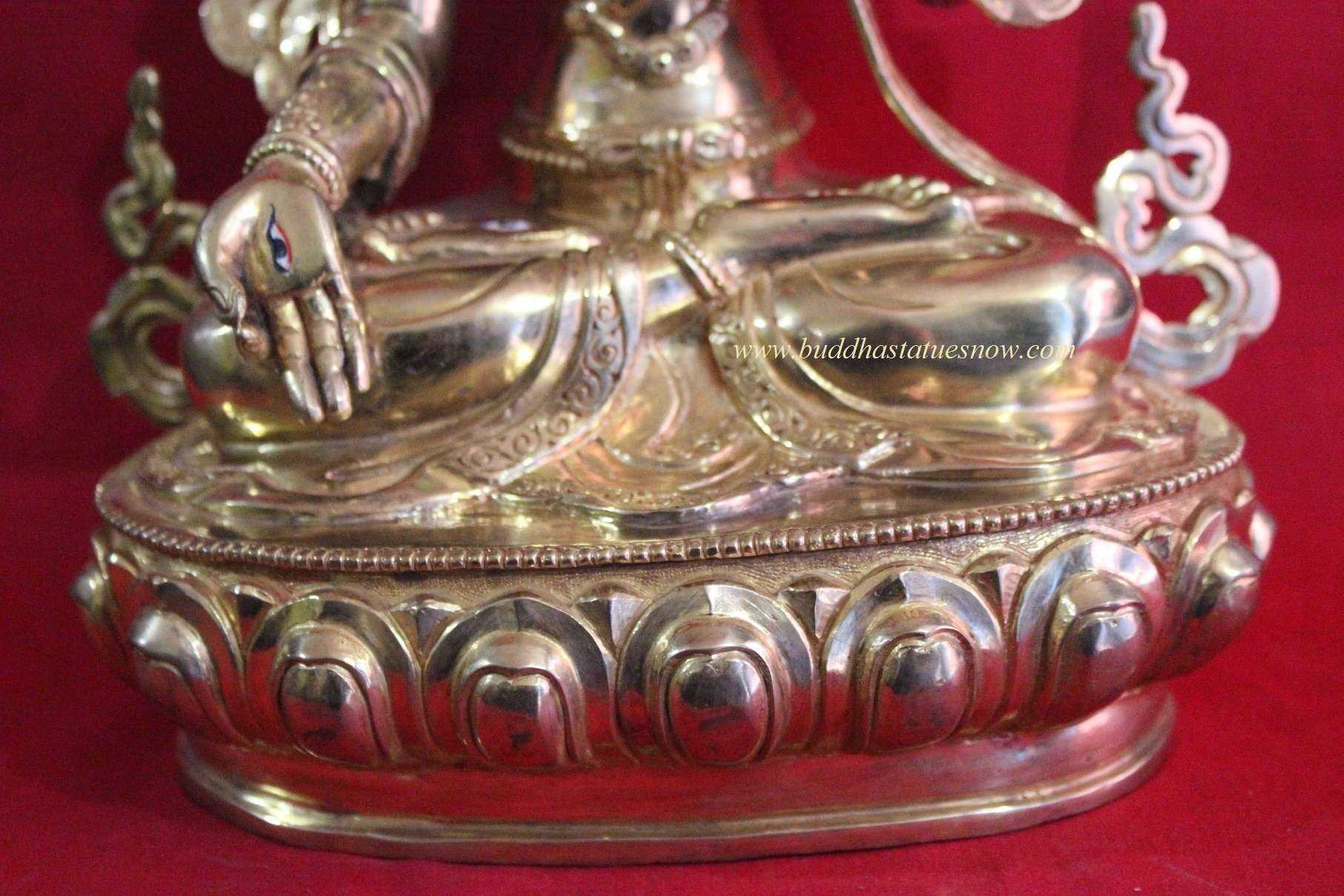
One of the most unique features of this White Tara Bodhisattva statue are the seven eyes of Cintachakra. Also known as the Seven-Eyed Goddess, each eye of our beautiful Cintachakra statue is hand painted by our skilled master artisans in Patan, Nepal: the upright third eye between her brows, an eye on each palm — clearly visible on both her open Varada hand and her raised left hand — and an eye on the soles of her feet. White Tara’s seven eyes represent her compassionate awareness extending in every direction — learn more about the meaning behind her seven eyes.
This beautiful Cintachakra statue also has two lotus flowers rising in full, open blooms on leafy stems over each shoulder. The lotus is deeply significant in Buddhism because it symbolizes enlightenment: the flower grows from the bottom of a muddy pond, rises through murky water, and blossoms in the clean air and sunshine above the surface. The murky pond is a metaphor for the sea of suffering — samsara — and devotees can draw inspiration from the statue’s promise that the same ascent awaits them.
Beautiful Cintachakra Statue Additional Features
Our Cintachakra statue sits in full lotus pose on a single lotus pedestal with broad petals beneath a beaded rim, adorned with the crown and jewels of a Bodhisattva — a tall openwork crown around her blue-black painted hair, large leaf-form ear ornaments, and layered necklaces reaching the waist. Cintachakra expresses the gift-giving Varada mudra with her right hand draped over the right knee, while her raised left hand holds the stem of the lotus between thumb and finger in the gesture of refuge and teaching — encouraging devotees to be fearless in their pursuit of virtue. She is also known by her Sanskrit name Sita Tara — literally “White Tara” — and is associated with compassion, long life, and healing. Read more about White Tara’s meaning and symbolism, or browse our full collection of White Tara statues to compare sizes and finishes.
Authentic, Handmade in Nepal
Every statue is handcrafted in Patan, Nepal, using traditional lost wax casting and comes with a certificate of authenticity issued by Nepal’s Department of Archaeology, verifying its materials, technique, and origin.